Come on a safari with me!

Standard

IMG_1814

IMG_1815
The last two days of my week in Kenya were spent at the fantastic Maasai Mara Game Reserve.  I was accompanied by  my new friend Salaton and I felt extremely privileged to have the tribal chief as my personal safari guide!  We were driven in a 4-wheel drive van with a pop-up top, so I could stand up and take pictures.

This was my first real safari and I didn’t quite know what to expect.  I was expecting to see animals, of course, but nothing really prepared me for the enormous space of the Mara, or of how up close and personal we were able to get to the animals.  Since they have learned that these funny-looking two-legged creatures in the noisy contraptions are neither prey nor predator, they mostly ignore us completely…going about their business and allowing us to gawk.

I was able to see more than 30 different animals; most closely enough to get a good look and a good picture.  ALL the pictures here were taken with my little point-and-shoot camera.

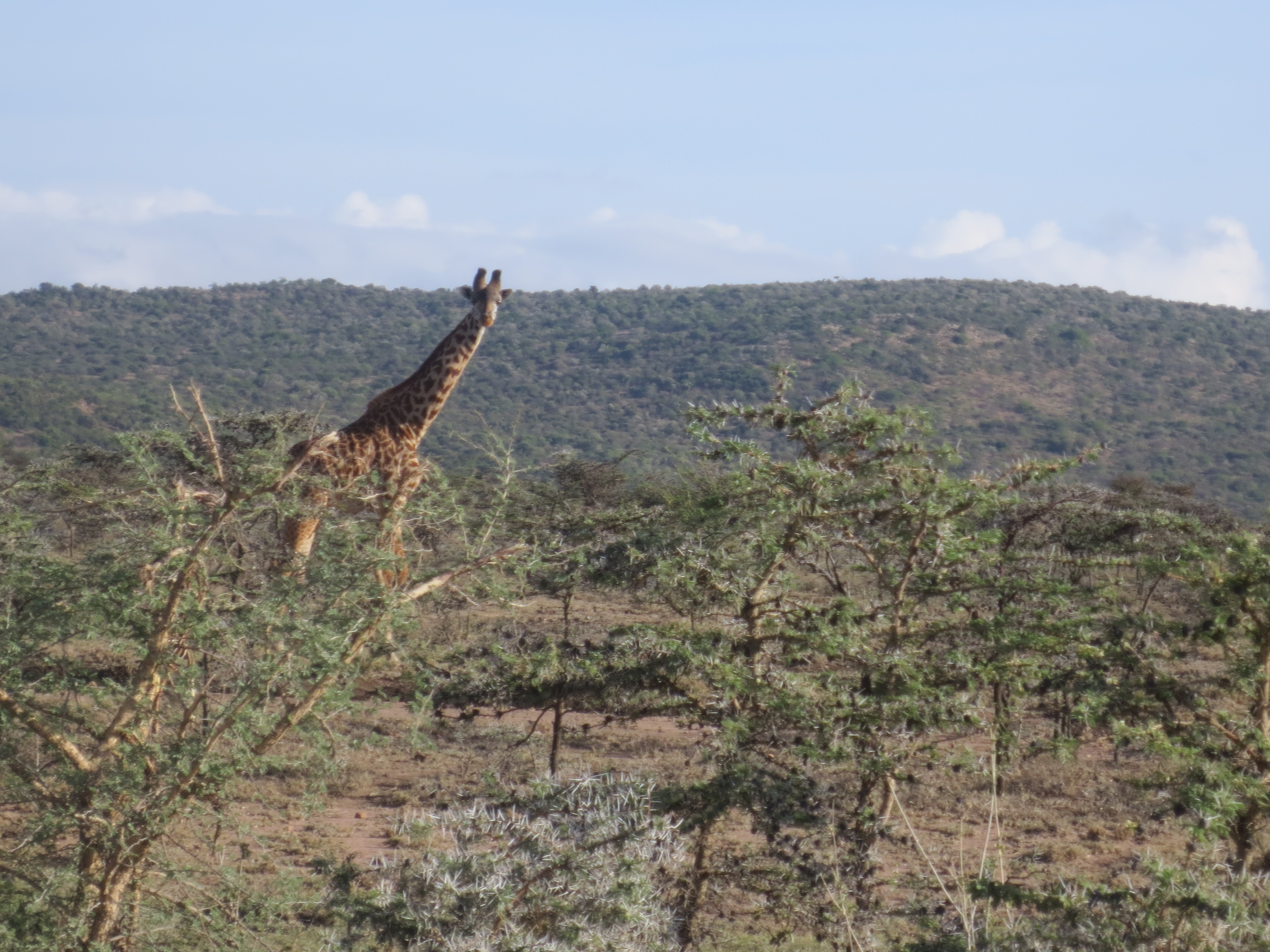
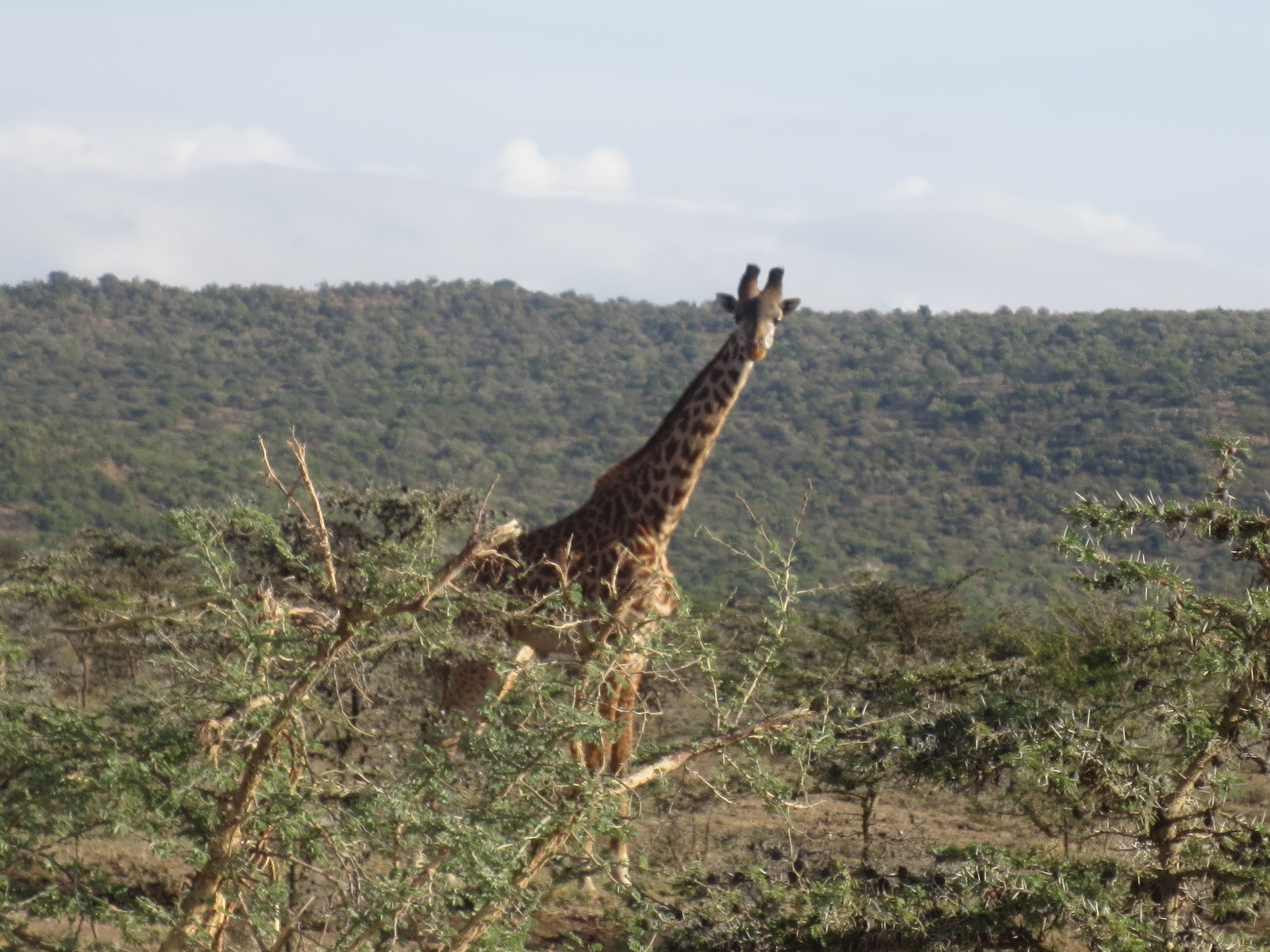
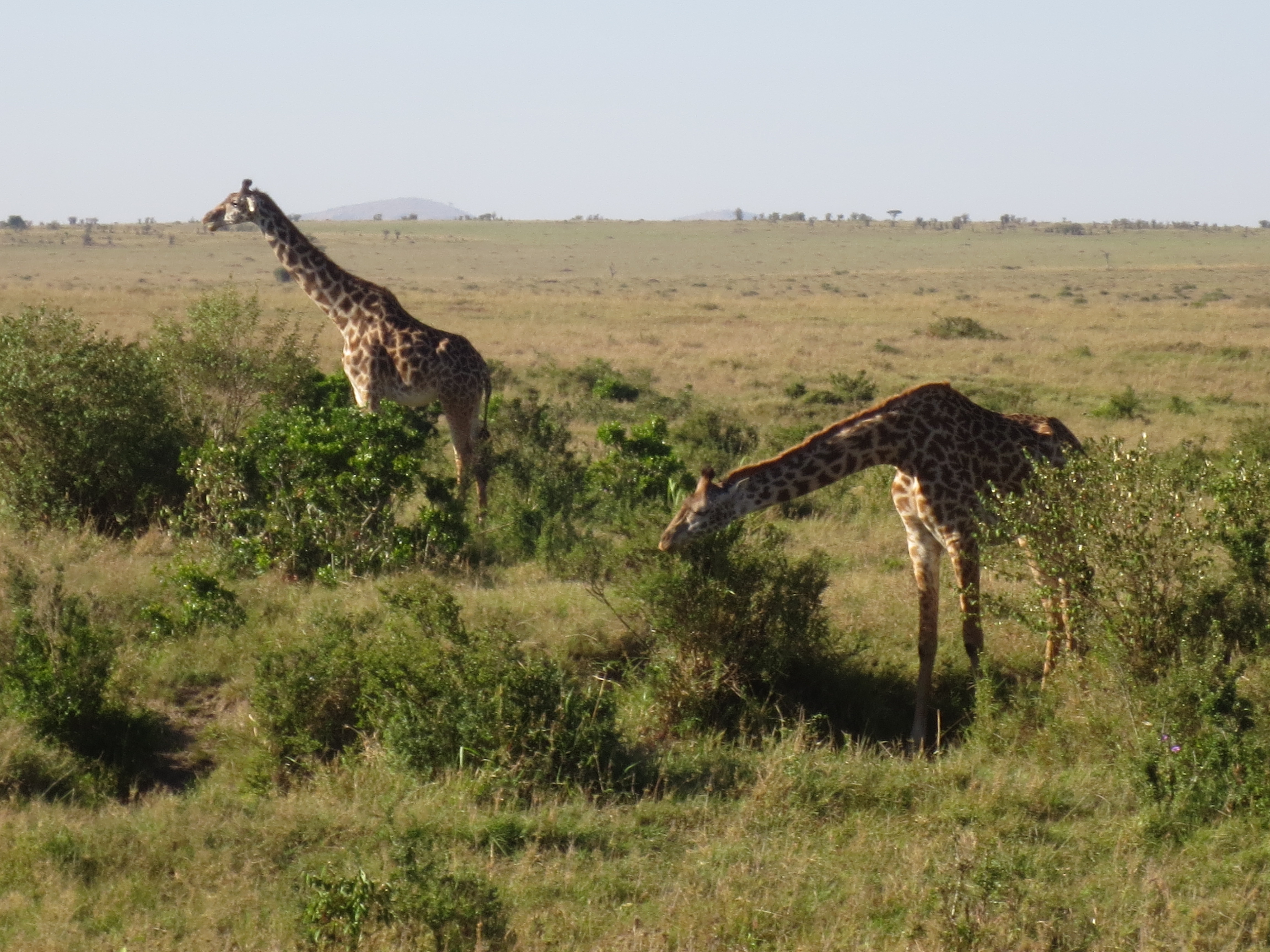
We saw giraffes before we even got into the boundaries of the reserve…and later saw more, even closer.

IMG_1900 IMG_1899 IMG_1806 IMG_1807

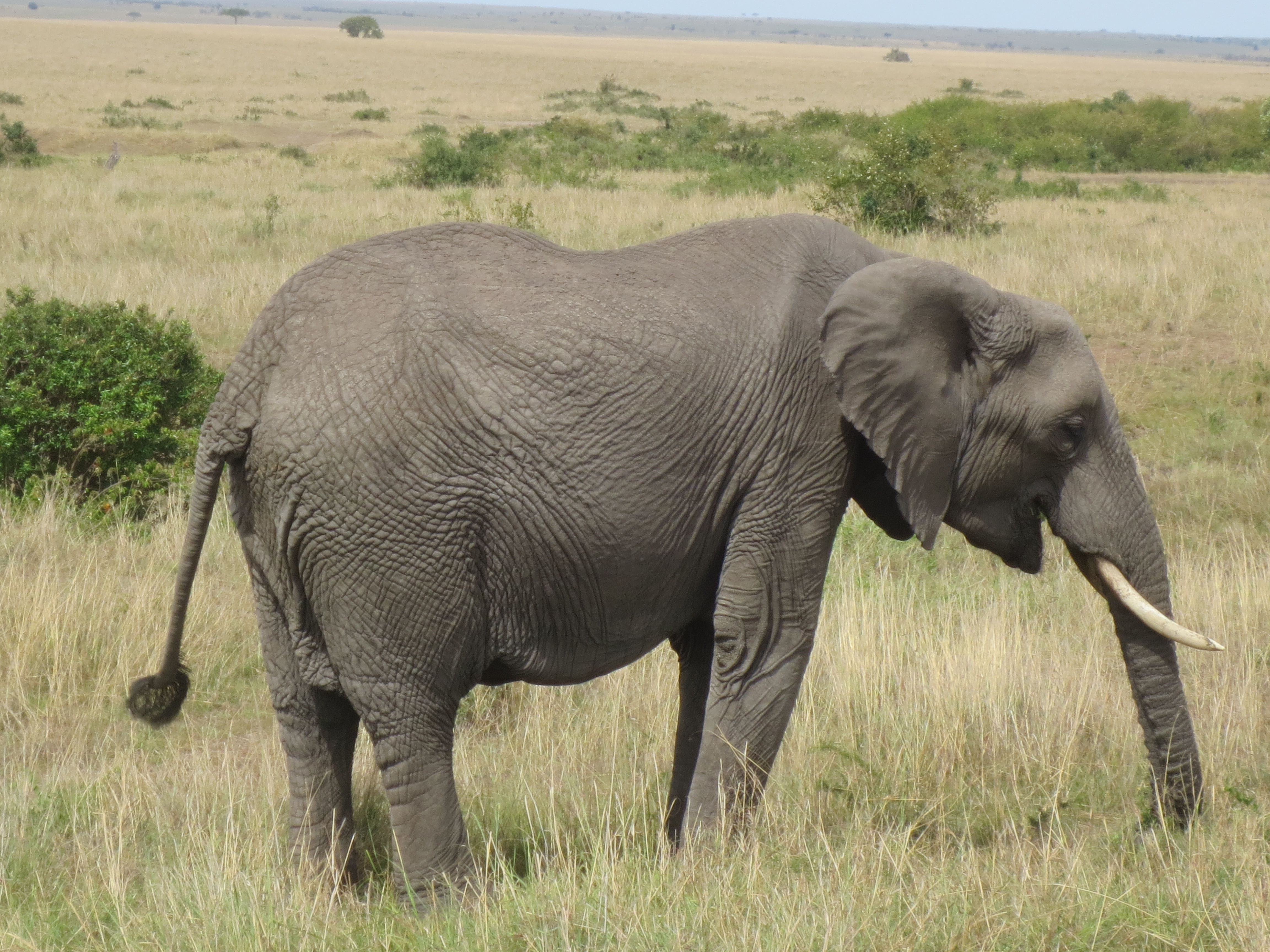
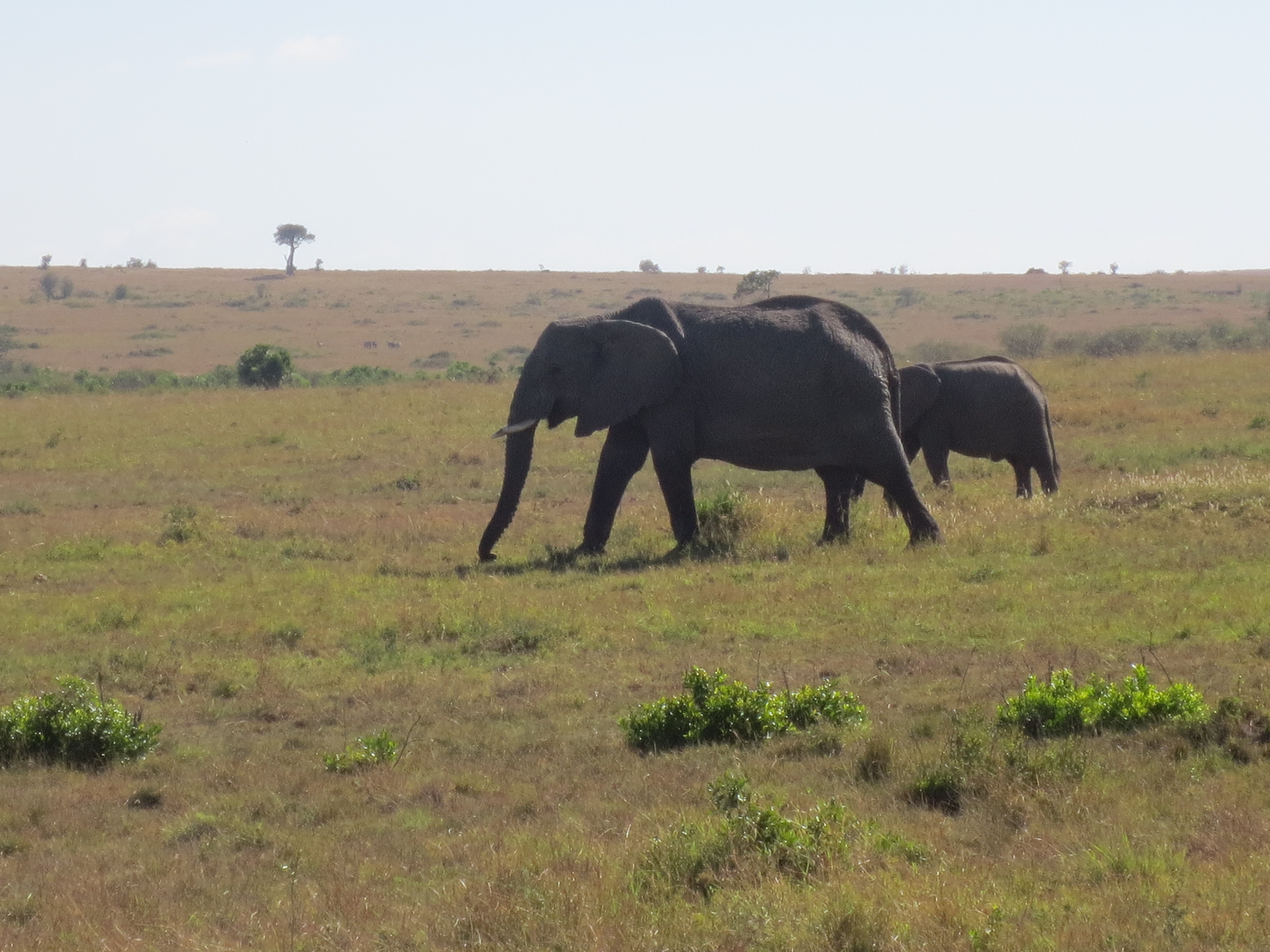
As I had hoped, we saw many elephants.  There were even a couple of babies…but the mother carefully herded them away as we approached.

IMG_1840 IMG_1841IMG_1913


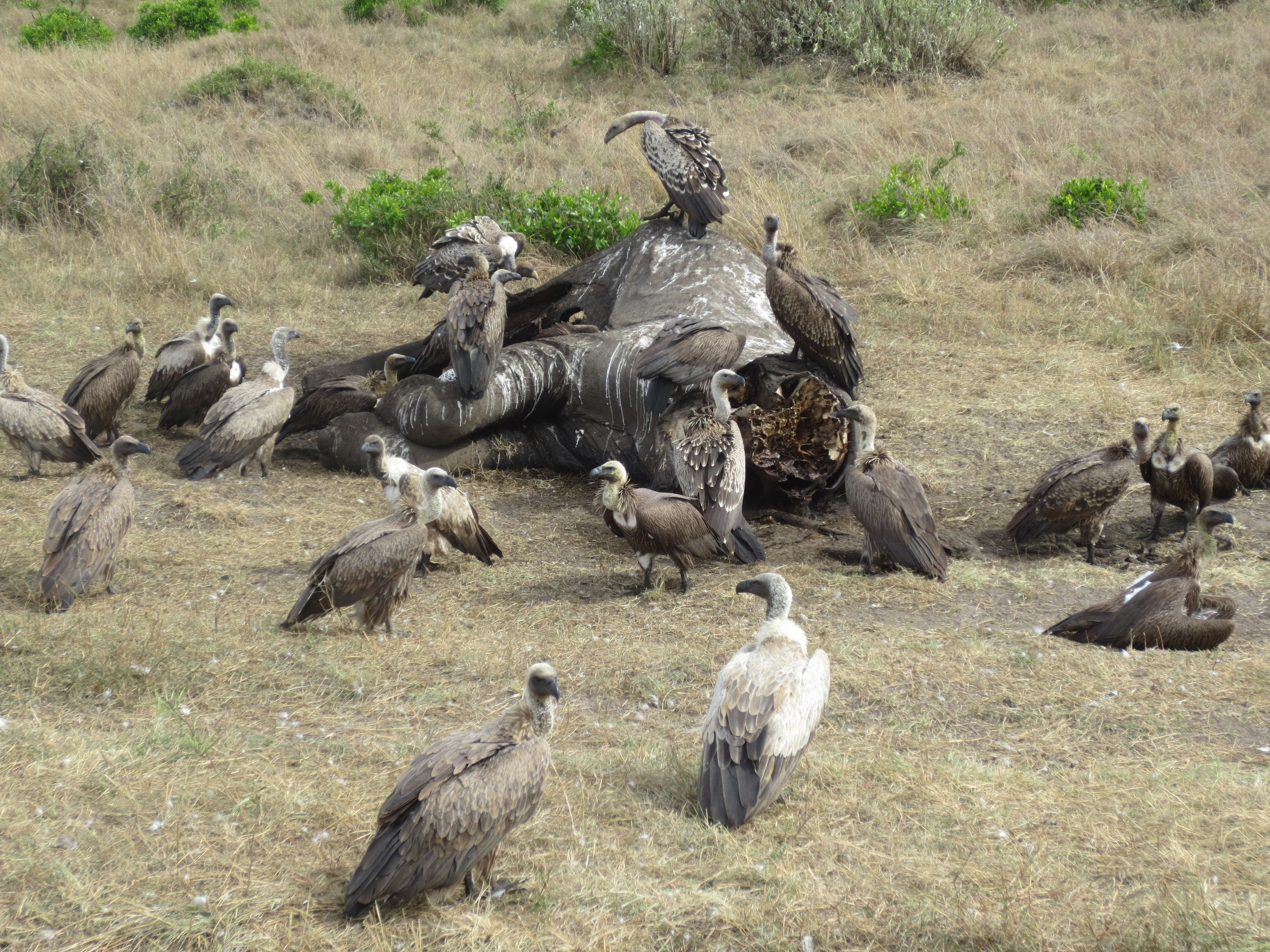
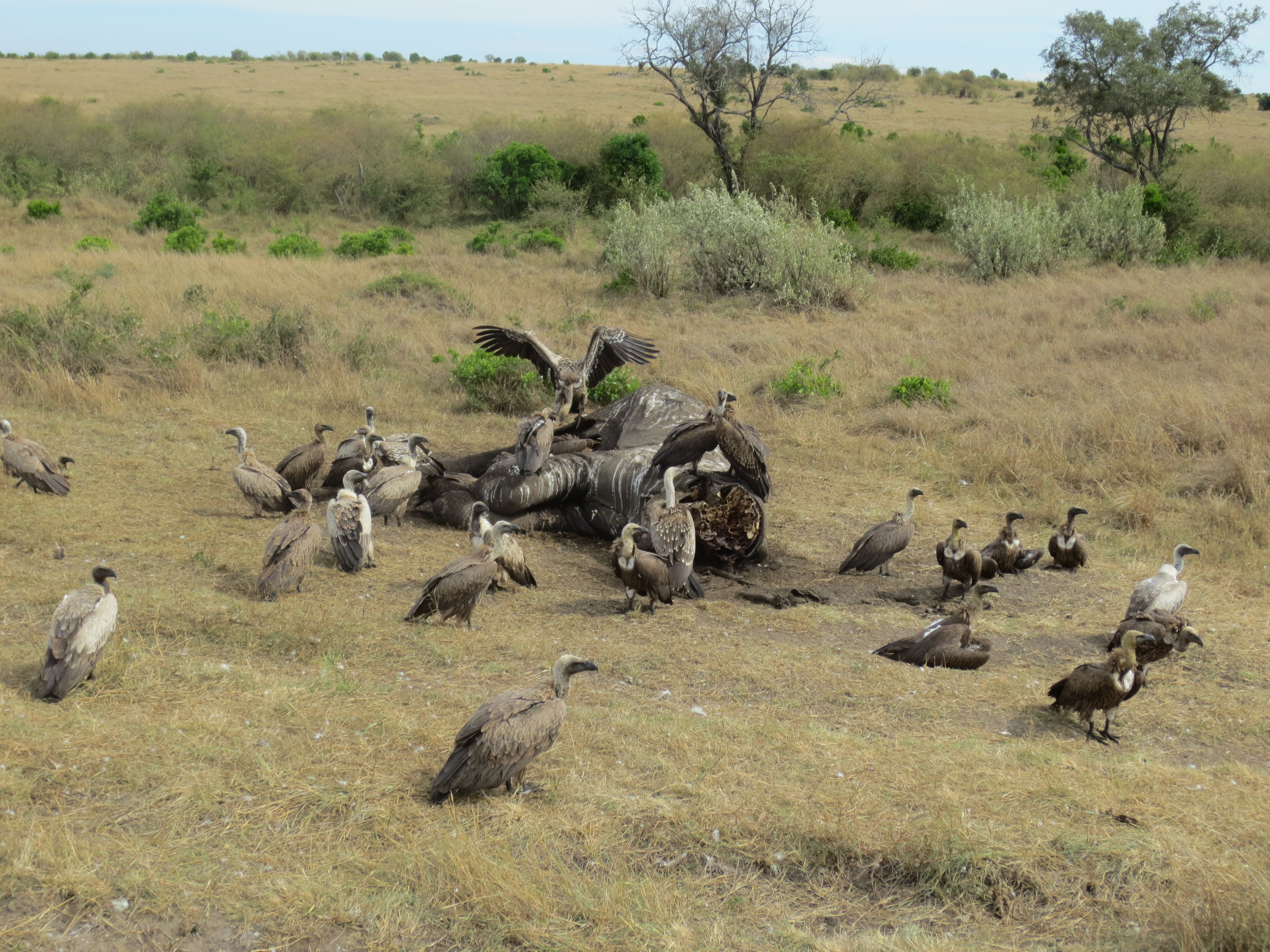
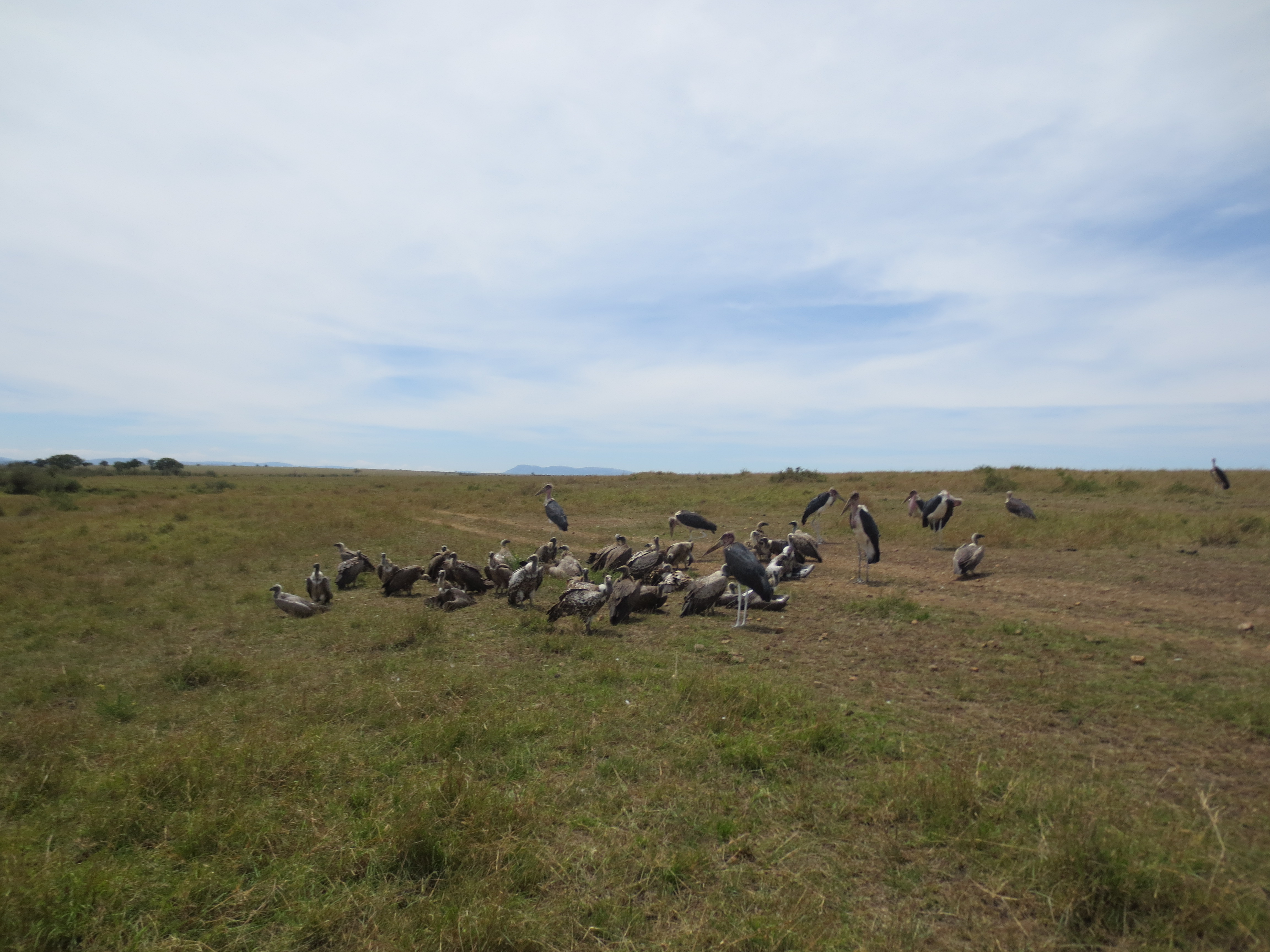
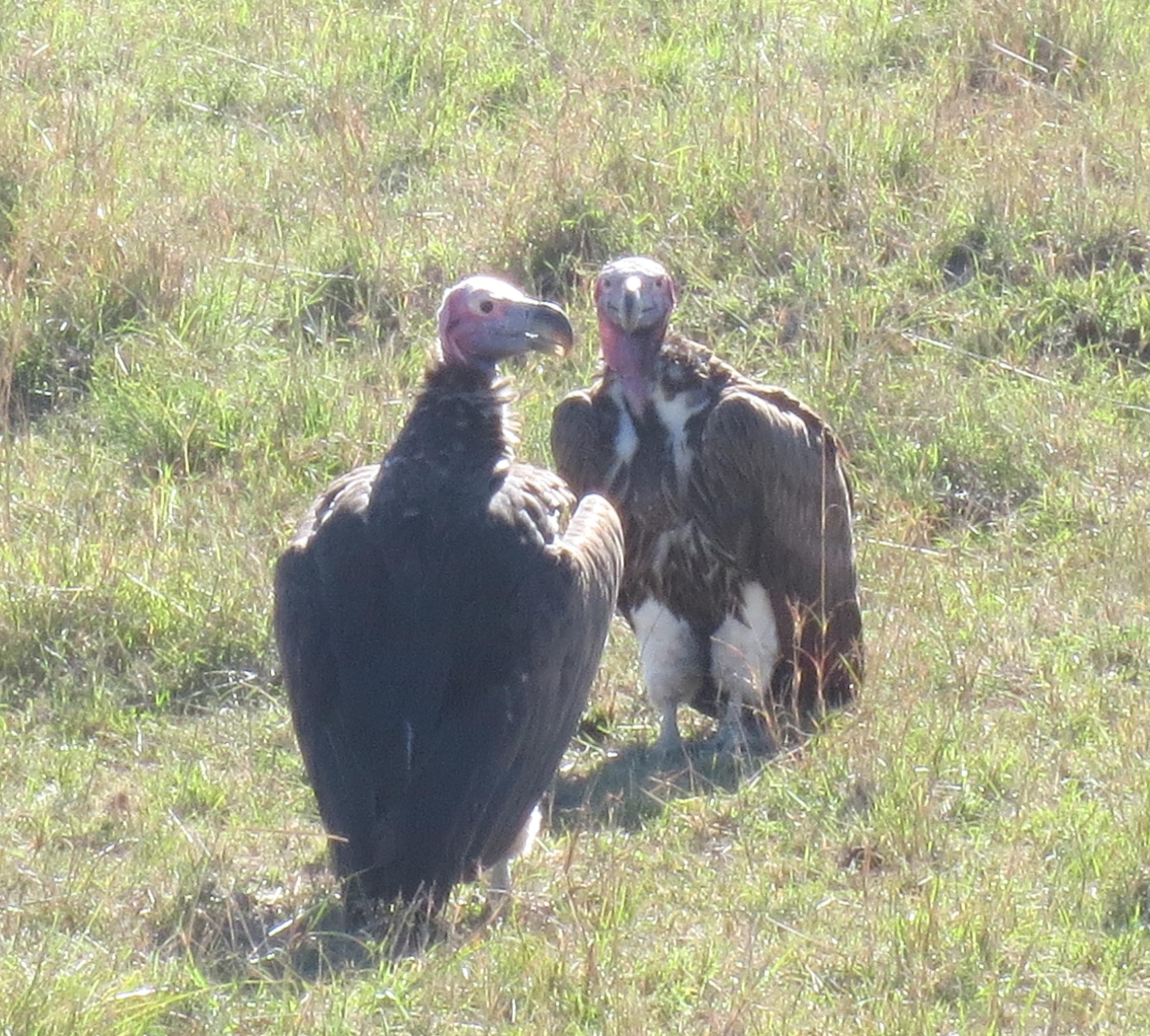
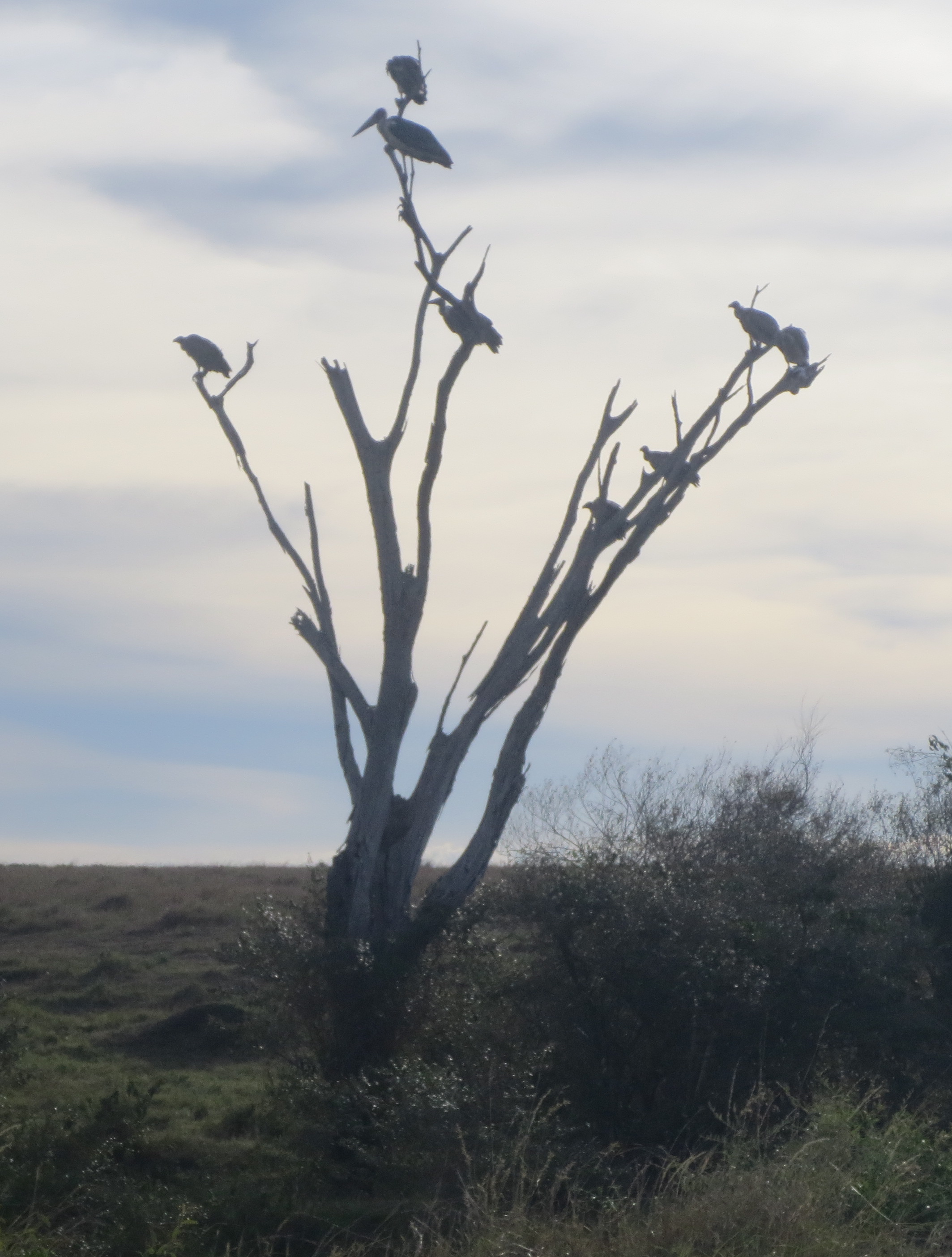
We saw several kinds of vultures…some in trees and a bunch feeding on the carcass of a dead elephant.
IMG_1902 IMG_1890 IMG_1831 IMG_1834 IMG_1835

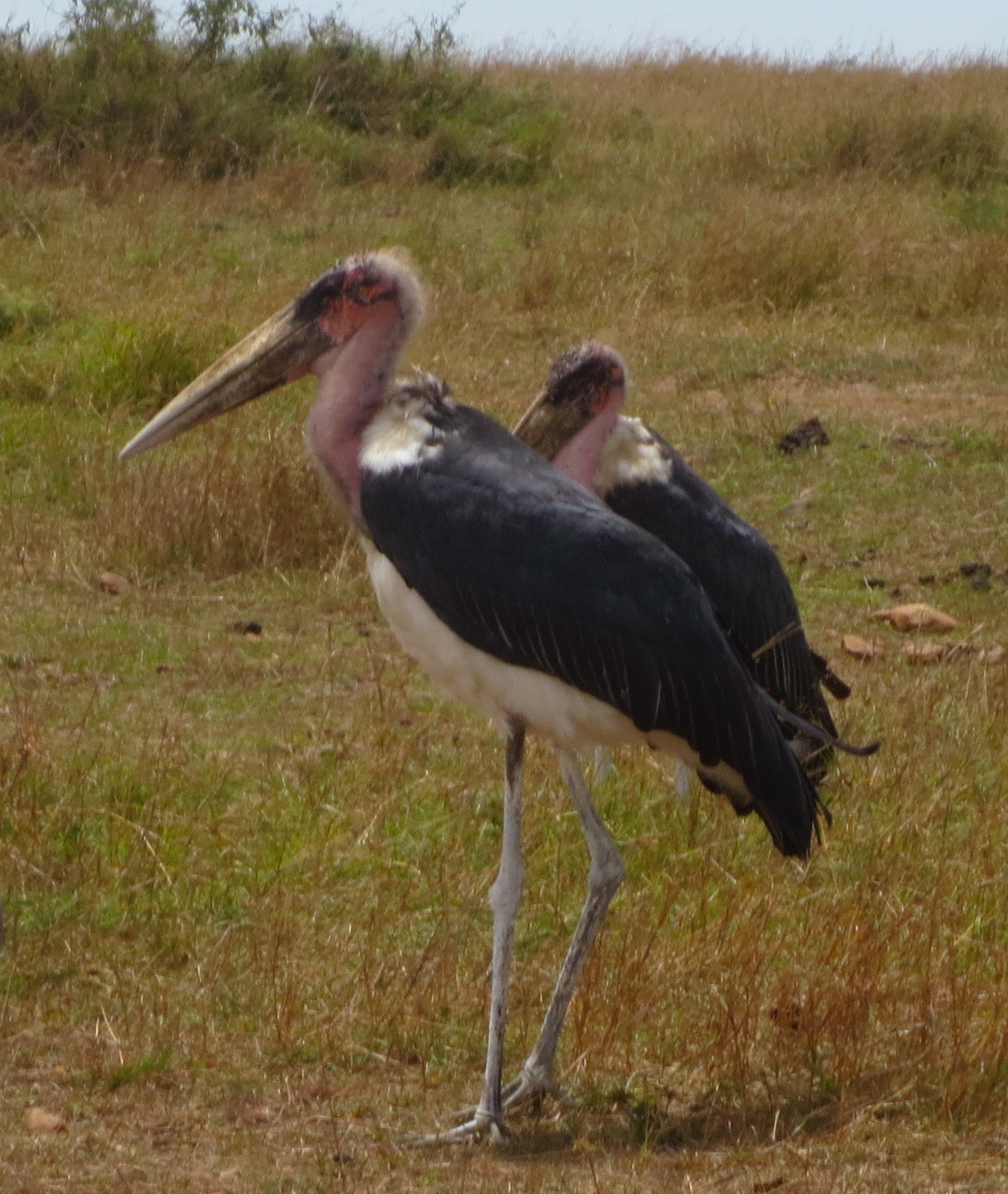
I got a good shot of a malibu stork, which is the bird I saw flying from a distance on my bird watch last month.
IMG_1865

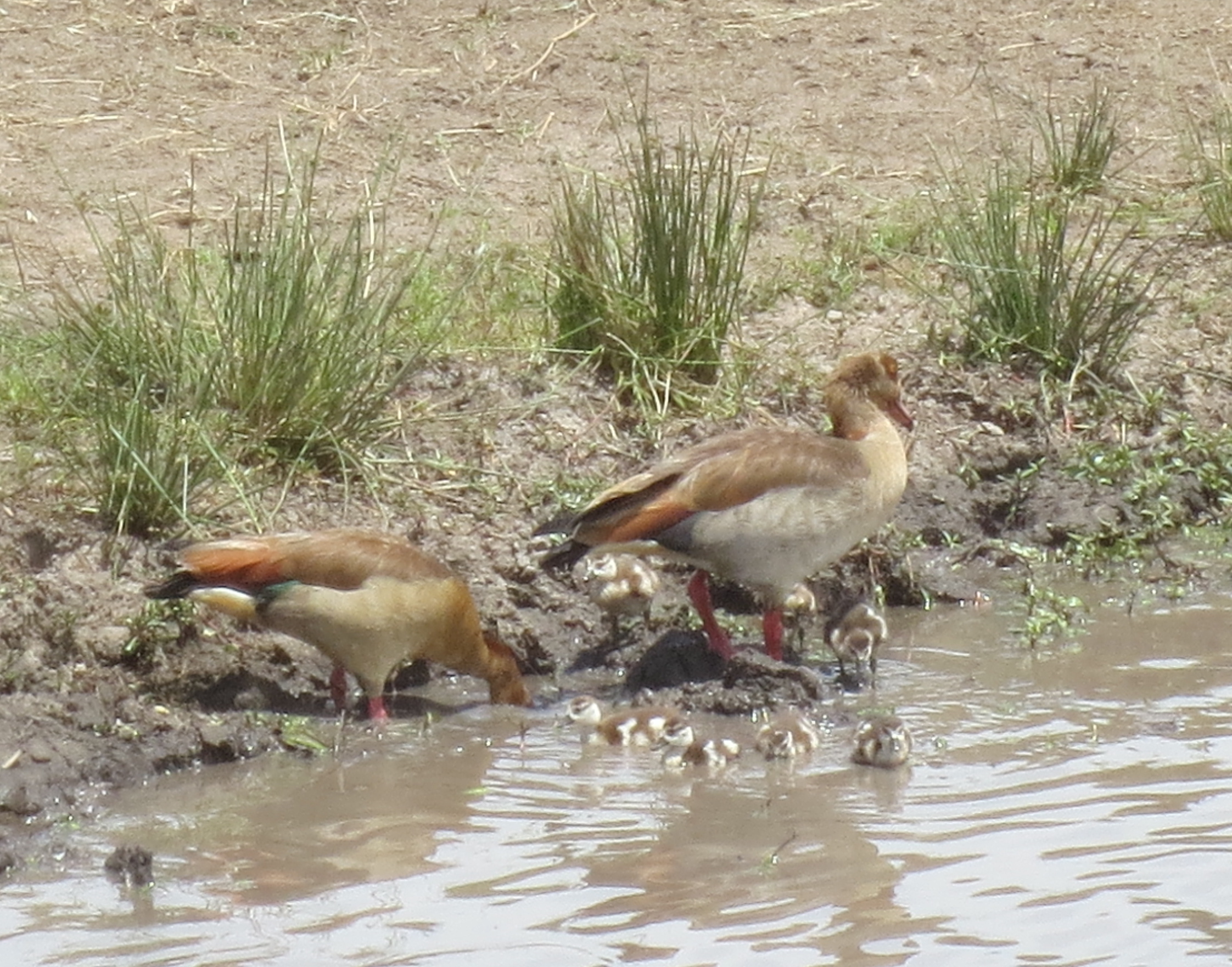
There were other birds, too….a secretary bird and a pair of Egyptian ducks with their little babies, no bigger than feather-balls.
IMG_1869

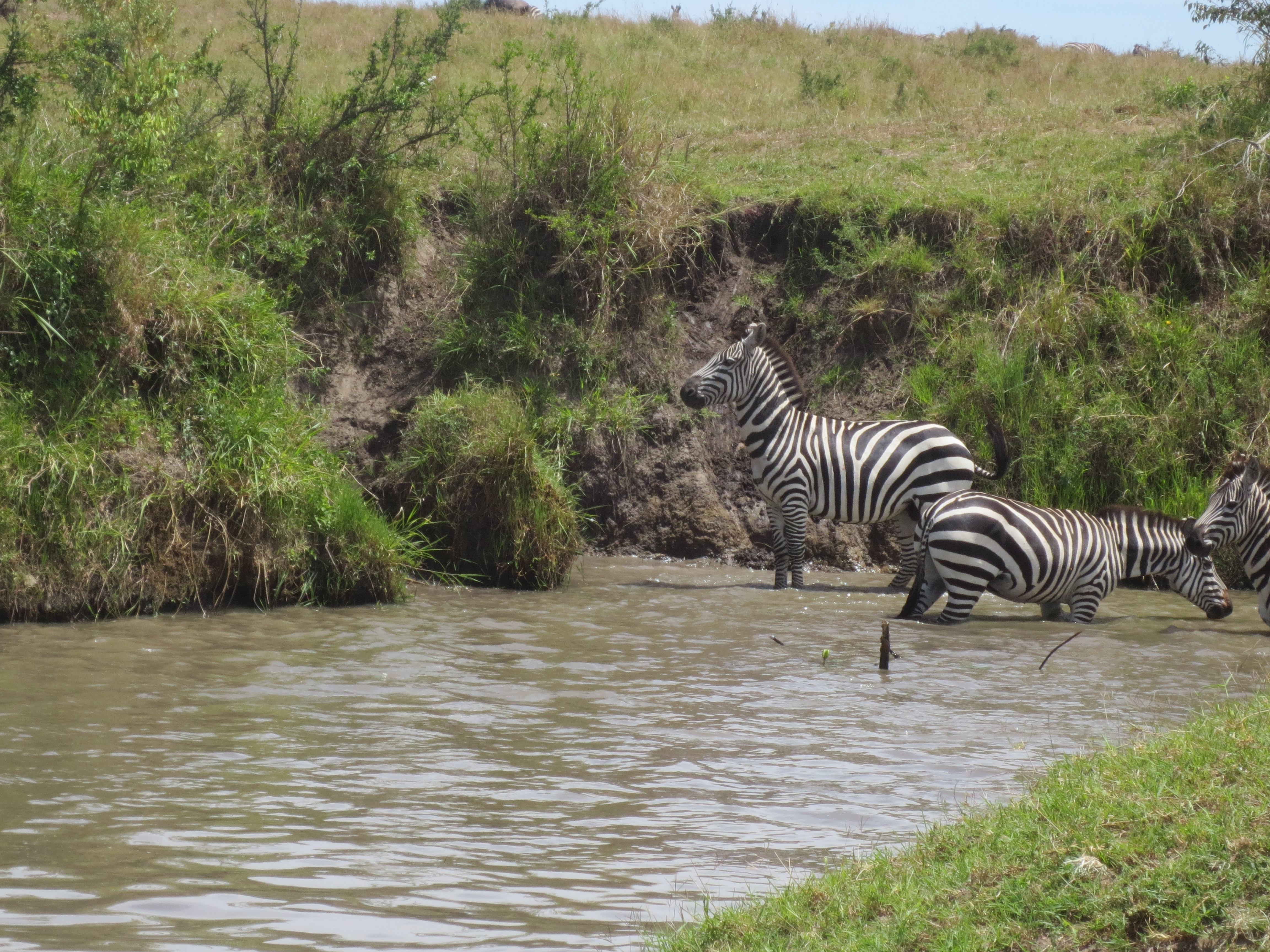
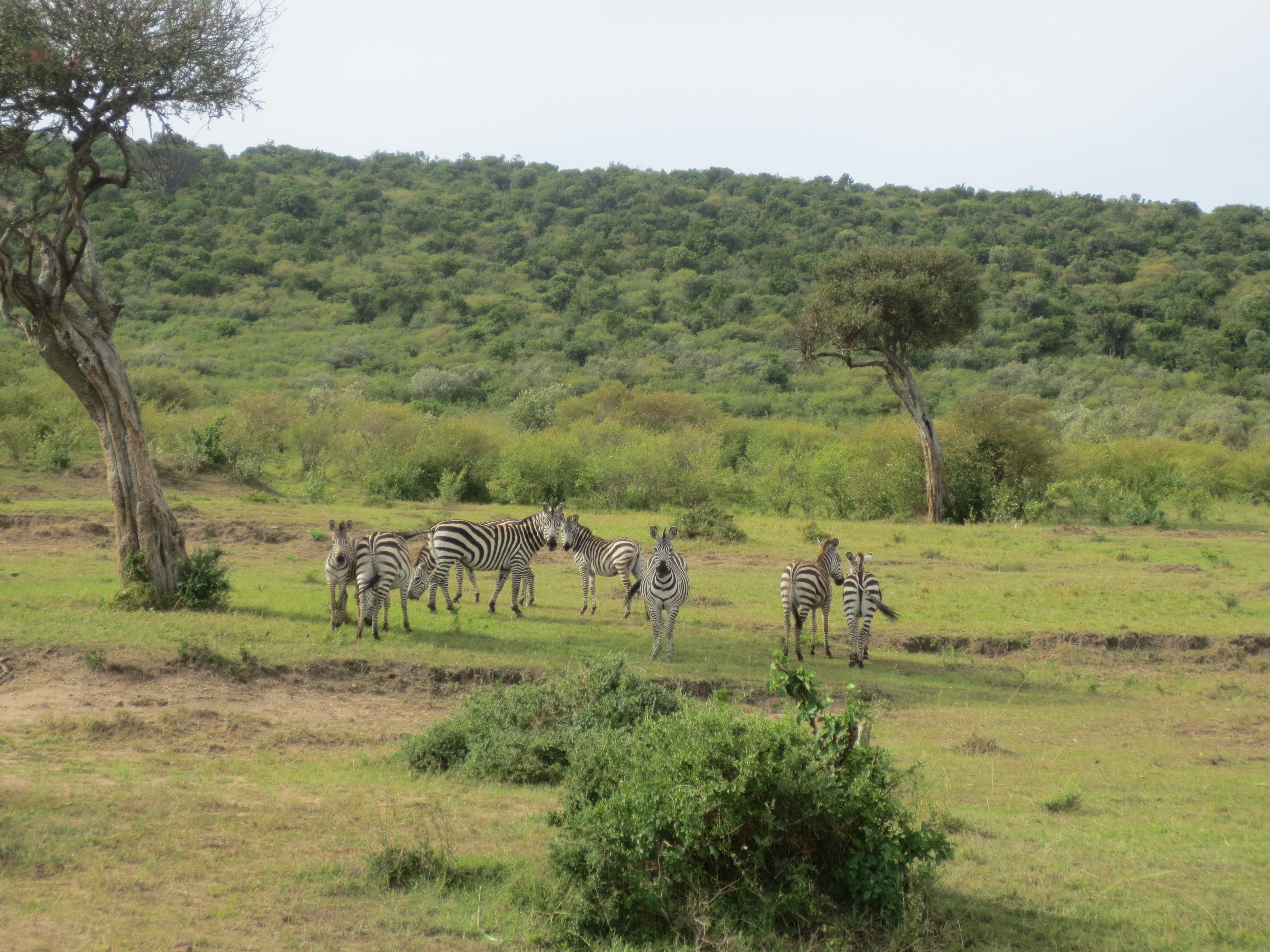
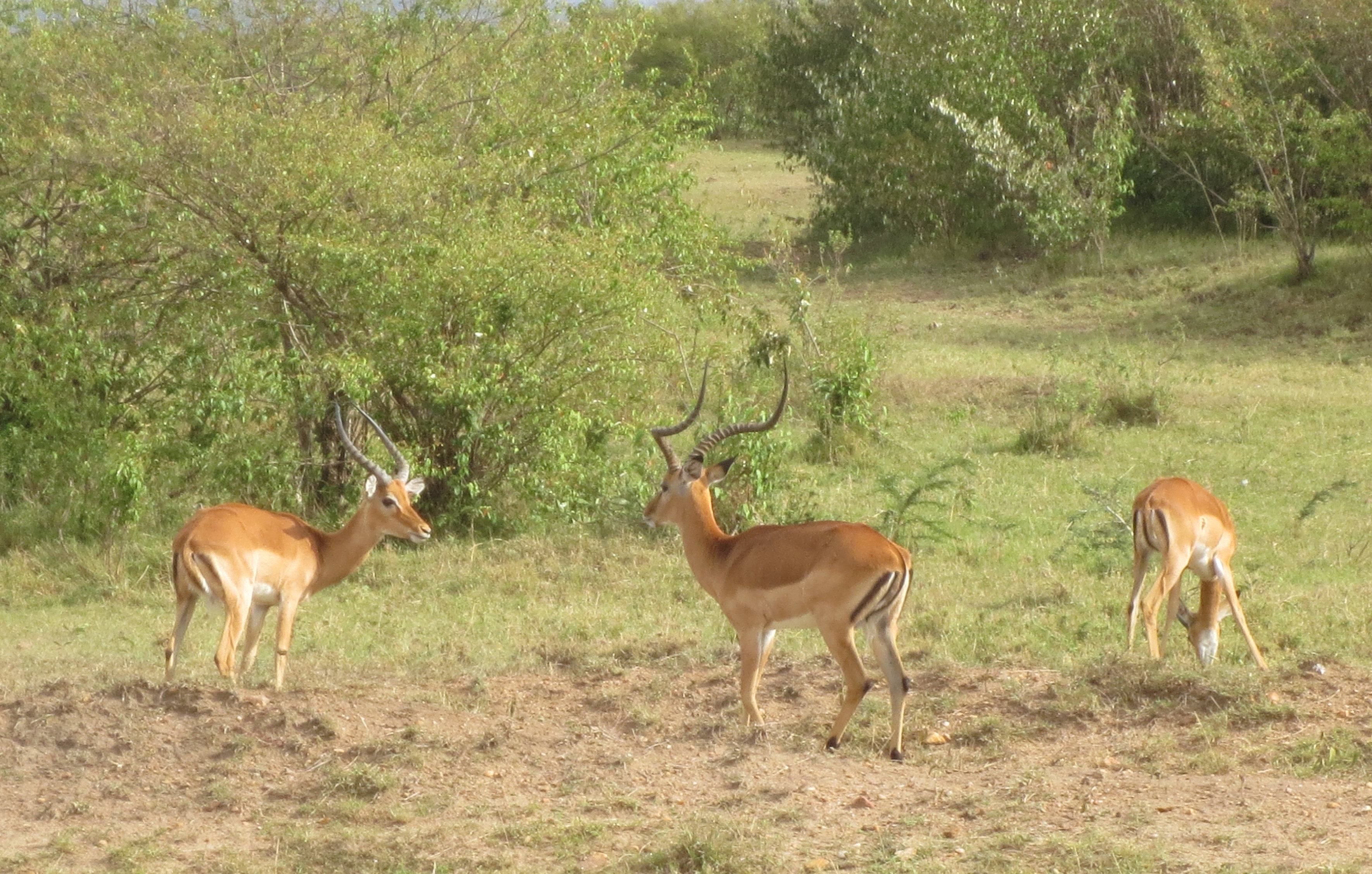
We saw a lot of zebras and wildebeests.  This was the end of their big migration (they tend to migrate together) and at one point, we saw a HUGE herd of them walking slowing across the plain.  There were also gazelles, impala, antelope and eland.

IMG_1867 IMG_1857 IMG_1870 IMG_1864 IMG_1819IMG_1919 IMG_1816


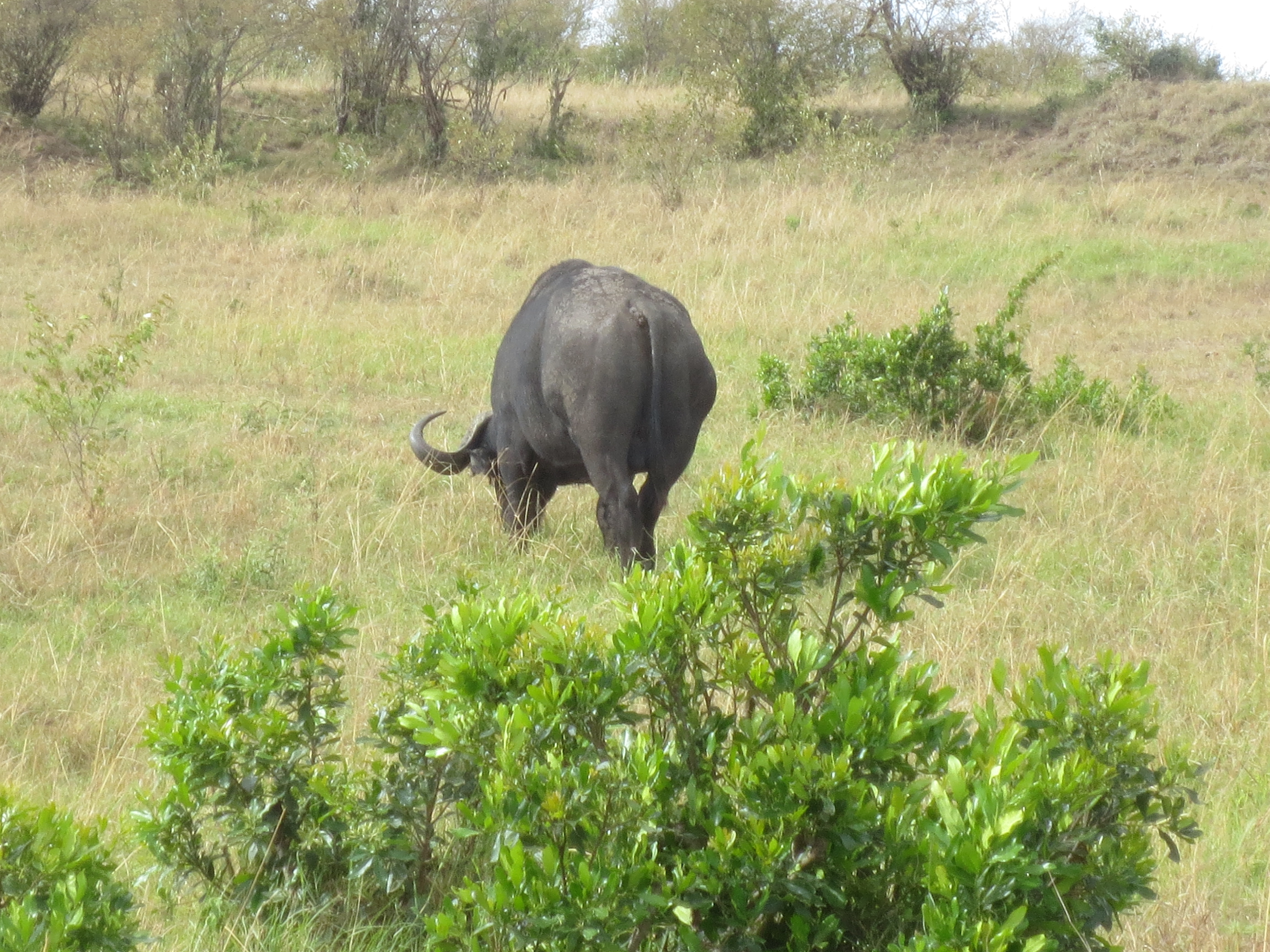
We came upon a couple of water buffalo, which apparently is one of the more dangerous animals, as they have been known to charge a vehicle!  And we also saw some warthogs…and some adorable babies, trotting along after their parents.  (“The Kenyan express,” Salaton said.)  I was unable to get a picture of the babies, but did get a snapshot of one hog hiding under a bush.
IMG_1823IMG_1882


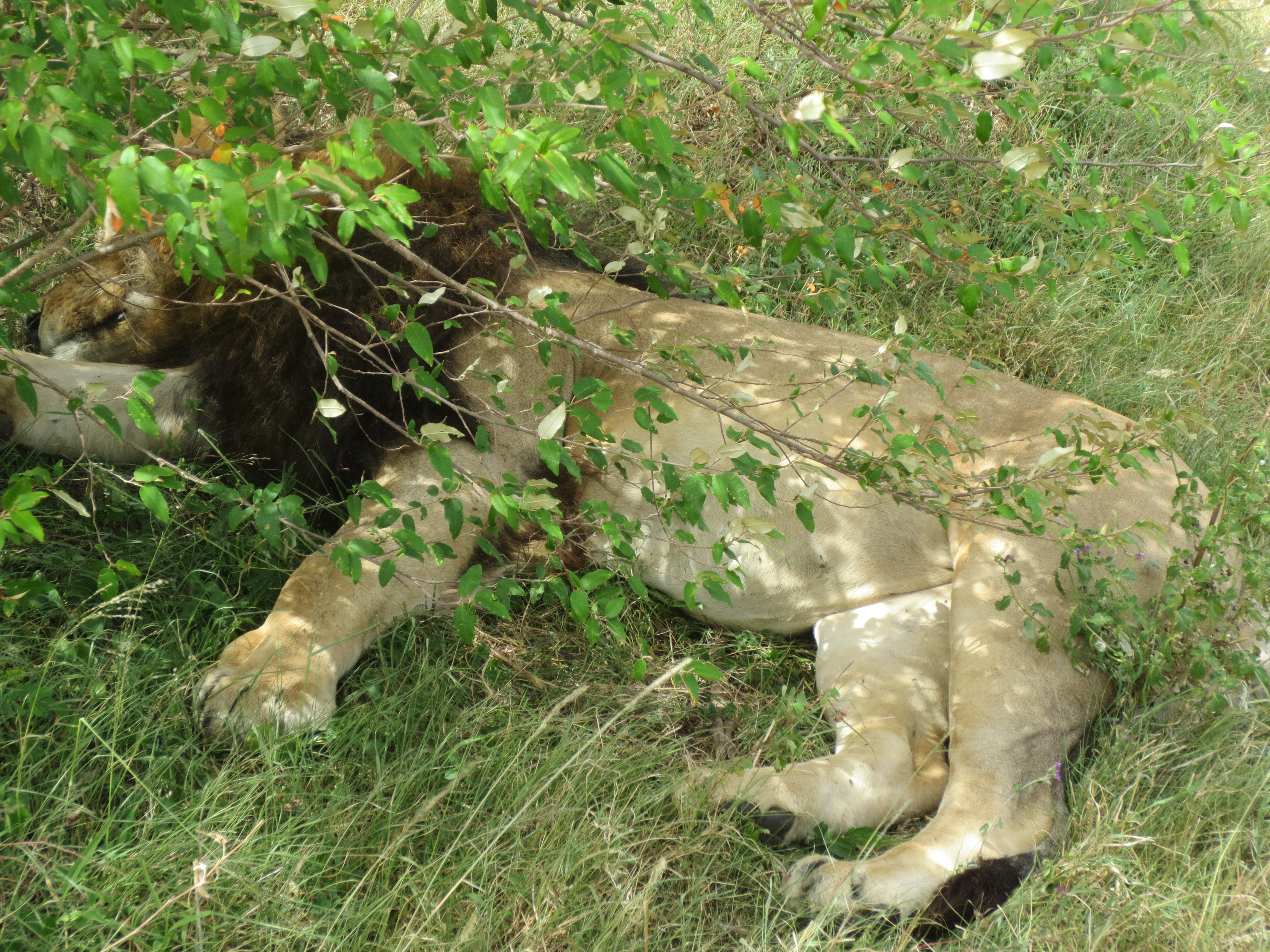
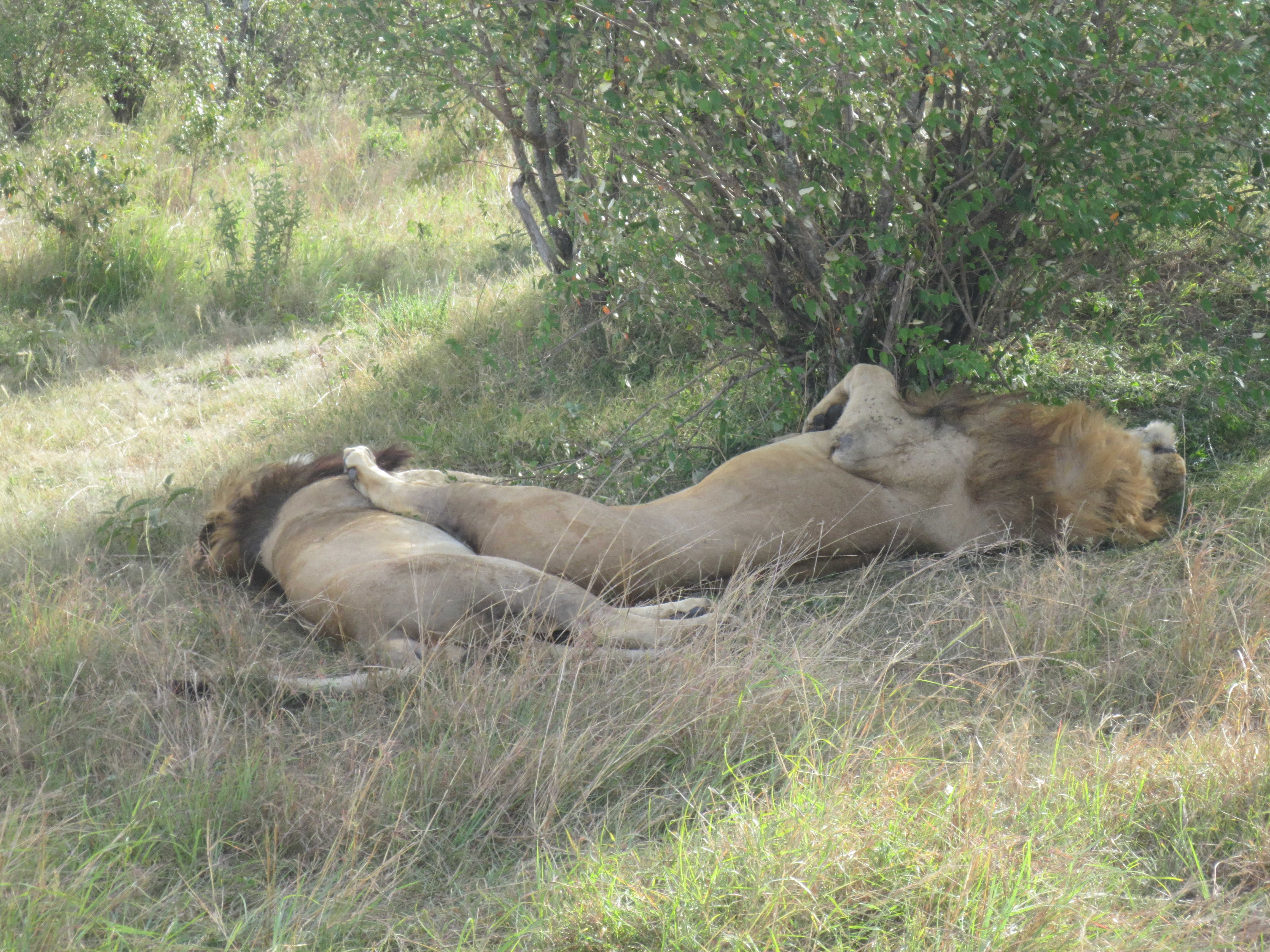
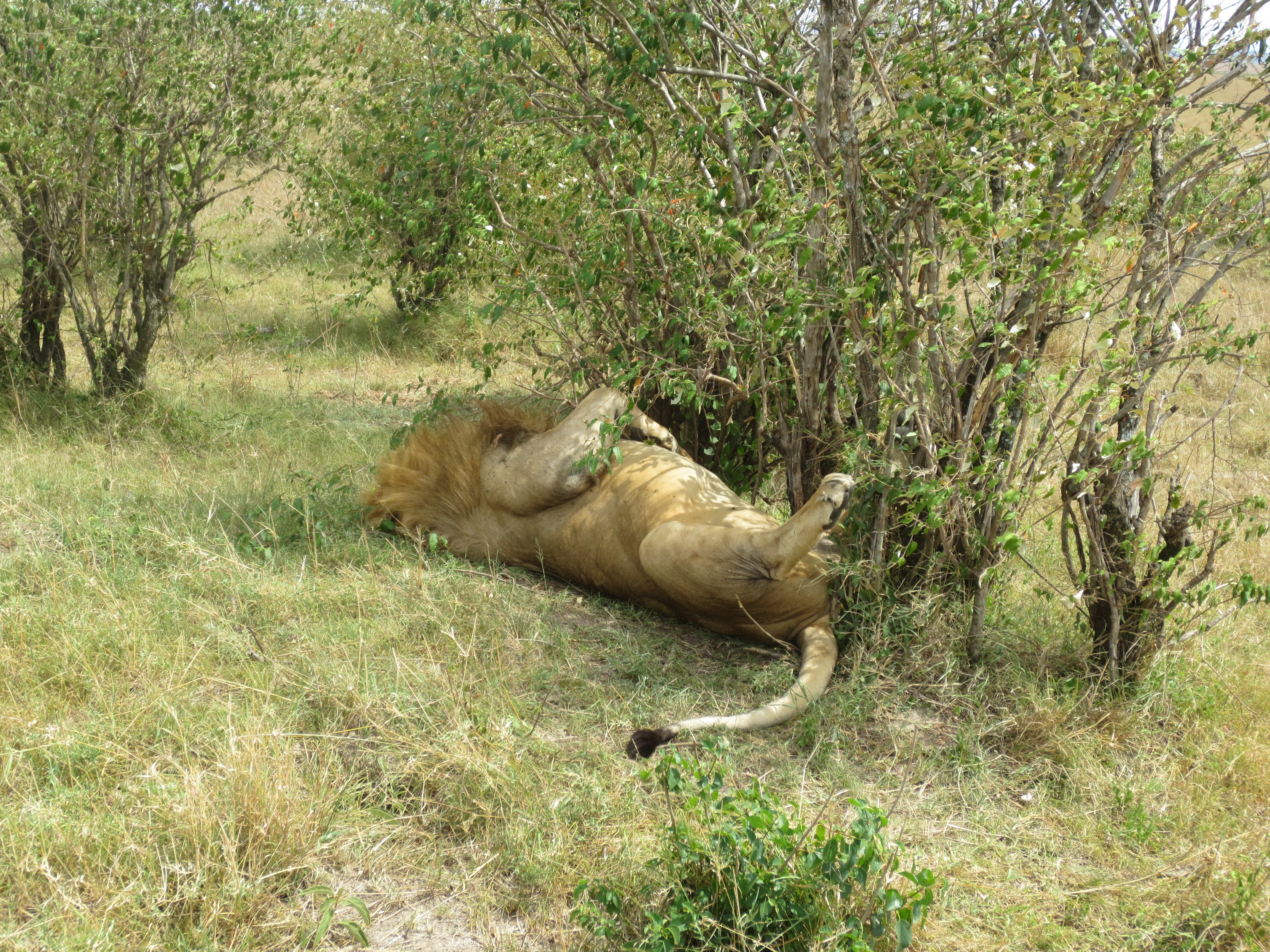
Of course, everyone wants to see the majestic lion.  We came upon four different male lions.  May I present: The King Of Beasts!
IMG_1852 IMG_1854 IMG_1884 IMG_1885

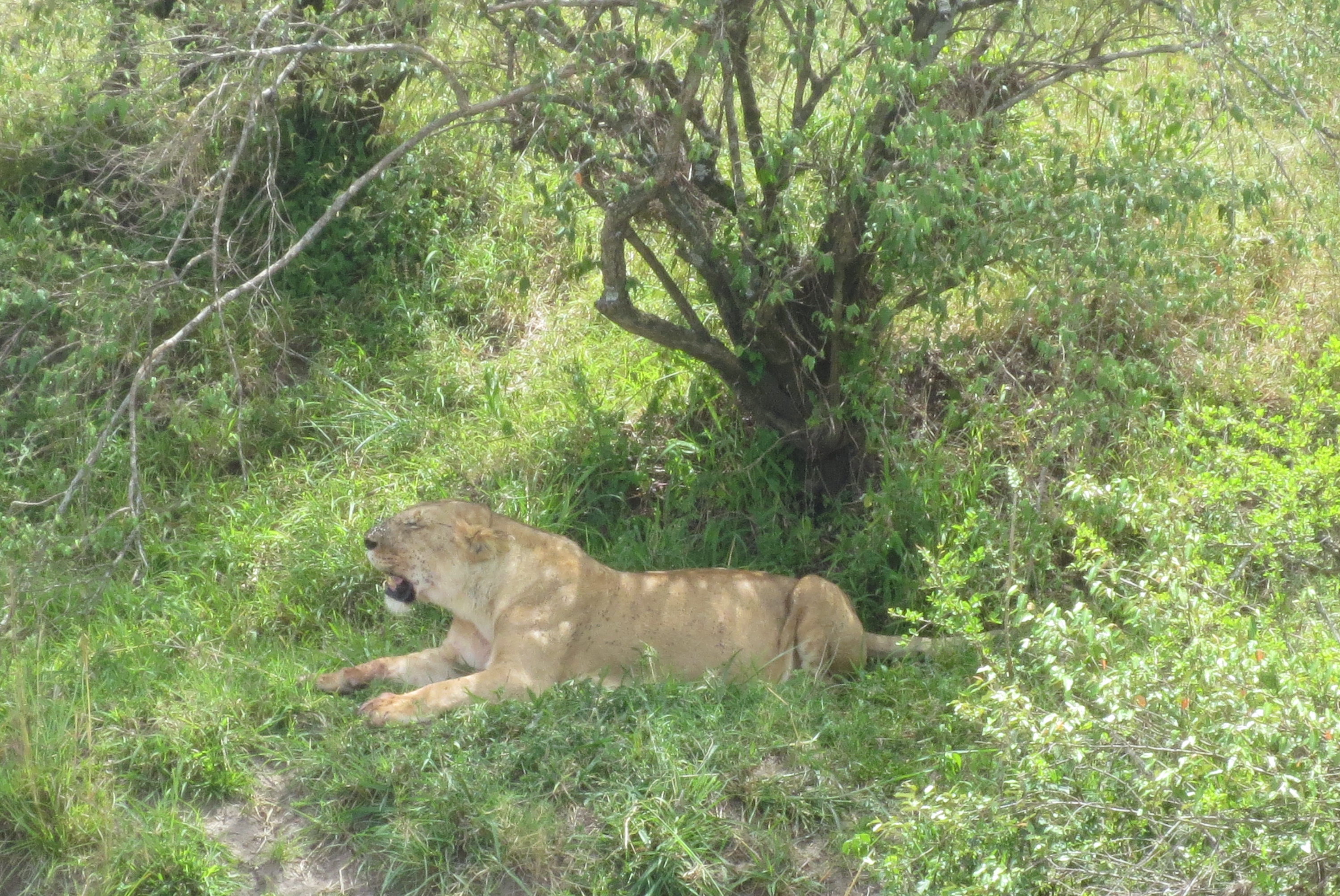
Meanwhile, the female lion had made a kill and was guarding it carefully.  There was a flock of vultures nearby, waiting for her to be finished.
IMG_1862 IMG_1863 IMG_1864

We were lucky enough to see a cheetah – although not close enough for a good picture, I was able to view it through my binoculars.  It was sitting under a tree, looking like a huge housecat as it licked its paws and yawned.

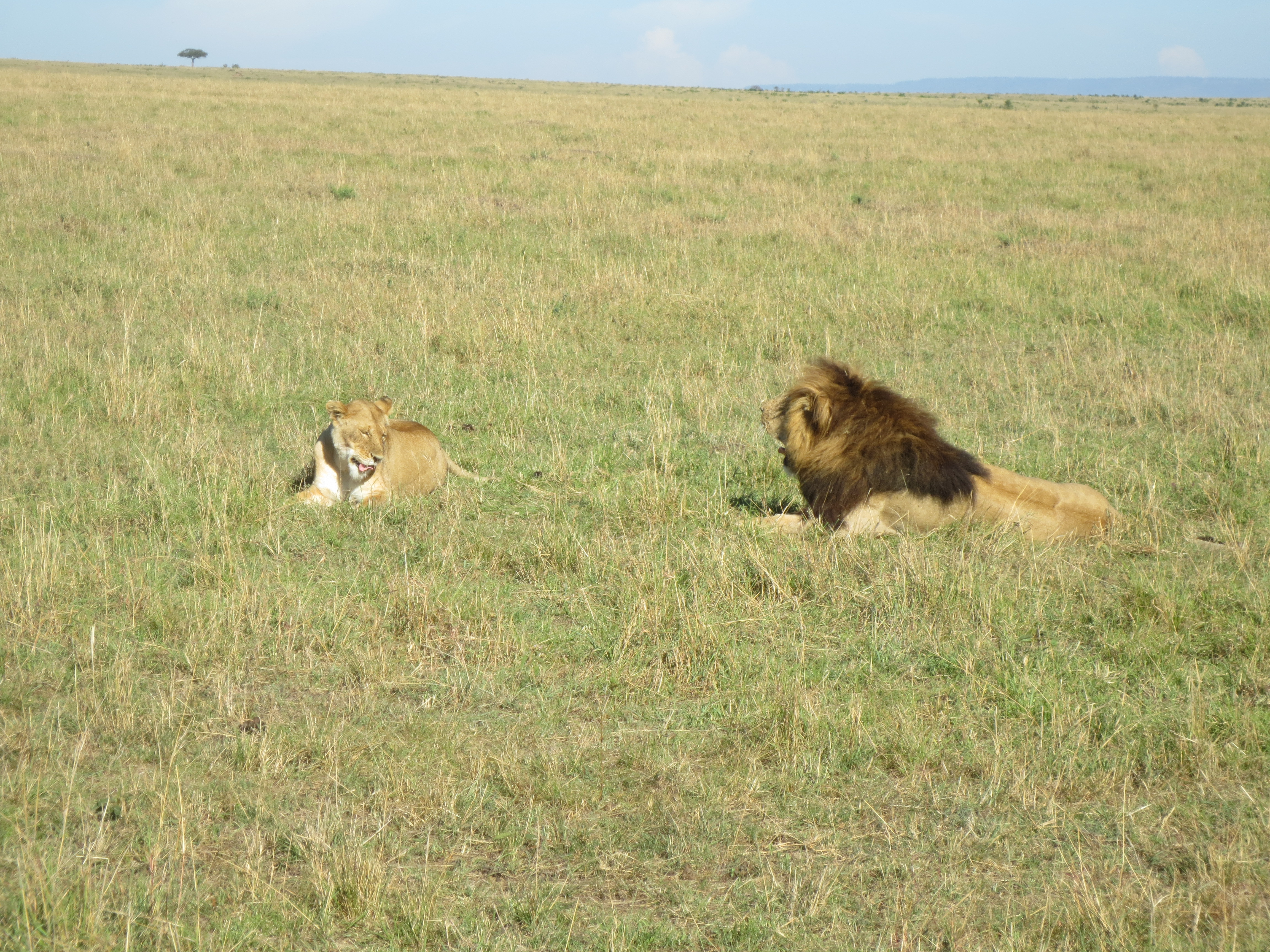
Later on, we came upon a pair of lions.  Salaton said it looked as though they might be getting ready to mate, and indeed, the male put on a great show to the female – approaching her several times with his hips swaying and making huffing sounds.  He even went so far as to urinate most spectacularly right in front of her nose (and I got a picture of him doing it!) However, she was unimpressed and merely moved away from him.  He sat down again to wait for another opportunity.

IMG_1903 IMG_1907 IMG_1906

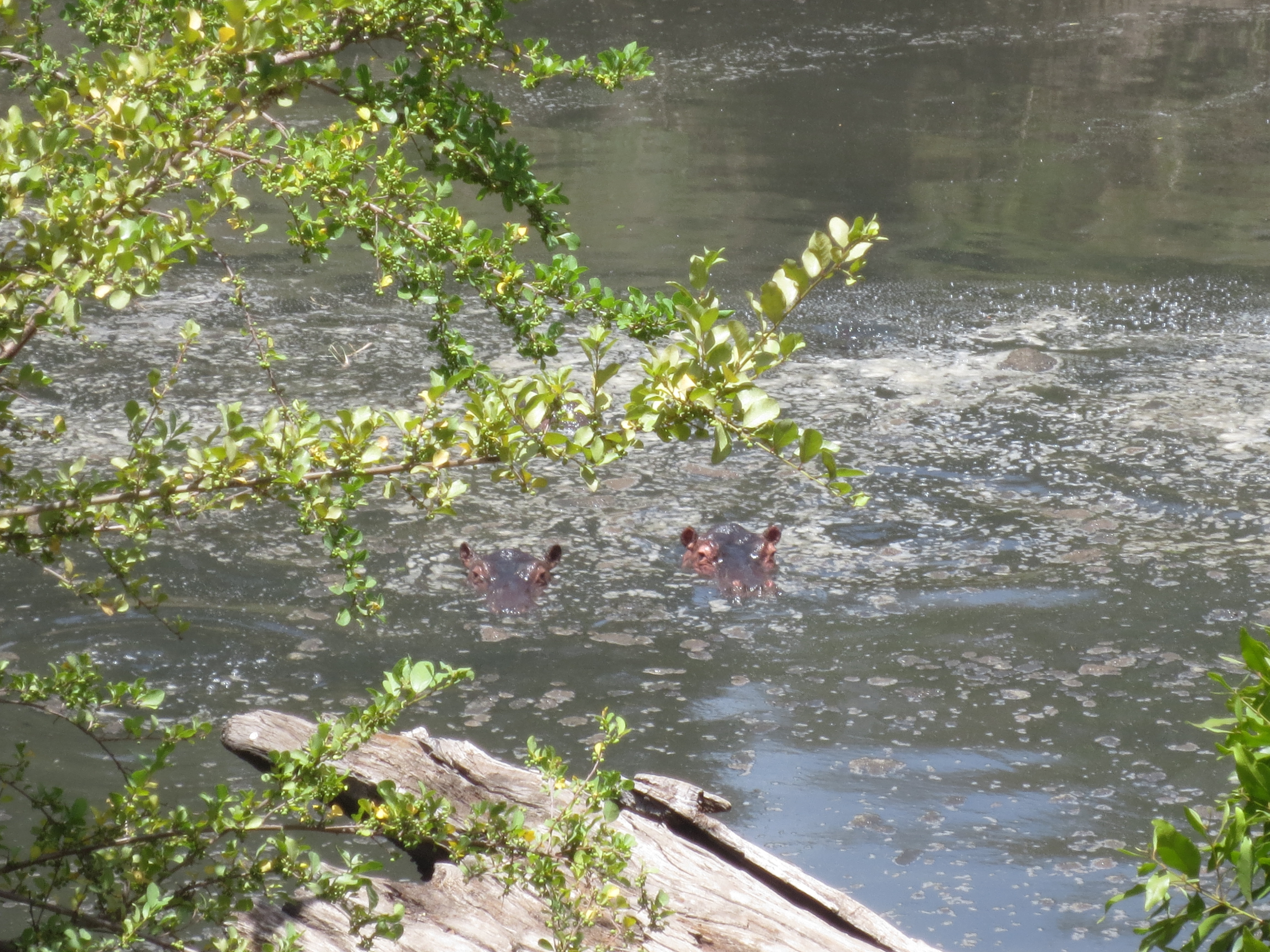
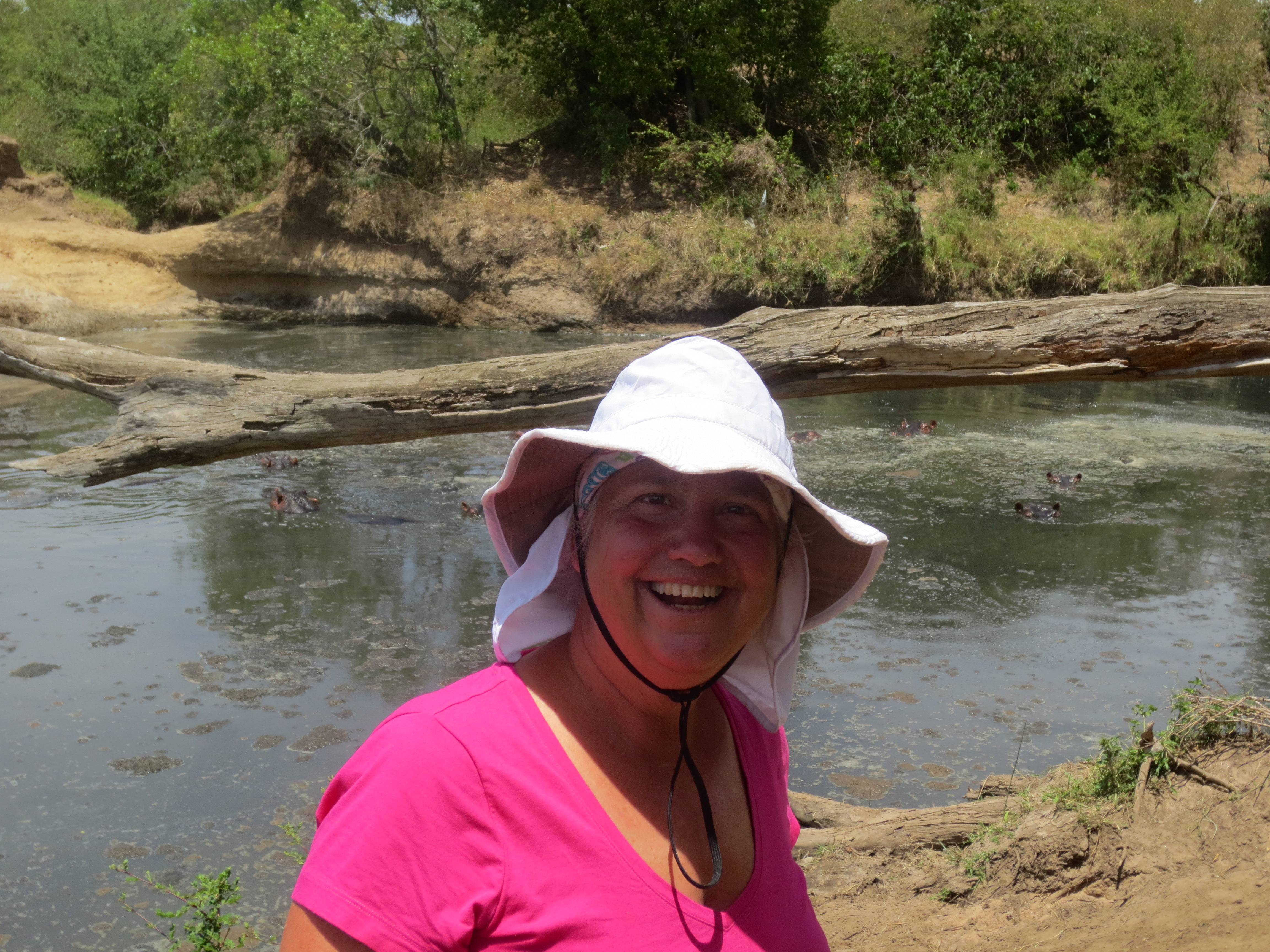
Just before lunch, we found a watering hole with at least a dozen hippos!  They did not come out of the water (which was probably a good thing) but we could see their heads and ears and hear their snuffling sounds…almost like whales…as they surfaced to breathe.

IMG_1875 IMG_1874


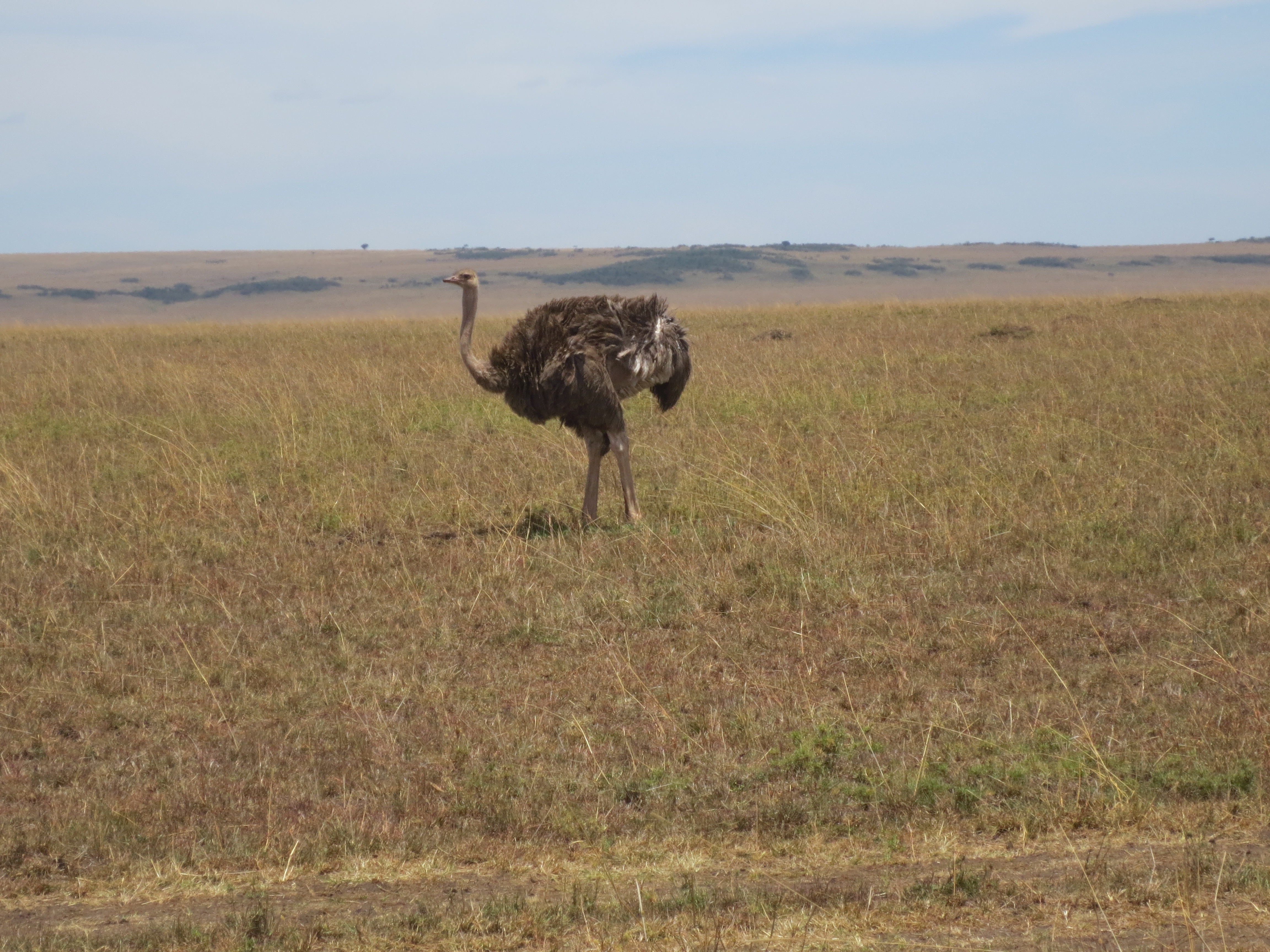
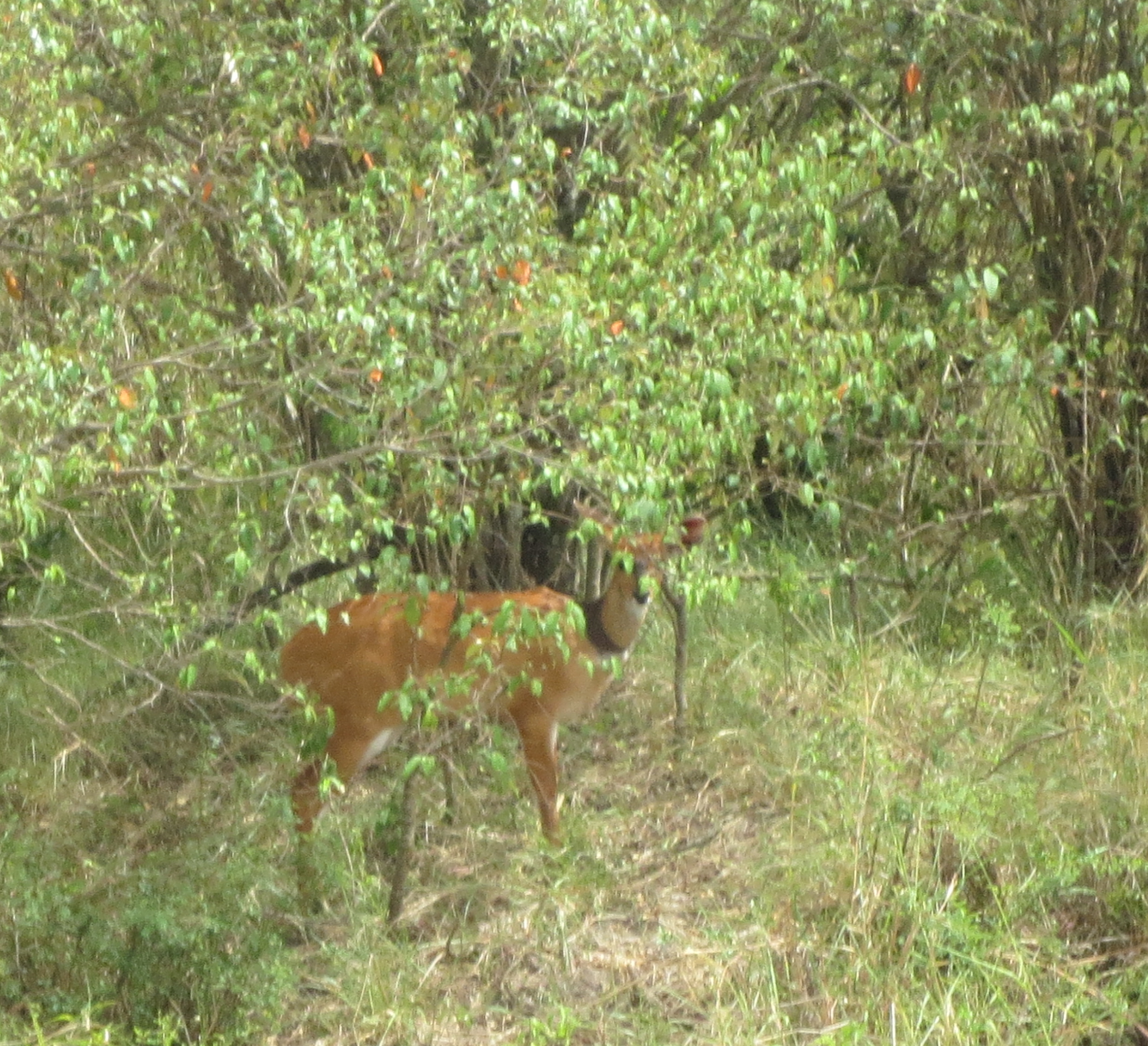
More animals included a bushback (very rare to see; as they are quite shy…) a jackal, an ostrich (which is HUGE and looks like a mistake in design!), some mongoose and a couple of crocodiles, swimming near the hippos.

IMG_1896 IMG_1891 IMG_1890 IMG_1873 IMG_1850

We encountered some Maasai boys just as we were having our lunch and gave them all our bread-and-butter sandwiches.  I remembered to touch their heads and say “supa” to them – who knows what they thought of me, a mzungu woman with white hair, a big floppy hat and green sunglasses!  But they smiled and said “supa” back to me.

It was a fantastic way to end my week in Kenya.
IMG_1877 IMG_1880


Widows, water and a walk across the plains!

Standard

In Maasai culture, women are traditionally not permitted to remarry.  Once they are married, they become part of their husbands family and their cattle and possessions belong to him.  Because many times young women (and girls) are married to much older men, it is common for a women to become a widow at a young age, often with several children and her options are few.

Salaton was encouraged by his mother (a  “medicine woman”) to do something about this – to help the widows and to discourage child marriage and female circumcision (or FGM – for female genital mutilation.) His mother, he told me, was a very strong woman, a very wise woman and he knew he had to do as she asked.  He has donated land for a “Widow’s Village” where widows can live together as a family, own their own livestock, build their own houses and make and sell jewellery.

IMG_1732

We were greeted at the entrance to the village by some of the widows, who sang a welcoming song, and then brought us into the middle of the group of houses; into an enclosure where they keep the cows at night.  This is the most important place of all, because the cows are so important.  There, they sang another song and had me and the other girl in our group join in the singing and the dancing.

IMG_1729

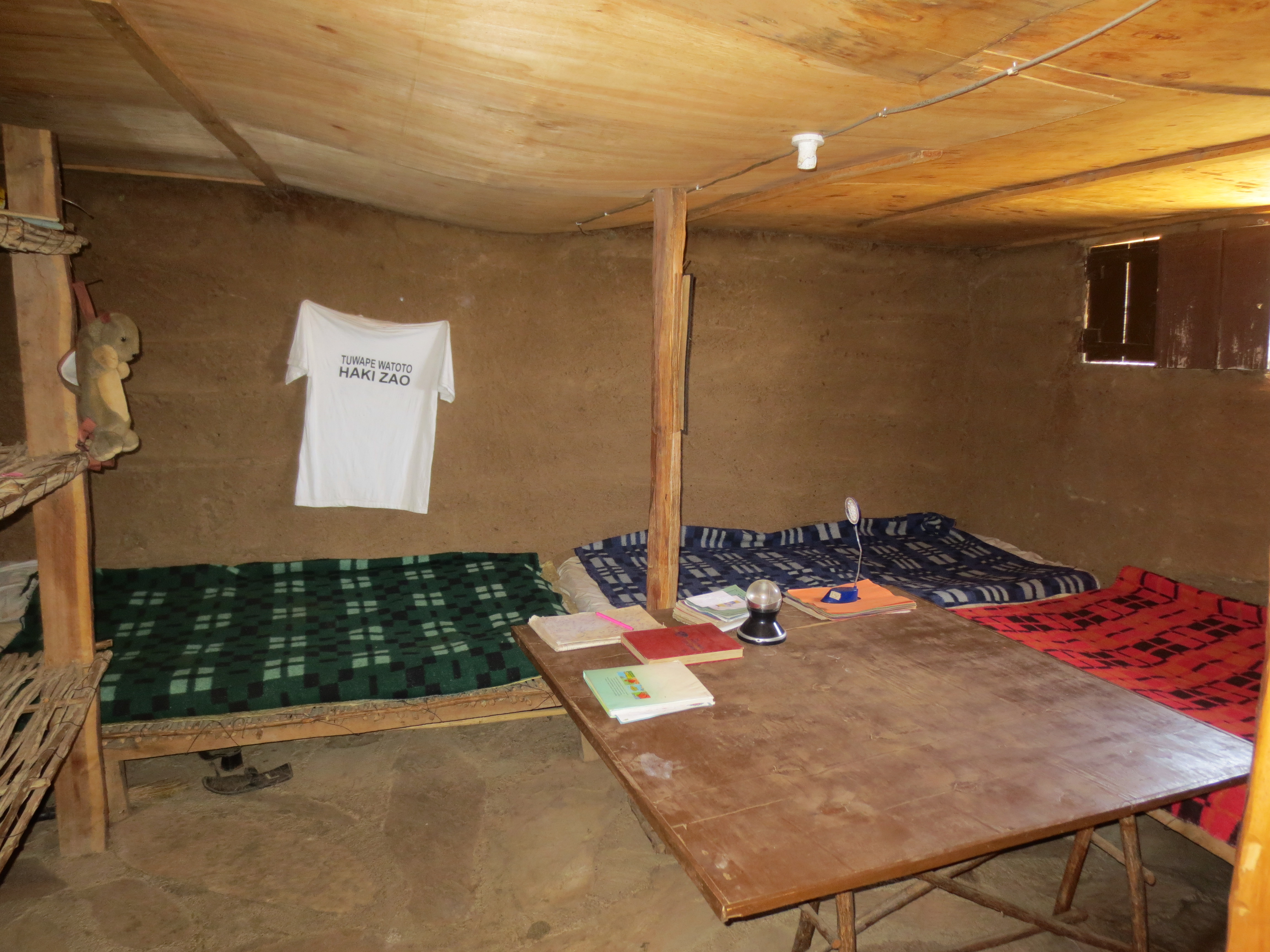
We were invited to see the inside of one of the homes – this is a very traditional Maasai house, with a low door and no windows.  Inside was a cook fire and two beds, one for the mother and young children and one for older children and any guests.  In addition, there was a space for the goats and young sheep.

IMG_1730

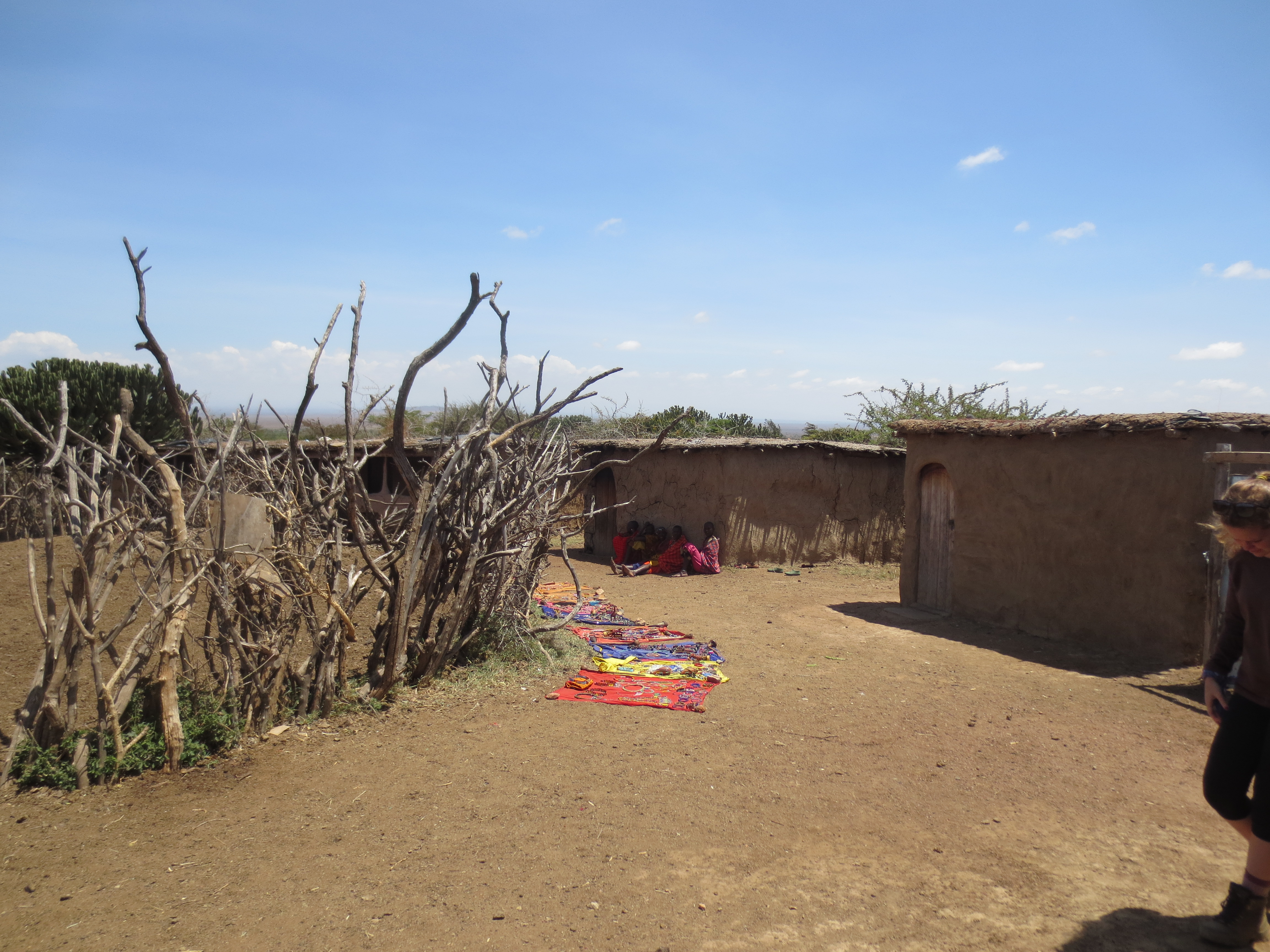
The women had spread all their wares out on individual shukas and we were invited to look and buy.  Everything was beautifully made.

IMG_1736

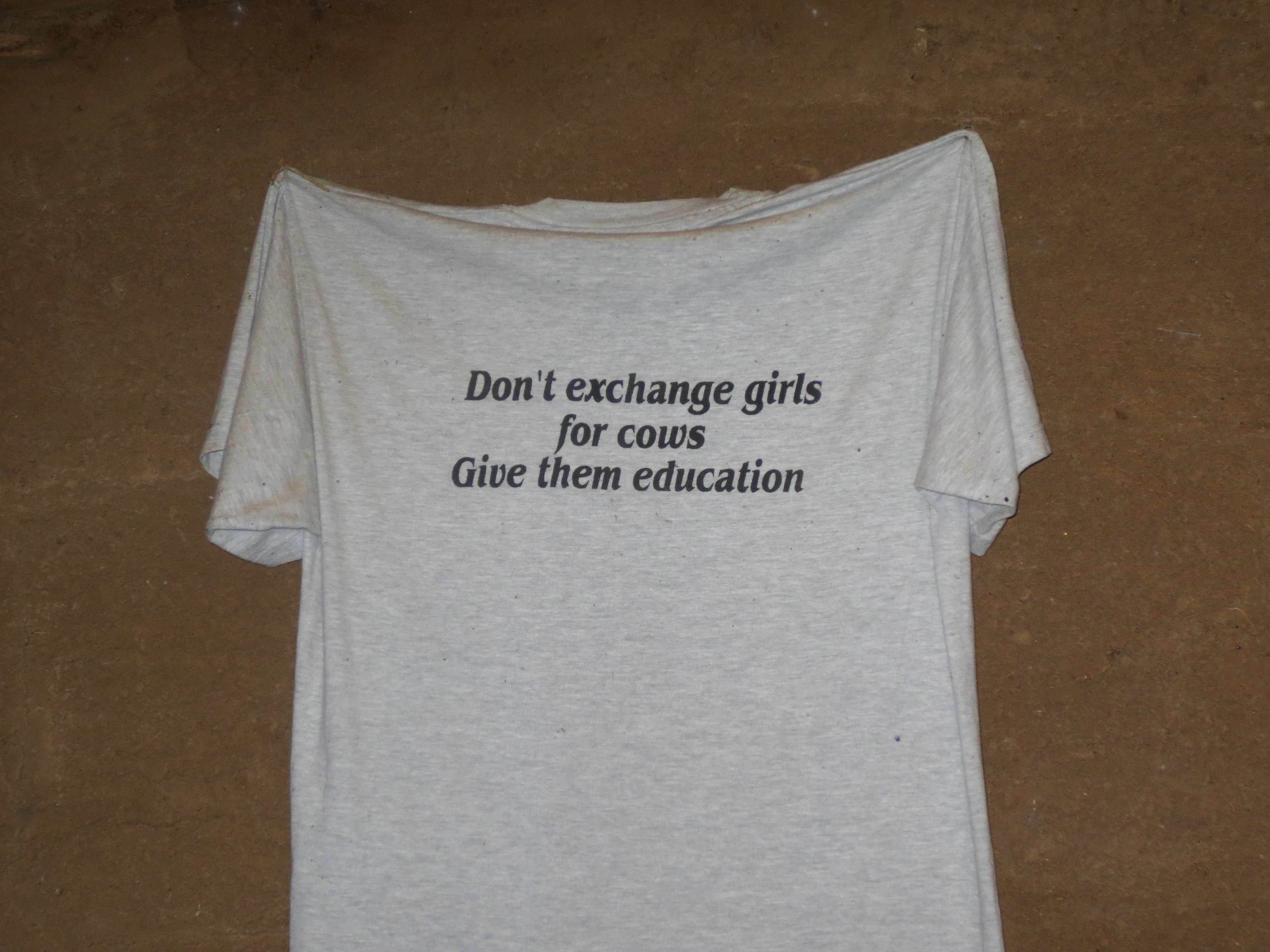
There is also a refuge center at the Widow’s Village.  This is for girls who are being forced into marriage or circumcision.  The girls can stay here safely and go to school.  After they have passed their secondary school exams, they are old enough choose their own husband and path in life and they can be reconciled with their families.

“I am not changing our culture,” Salaton told me.  “I am stopping harmful practice.  Many young girls are injured through FGM and some die when giving birth; and the babies die, too.  Far better for young girls to get an education that lasts forever than to be married off in exchange for a few cows that could die in a year.”

IMG_1735 IMG_1734

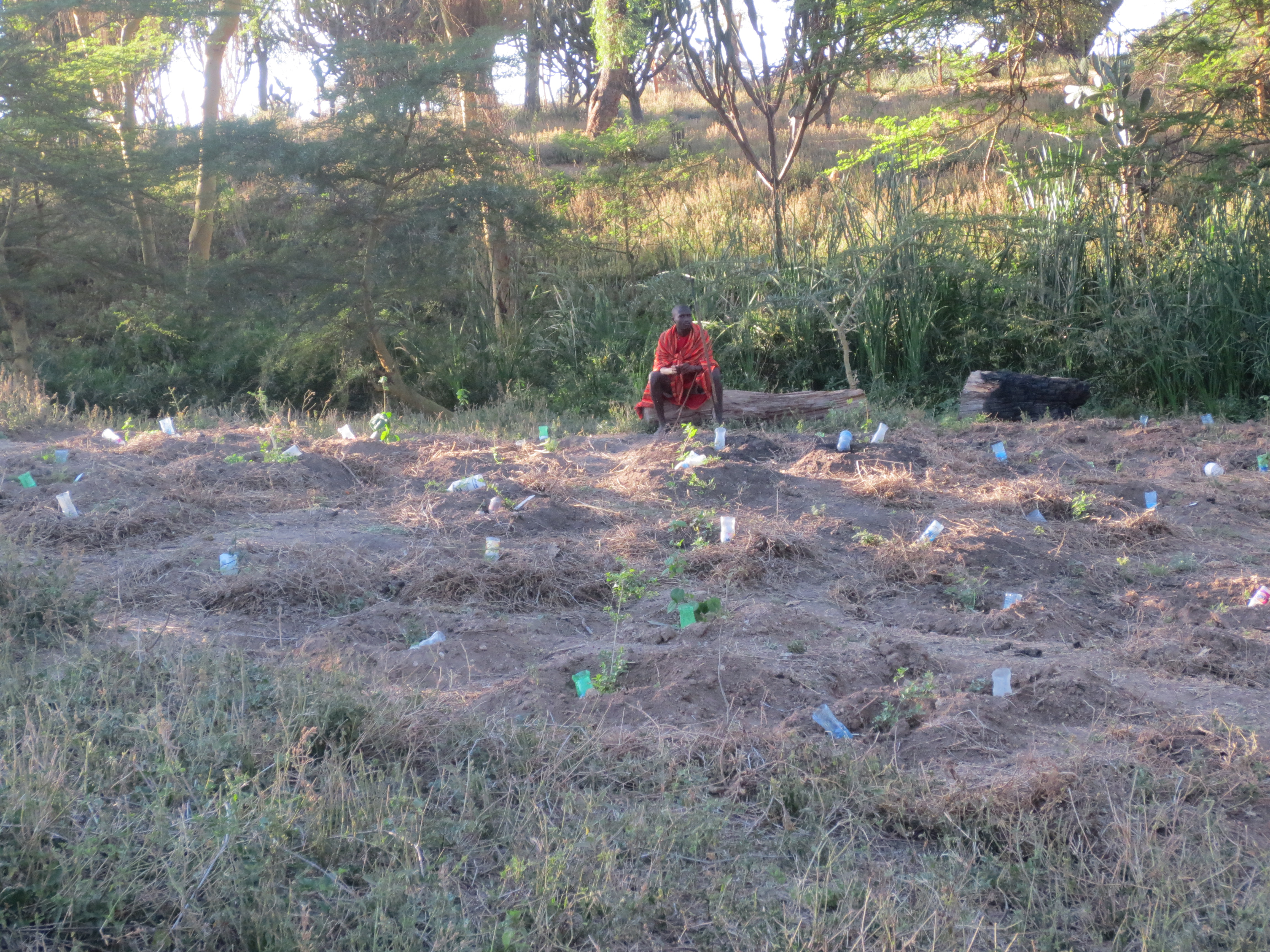
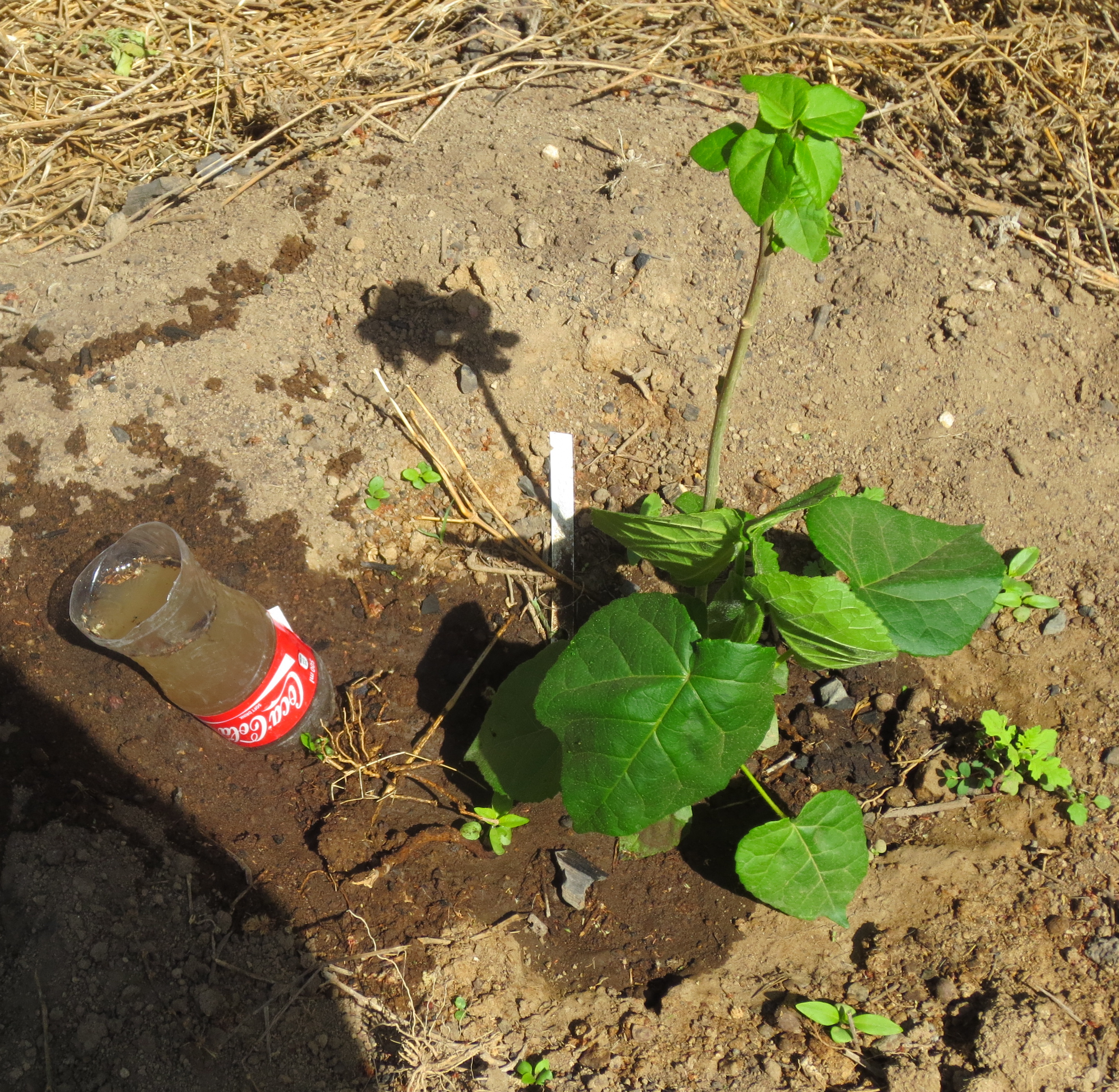
Another project in the works is a conservation plot.  Many trees have been cut down and burned to make charcoal, which is a cheap source of fuel.  However, for the Maasai, many plants and trees have holy or medicinal purposes…not to mention that they hold moisture and keep the soil from eroding.  Salaton has started a small plot with seedlings and Coila is their custodian.  Although he cannot read or write and speaks only Maa, (and some Swahili) he is an expert at caring for the plants.  We helped with the daily watering.

IMG_1705

IMG_1725 IMG_1722 IMG_1720 IMG_1718

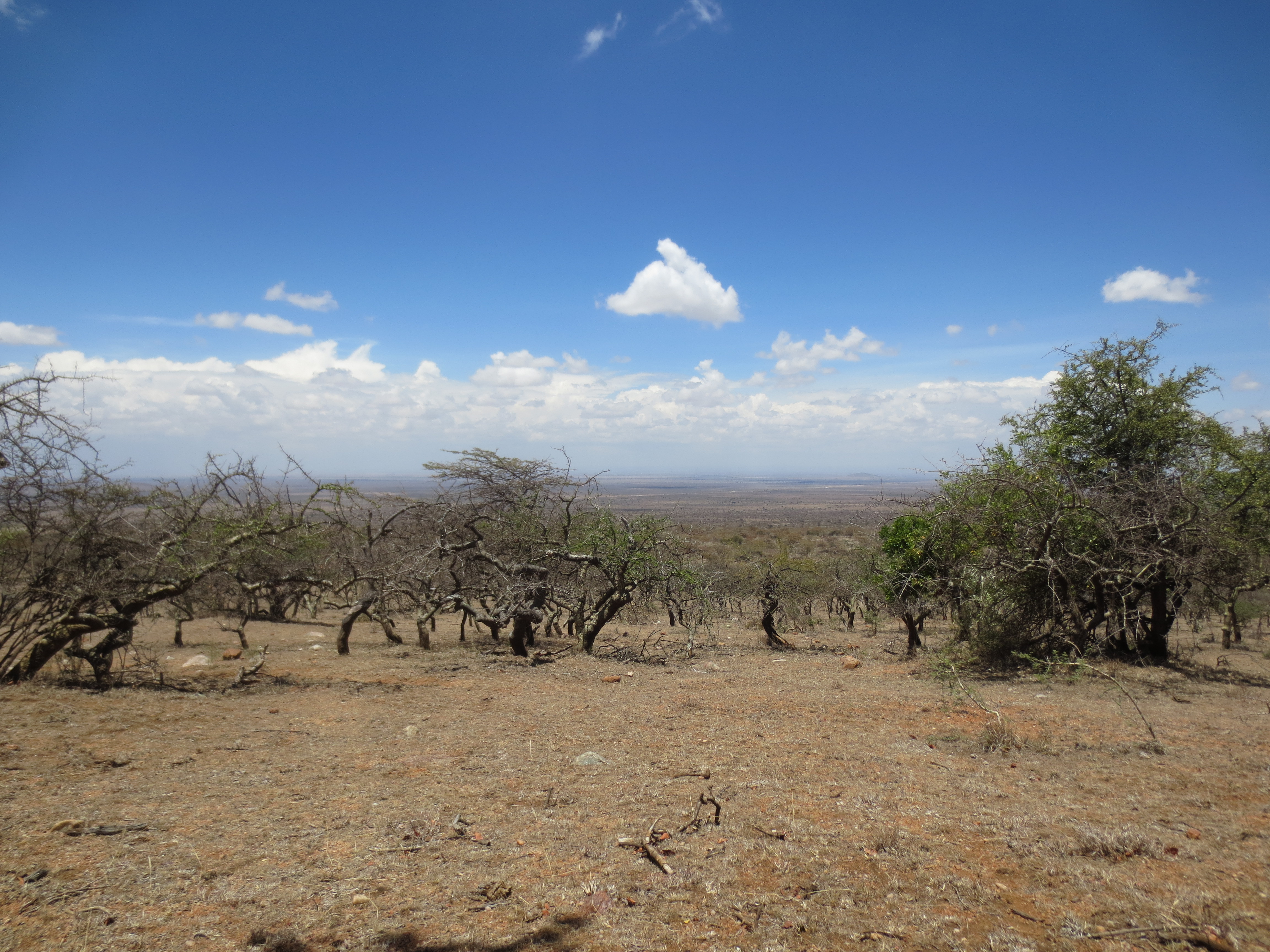
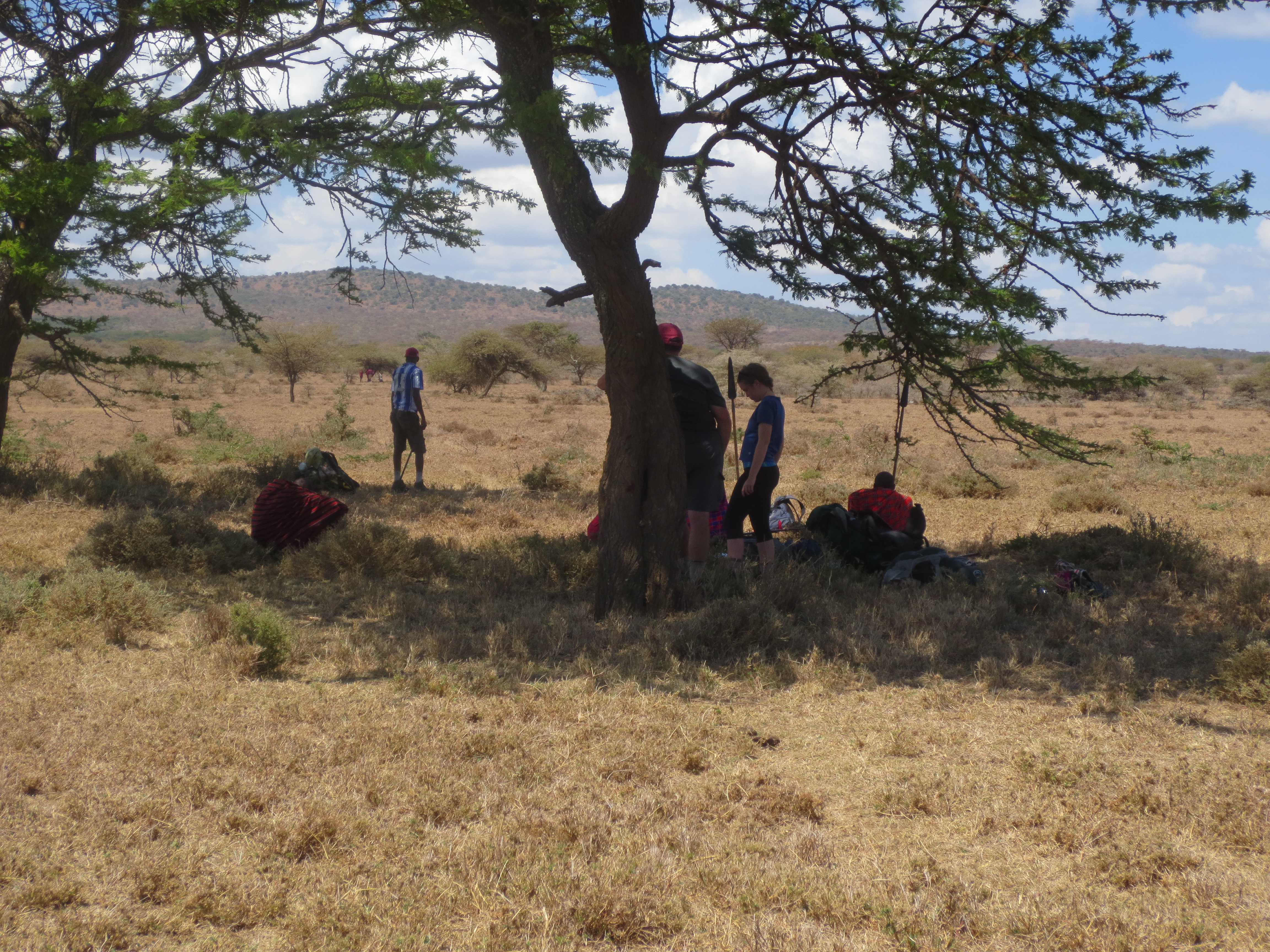
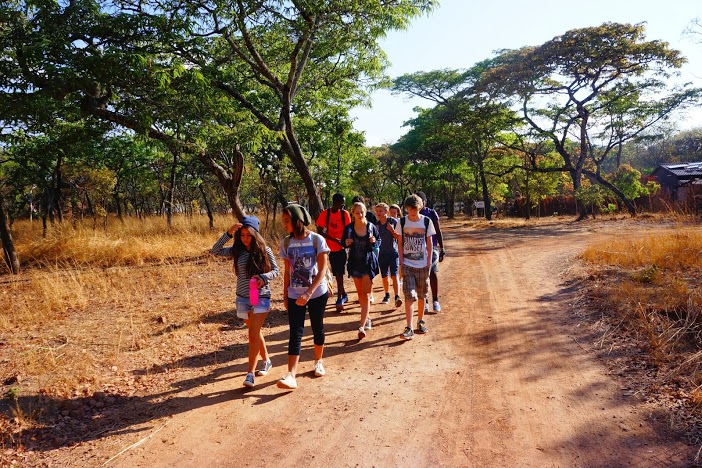
The next day, we packed for our walk.  Thankfully, we had several strong warriors to carry all the tents, sleeping bags, cookware and food!  It was hot and dry, but walking really gives you a great sense of the land and the surroundings.  We encountered other Maasai walking to get water, or caring for herds of goats or cows.   And we saw many small groups of mud houses…blending in with the land.

IMG_1774 IMG_1781 IMG_1780 IMG_1777 IMG_1782 IMG_1783 IMG_1784

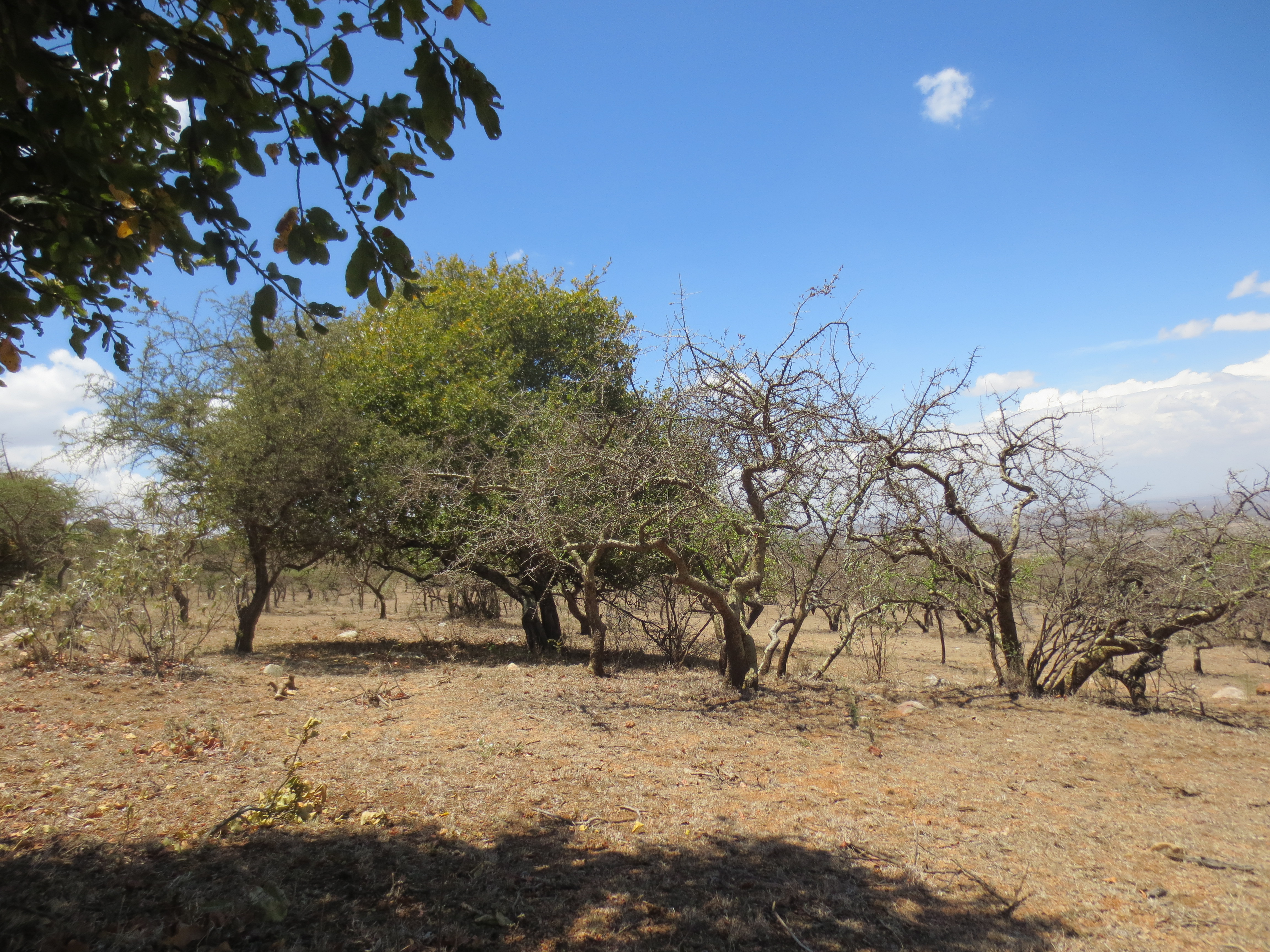
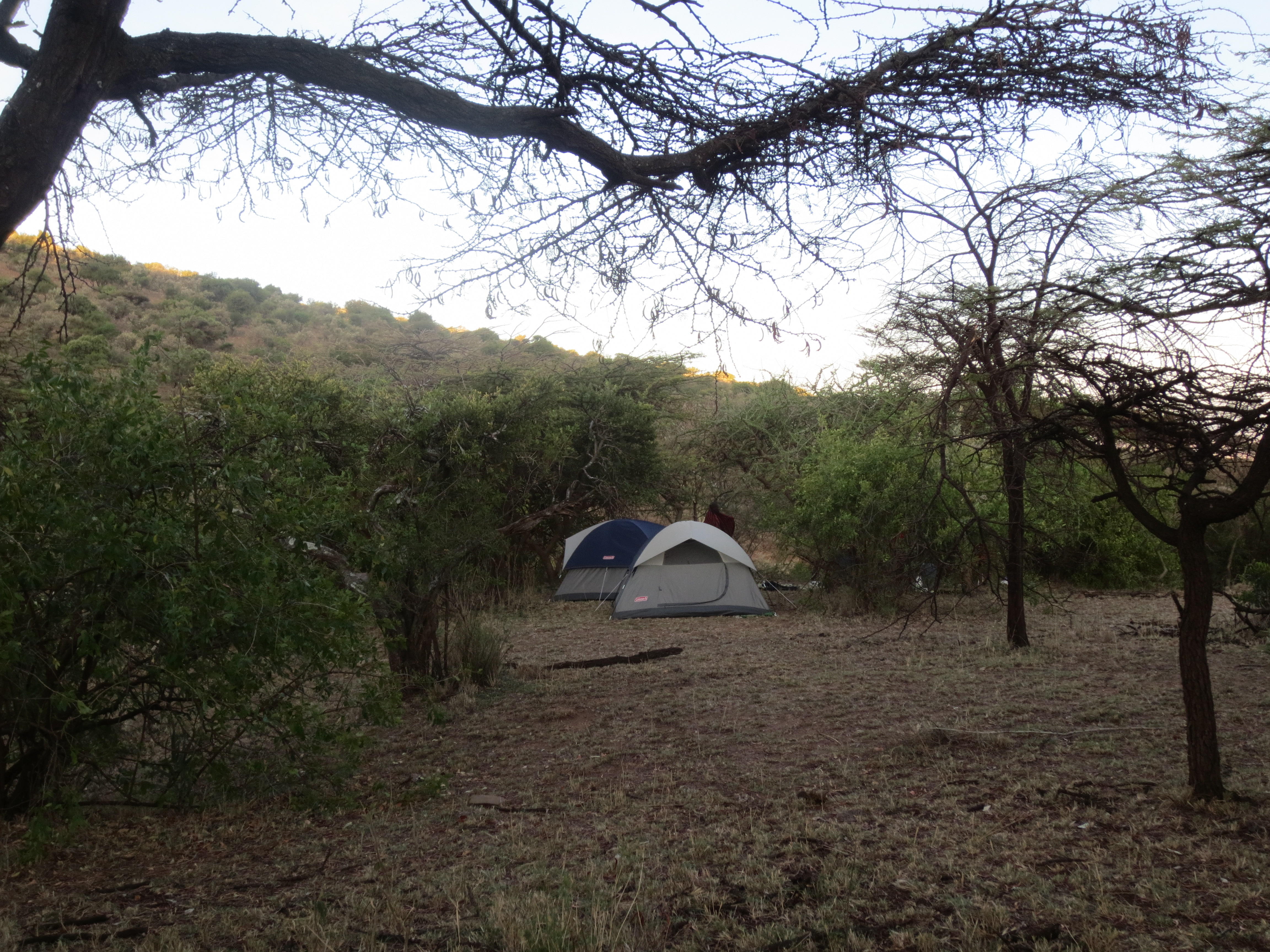
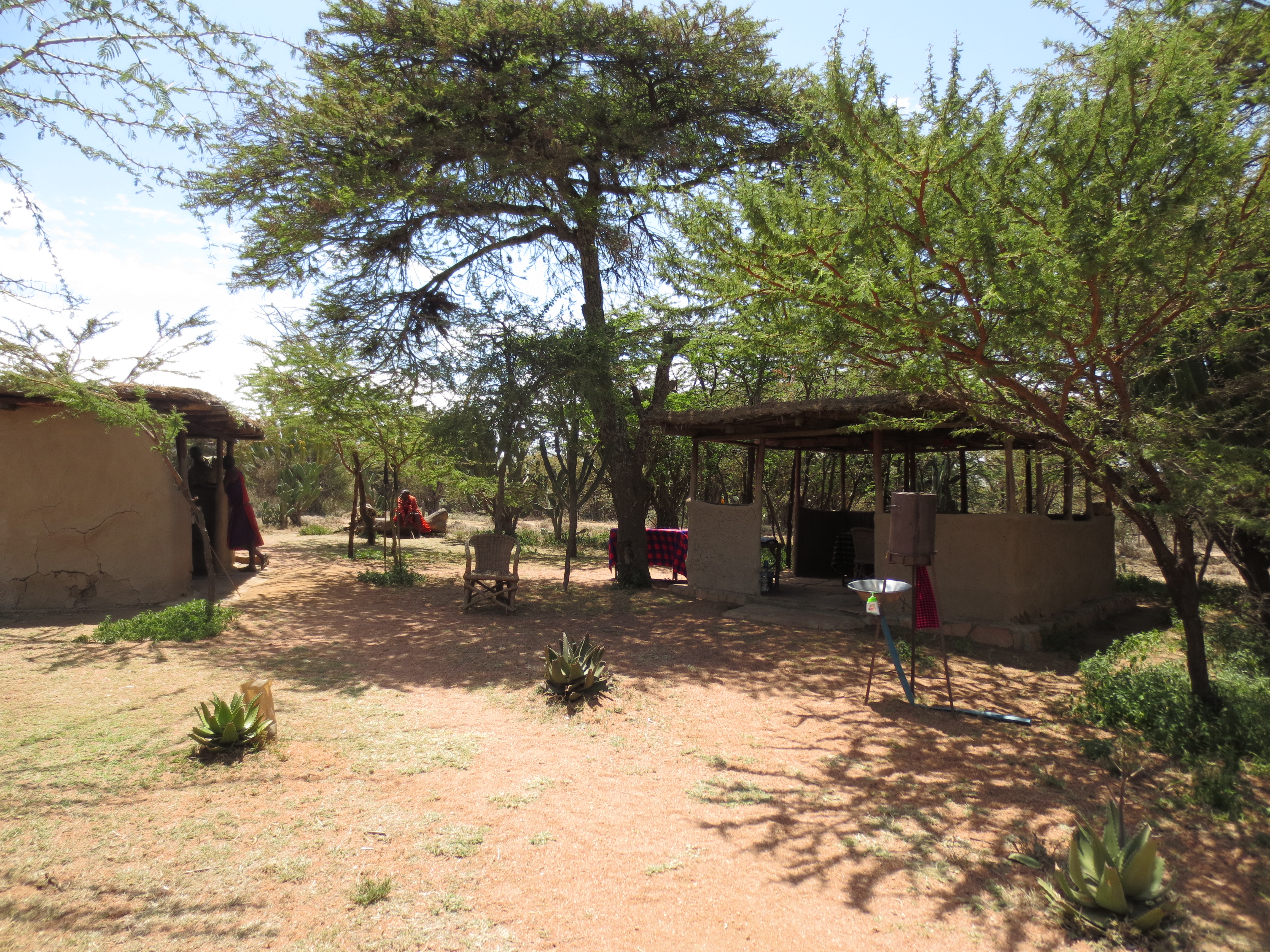
After about 6 hours of walking, Salaton declared that we had reached our campsite.  We collapsed, exhausted, while our warriors pitched the tents, made the fire and prepared afternoon tea.  (Seriously, we had tea and biscuits!)  We saw evidence of elephant, warthog, lion and other animals and heard the sounds of the bush around us.  It was a beautiful evening…and we even got some rain to cool things off later that night.
IMG_1795 IMG_1792 IMG_1788

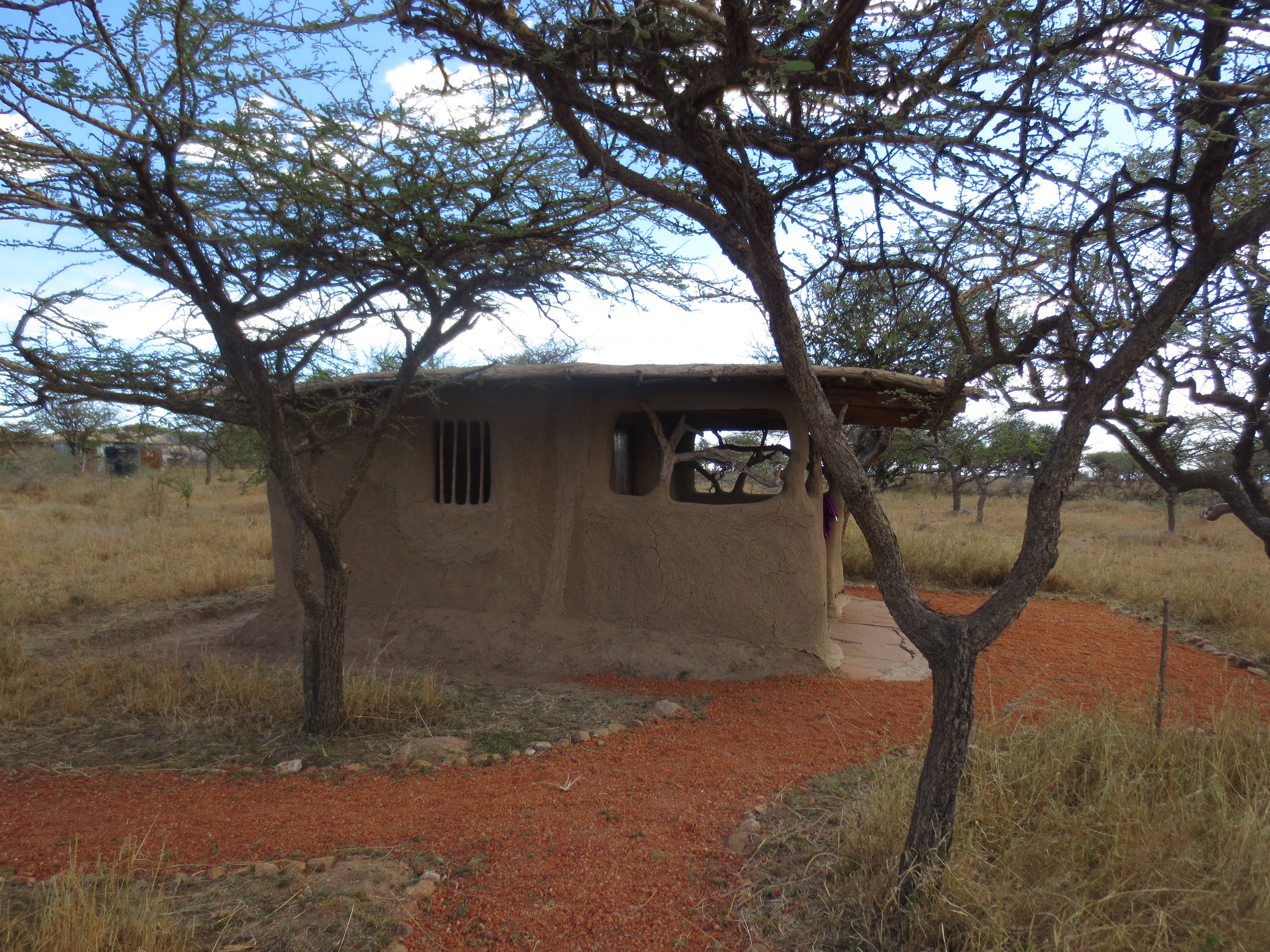
In the morning, we heard the distinct sound of a motorcycle…it was someone from the camp, with extra water for cooking and drinking.  I have no idea how he found us!  After breakfast, the warriors packed up and brought all the heavy equipment and supplies back to camp, while we walked on a bit further to a second camp, where we could have a proper shower and enjoy a night right on the plains.  This is a newer camp that also includes a widow’s village, again with land given by Salaton.  We had a delicious dinner and shared a bottle of wine, brought out by Hellen, an extraordinary woman with a hearty laugh who runs the camp, and also the school (which will be described in another post!)  I loved this camp – my little mud house looked right out onto the plains.  It was so peaceful and stunningly beautiful.

IMG_1803 IMG_1801 IMG_1798 IMG_1796

The next morning, I was picked up bright and early to drive into Masa Mara Game Reserve for my SAFARI!

IMG_1815

A week with the Maasai!

Standard

Map of Maasai camp


Maji Moto Maasai Cultural Camp

The Maasai are an ancient people with ancient traditions.  I read an article in the New York Times travel section about the “Maji Moto Maasai Cultural Camp” and I decided to spend my October break doing something…well, a bit different!

Through the Eyes of the Maasai 

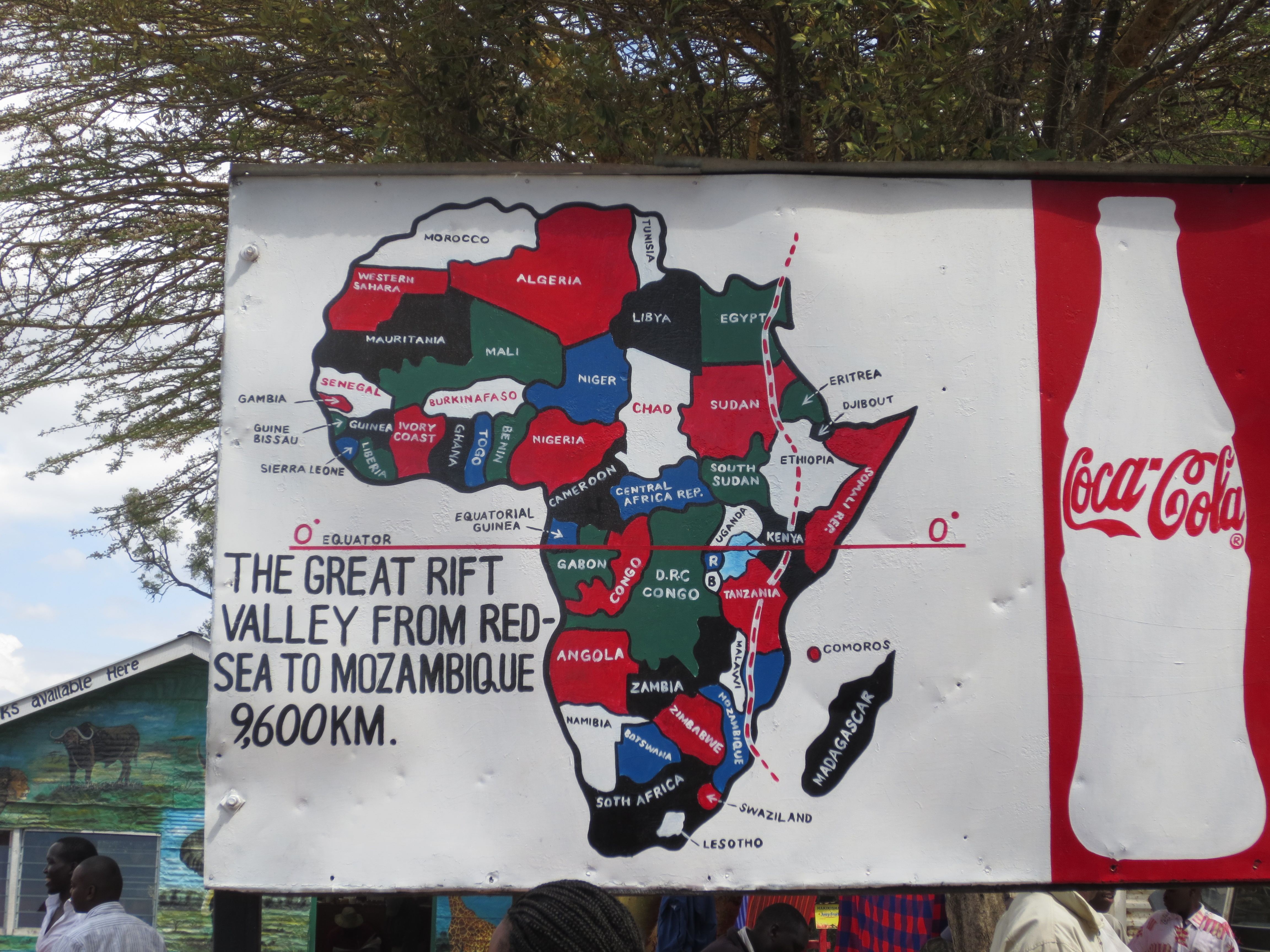
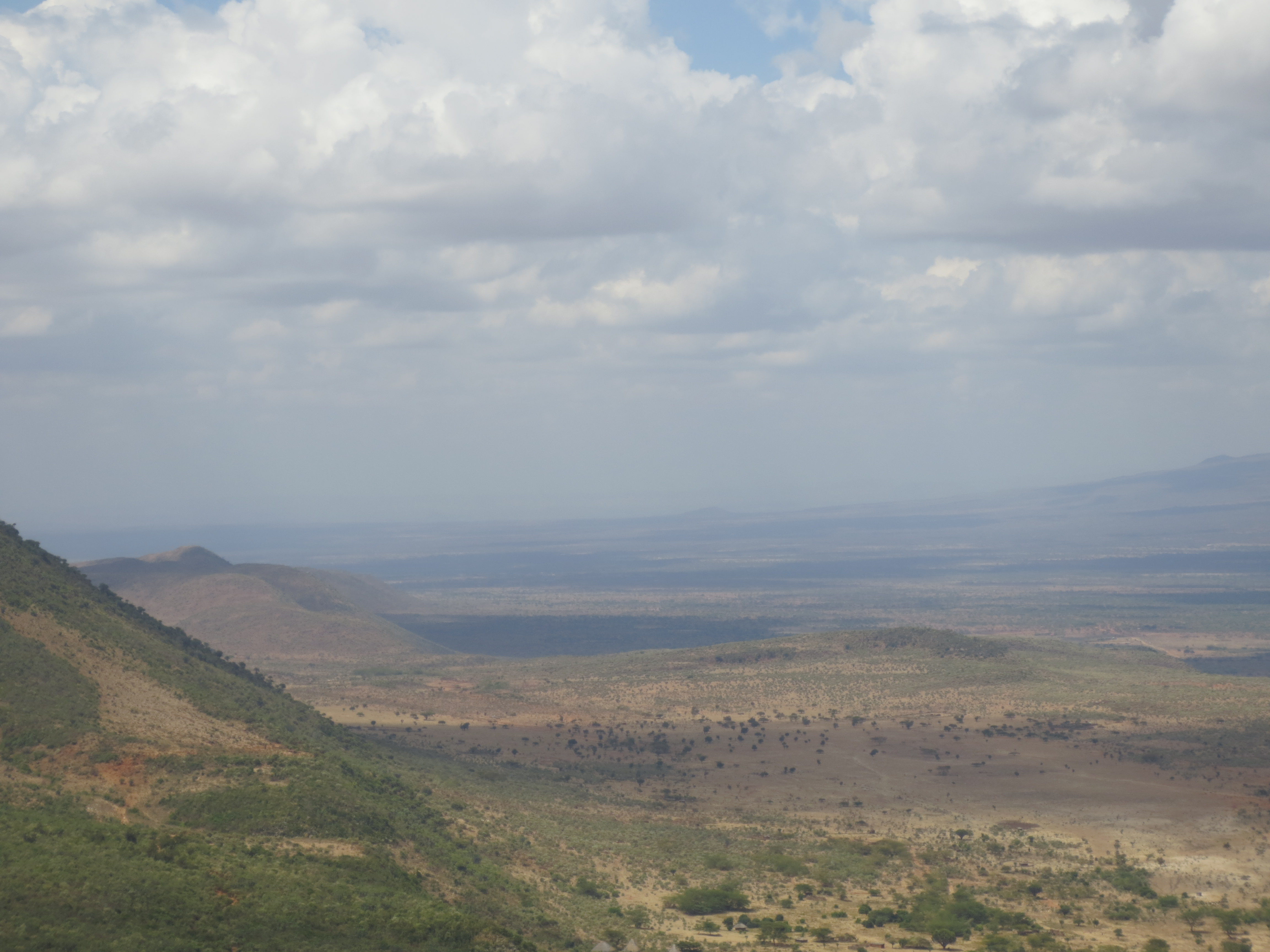
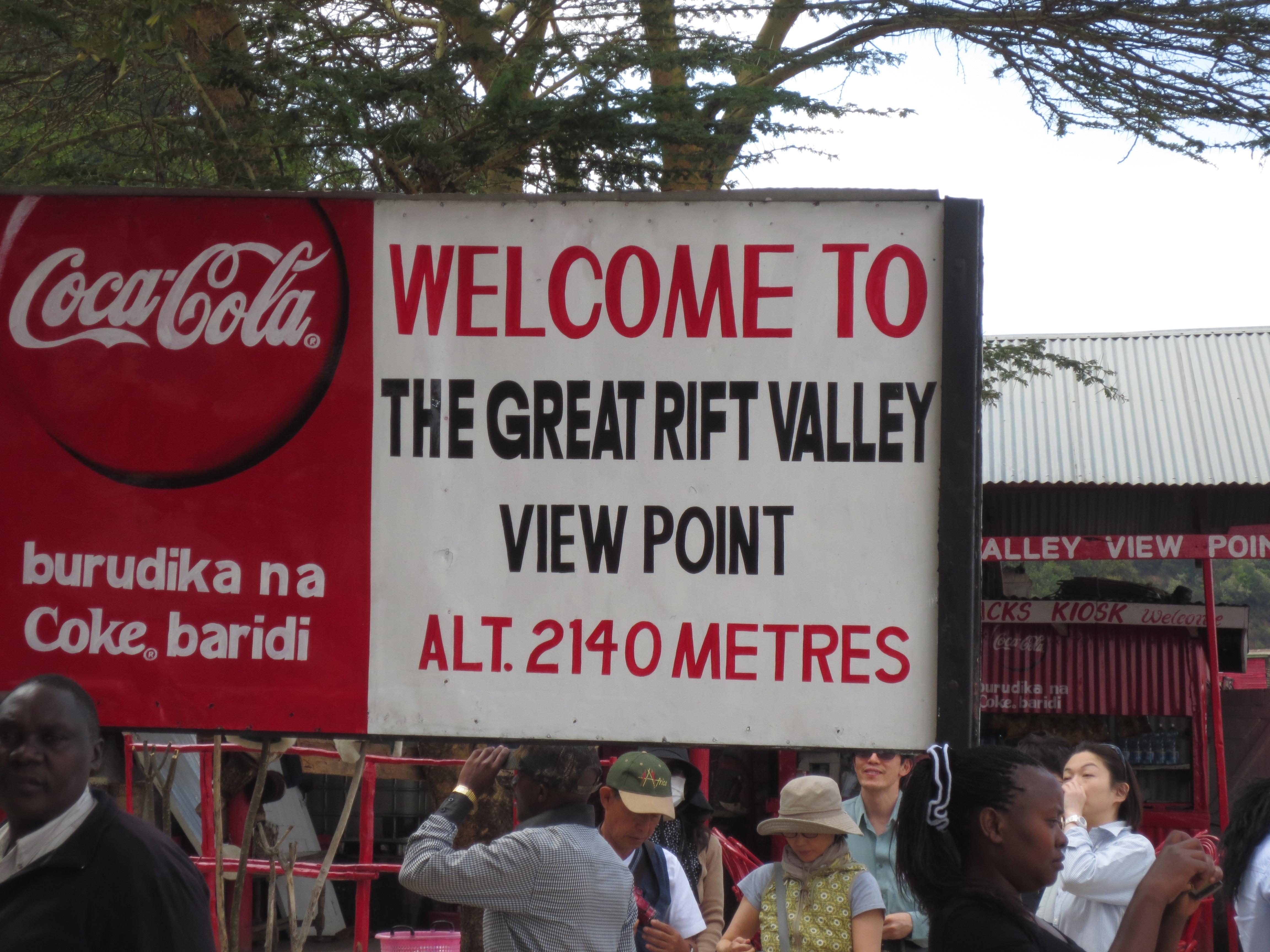
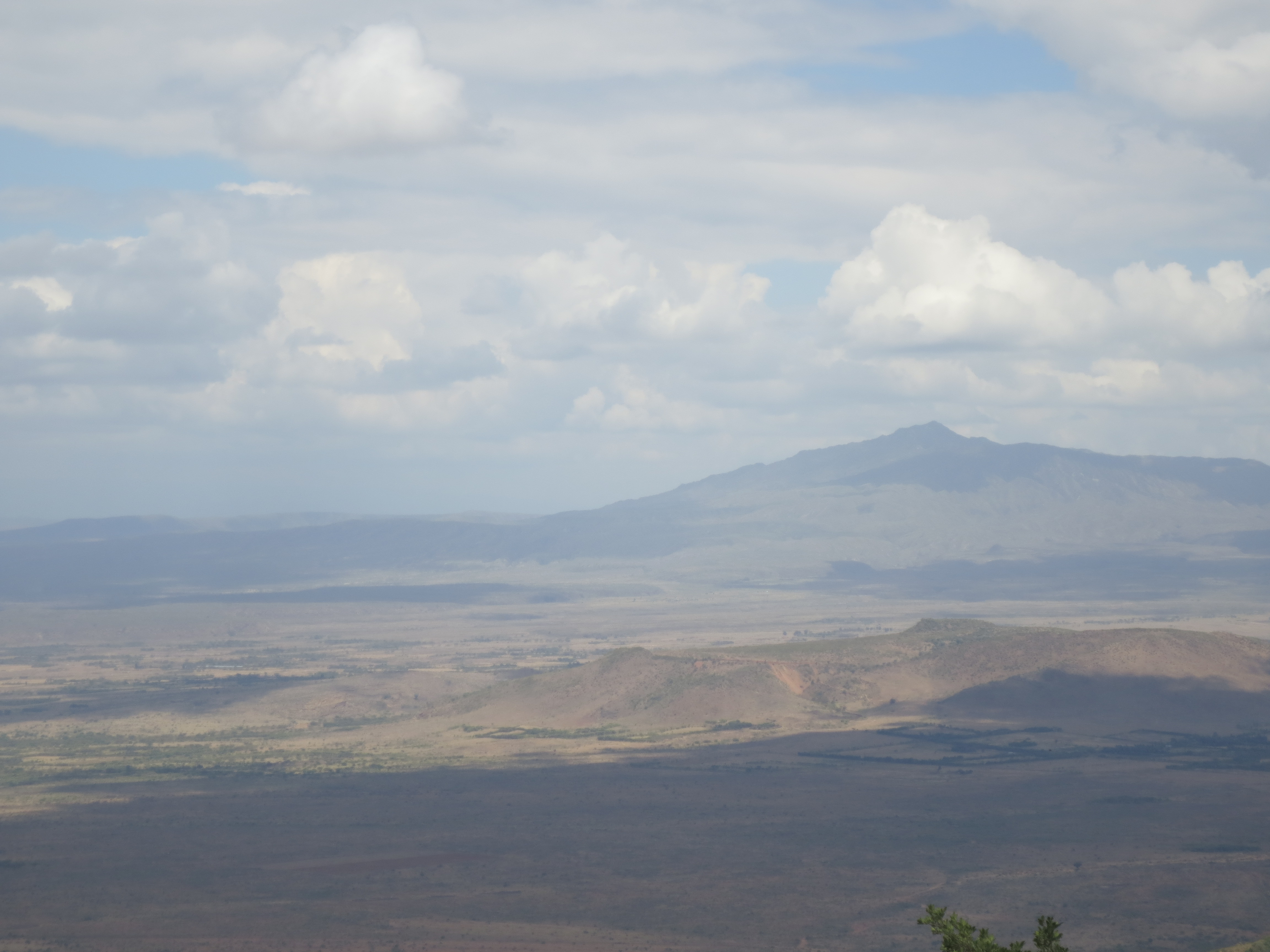
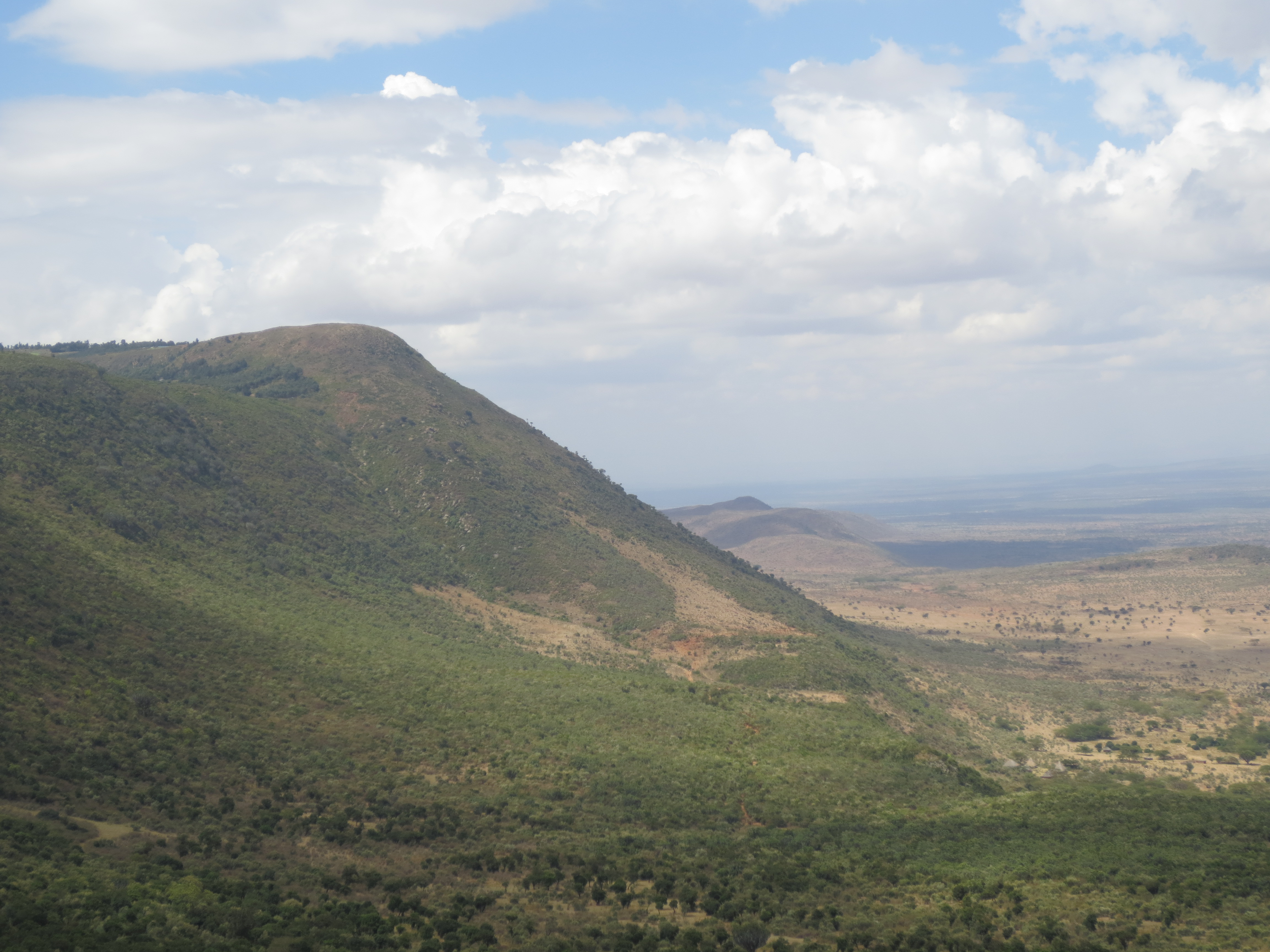
I got into Nairobi on Friday evening and was taken to a small hotel near the airport.  Nairobi is the capital of Kenya and a fairly developed city, with a number of sky-scrapers, a bustling downtown and huge traffic jams.  Tiampati, my Maasai driver, picked me up promptly at 9:00am for the 3 and a half hour drive to the camp, which is outside of Narok and just on the border of the Masa Mara game reserve.  We stopped at a viewpoint along the way at the Great Rift Valley, which extends almost 10,000 kilometers from the Red Sea all the way to Mozambique.

IMG_1598 IMG_1596 IMG_1595 IMG_1594 IMG_1593

There were many sight-seers at the rest stop…you could purchase crafts and souvenirs, tea or coffee and take pictures.  Some locals saw their opportunity and approached anyone who looked like a tourist (ie: any white person) to try to sell their wares.  One man kept appearing behind me and saying “Hakuna matata!” while pointing to the shop behind him.  Another man was selling roast corn on a stick (a very common road-side snack)  He would hold it up and shout “Yum yum!  Yum yum!” and was very persistent, even following me as I got into the car.  I politely declined, buying only a cup of tea.

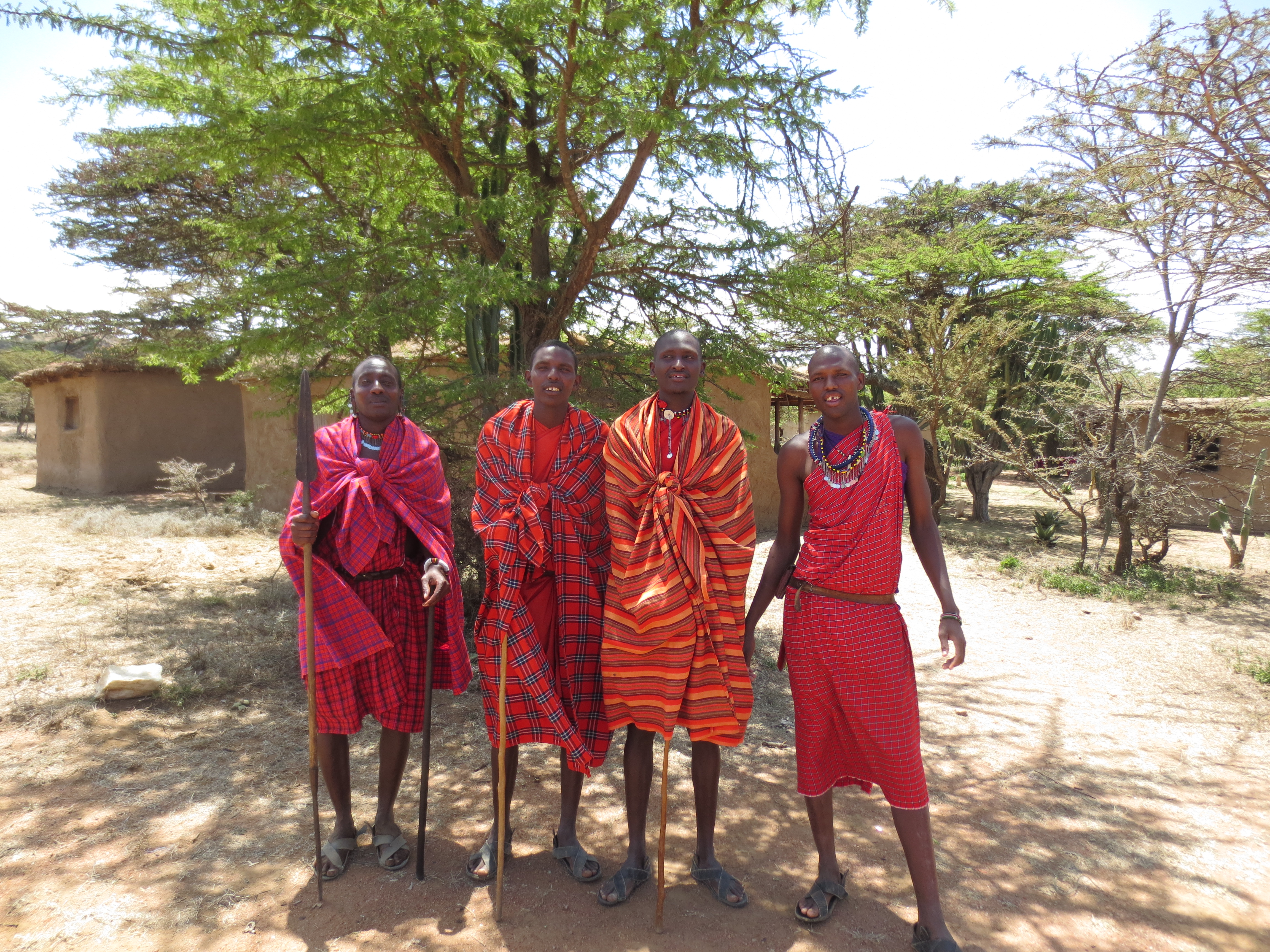
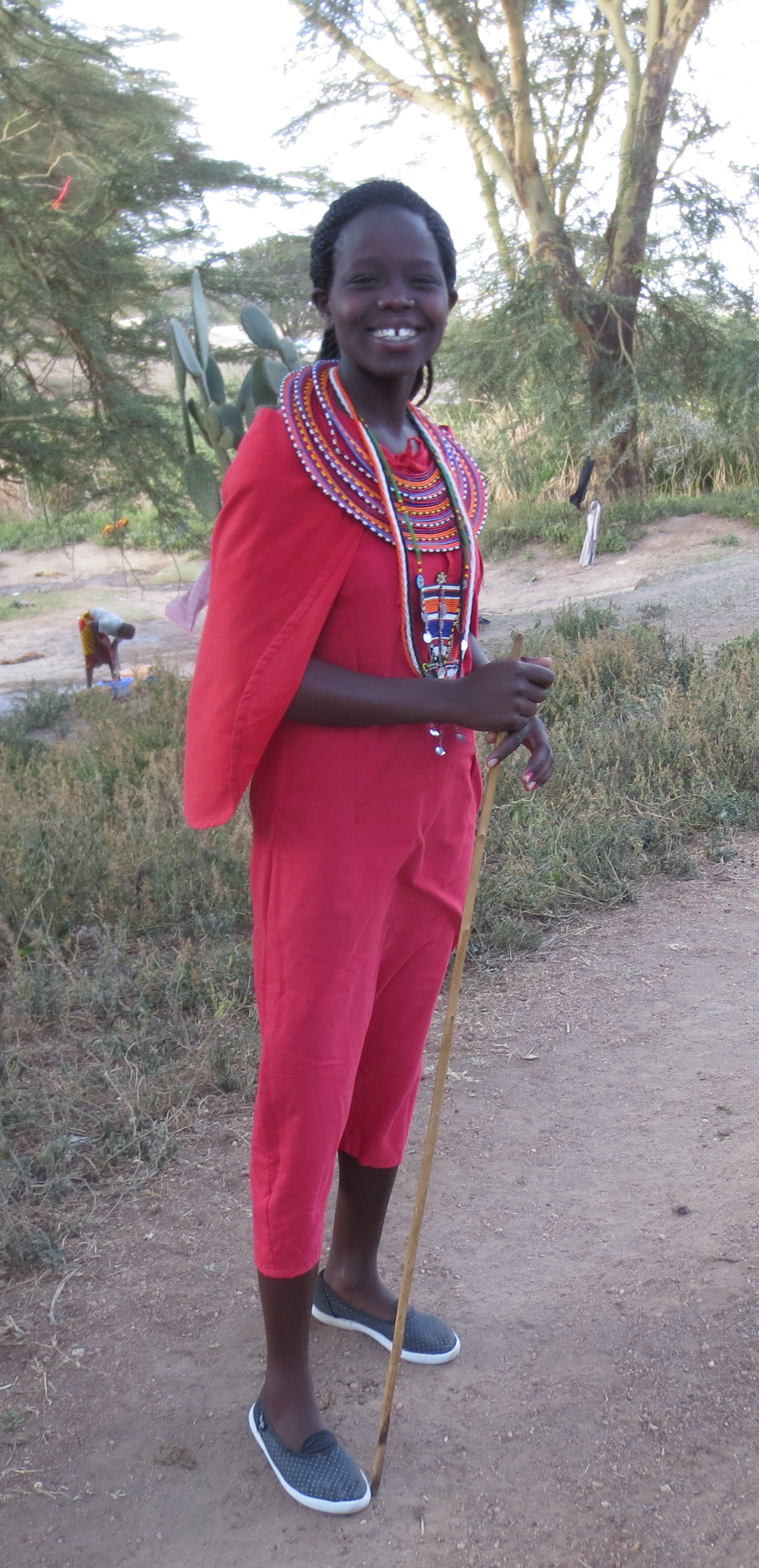
We continued onward through the valley and past tiny towns and wide open spaces.  Cows, goats and sheep were everywhere.  Finally, we reached the town of Narok; a fairly large town by Kenyan standards and the main town for many Maasai.  From here we turned onto a dirt road, which became incredibly bumpy and dusty…we were heading into the Mara.  After about 45 minutes, we turned at a small sign that said “Maji Moto Maasai Camp” and the road became even narrower.  Small groups of mud huts could be seen here and there and there were many flocks of goats and sheep, usually tended by a small boy.  Finally we arrived at the camp and were greeted by a group of Maasai warriors.  They sang and danced for me and I was given a shuka (traditional Maasai shawl)
IMG_1602 IMG_1603

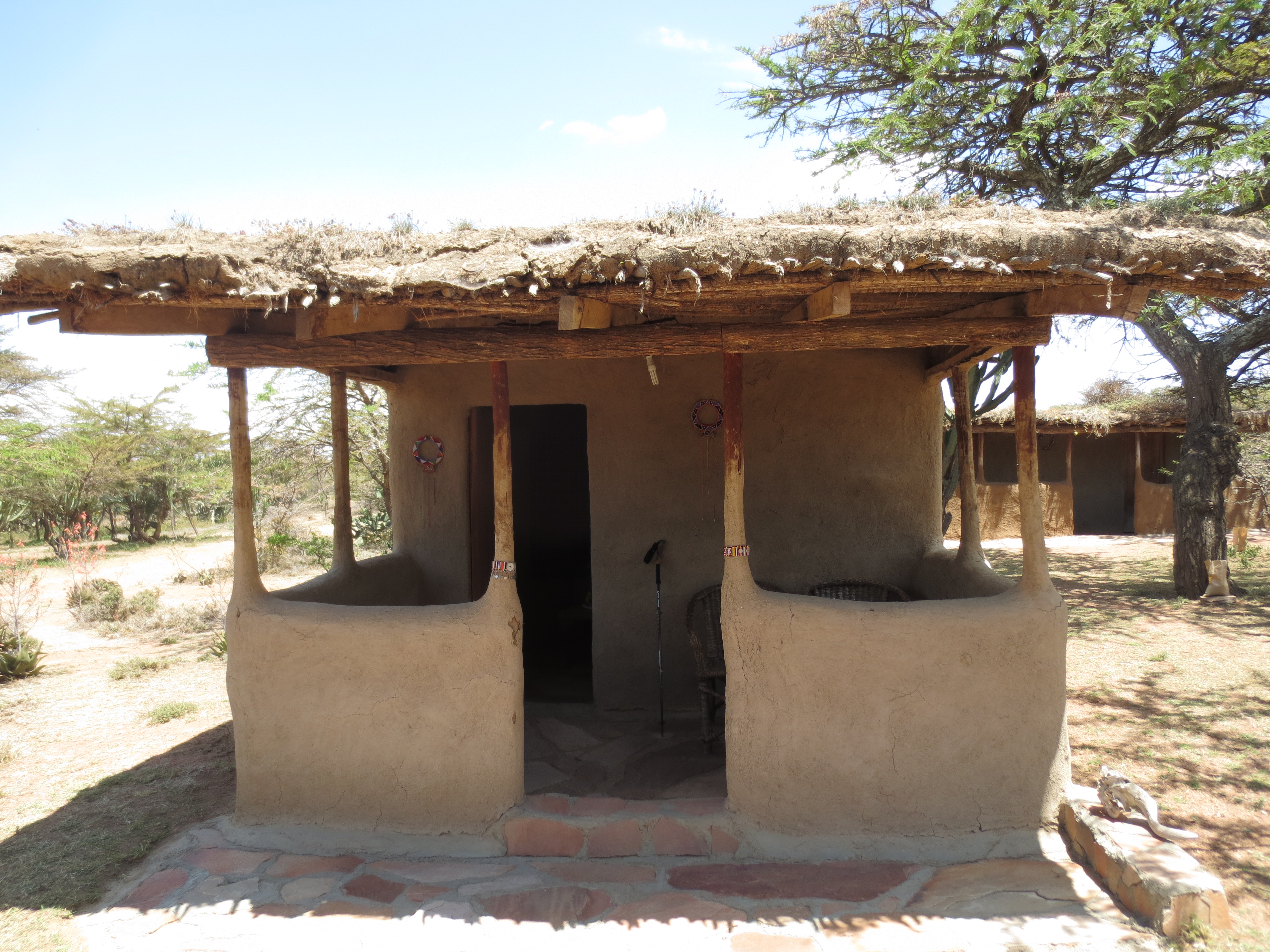
The camp consisted of several buildings, all constructed in the traditional manner of mud, ashes, cow dung and timber.  These had been “westernized” in that they had windows, stone floors and a door you could walk through (rather than crawl.)  They were quite cool inside and very comfortable.

IMG_1608 IMG_1614 IMG_1606

There was a wash-station and a toilet and outdoor shower, which was filled from the hot springs of Maji Moto (which means, literally, “Water Fire”)  Everything was very clean and neat and it really felt like you belonged to the earth.

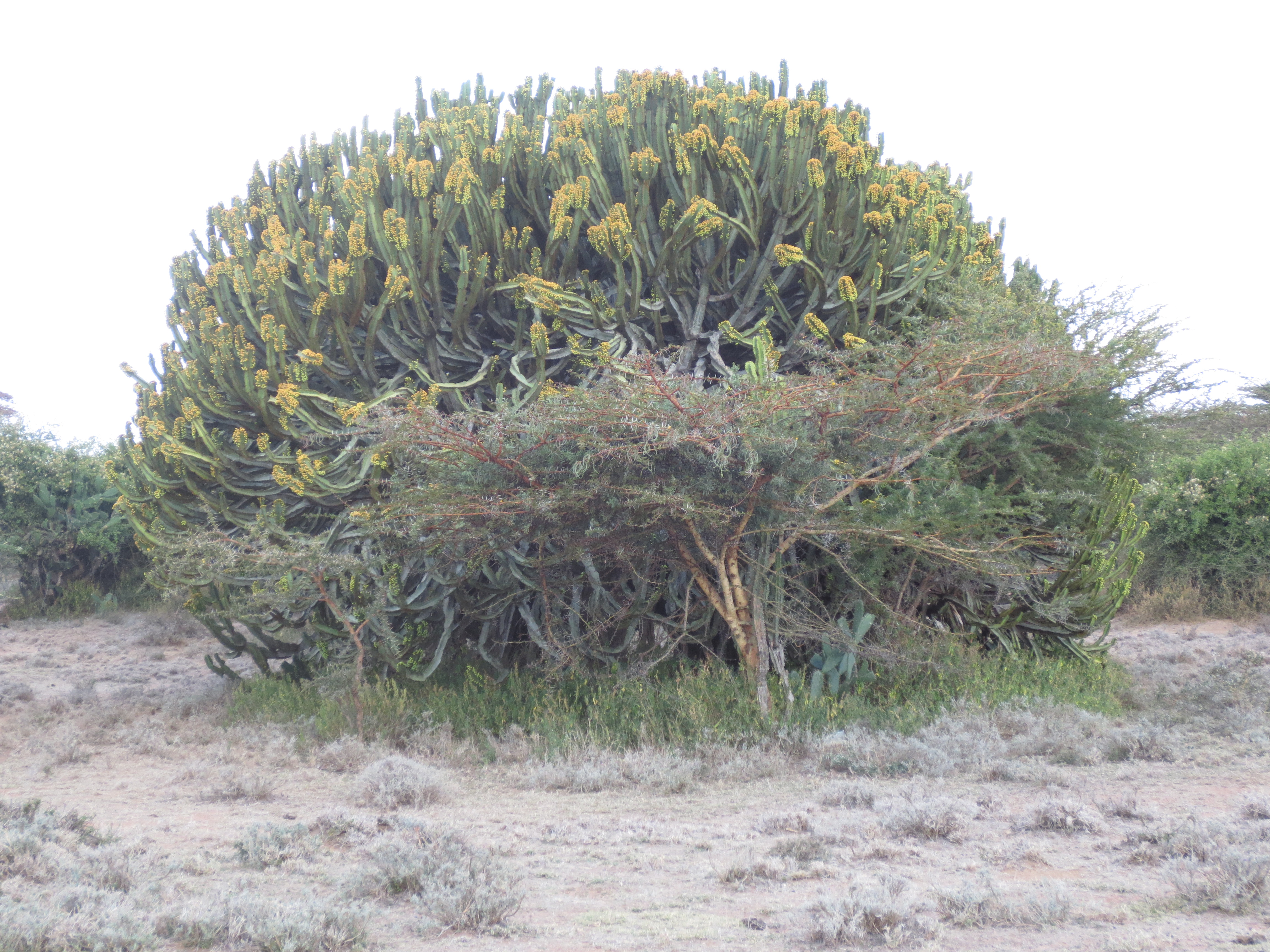
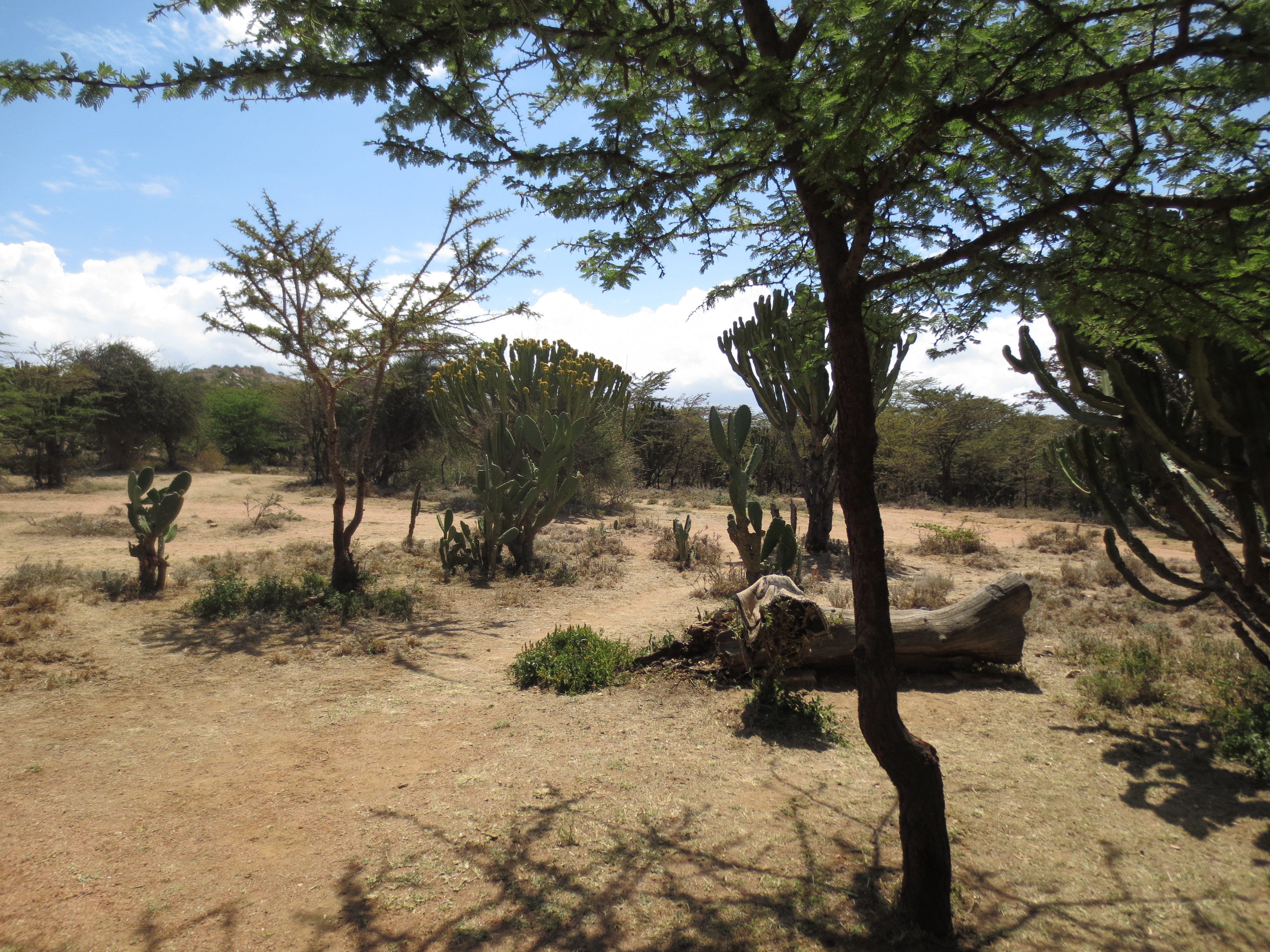
There were many plants and trees and animals around the camp and you could see the Loita Hills rising above you.  All the food was cooked in the outdoor kitchen on a wood fire and was simple and delicious.
IMG_1697 IMG_1695 IMG_1634

IMG_1620 IMG_1612 IMG_1616 IMG_1617

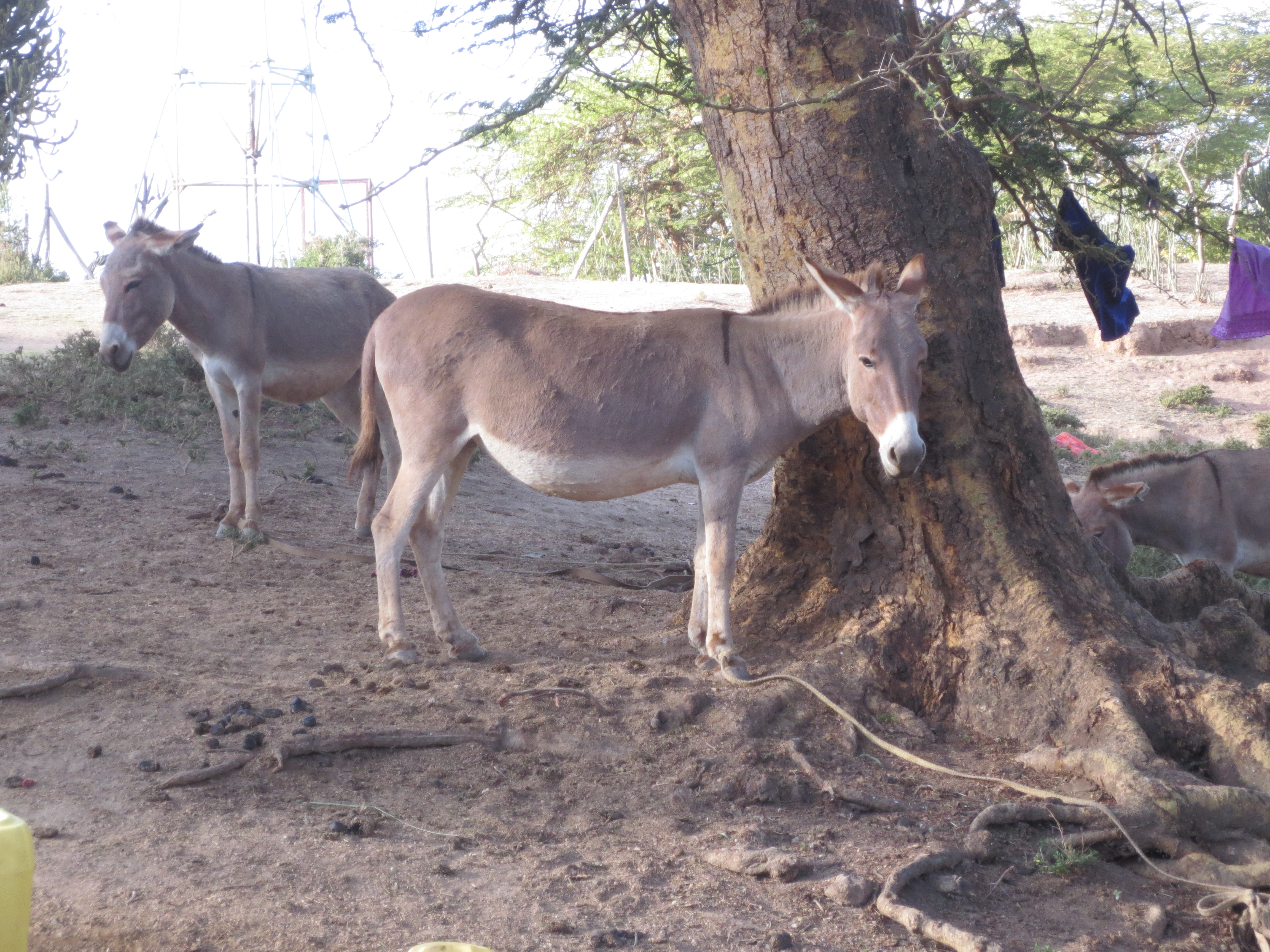
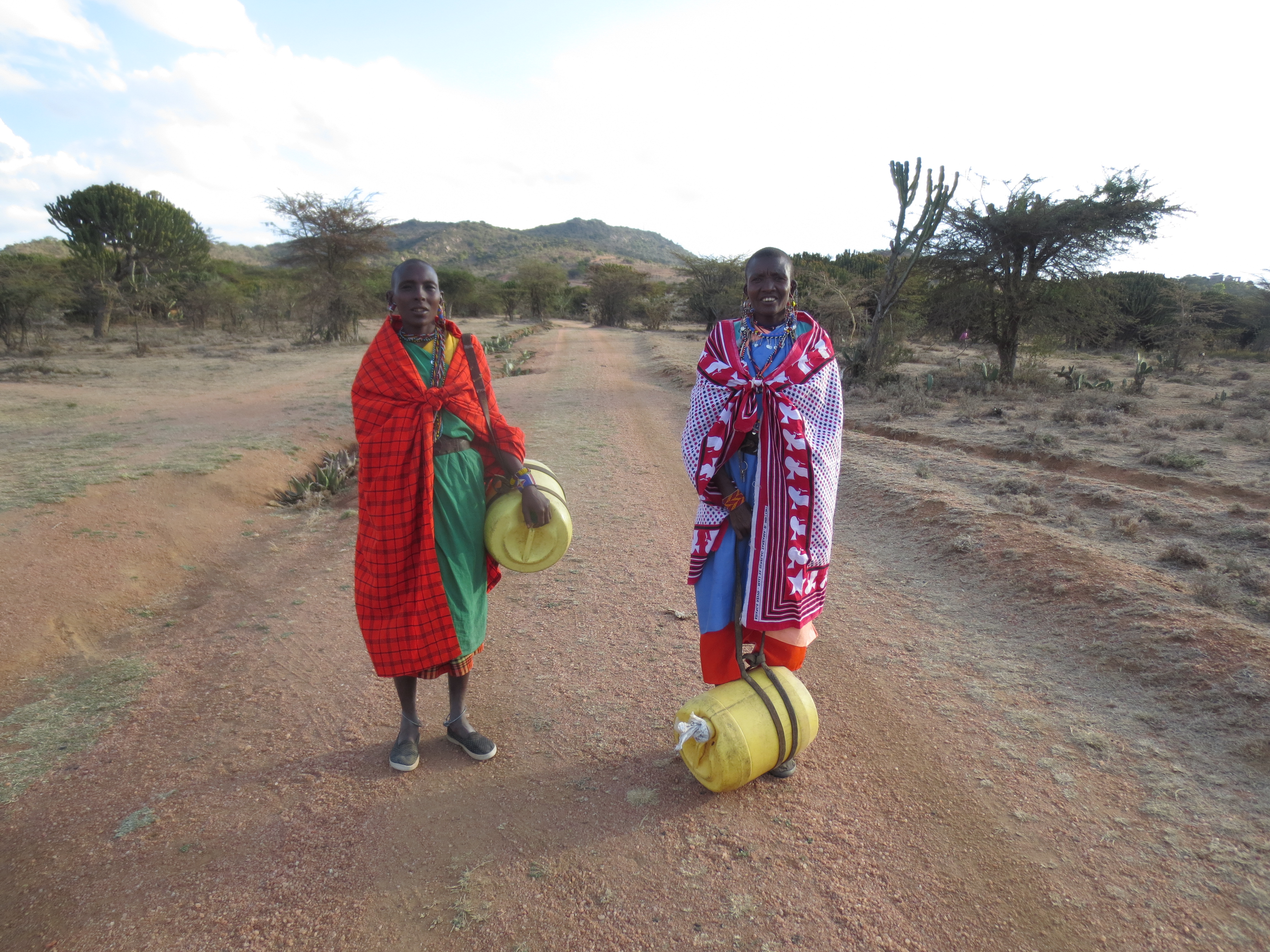
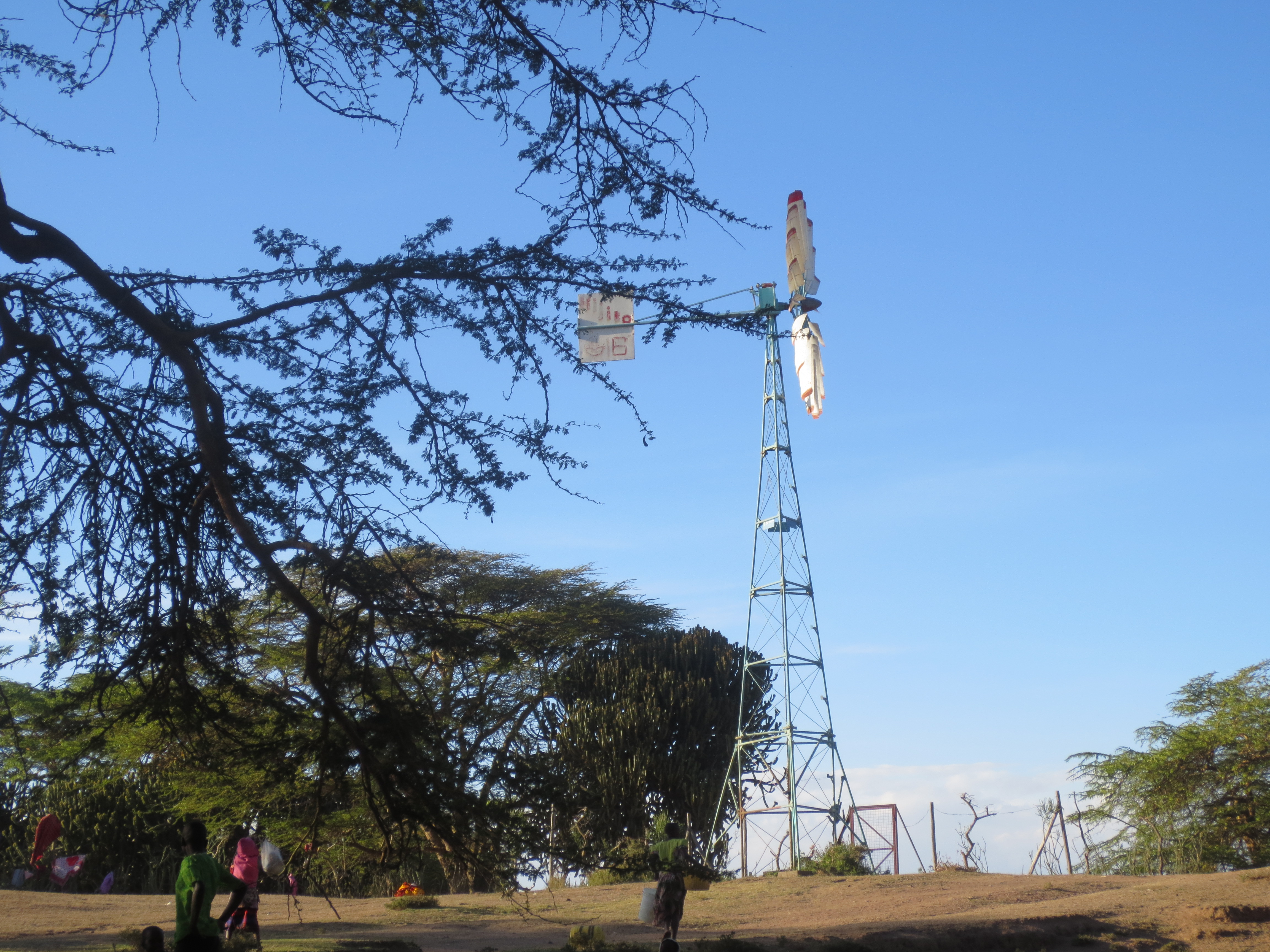
I walked down to the hot springs with Rose, one of the volunteers at the camp.  There is a large windmill that pumps the water for two communal showers there (one for men, one for women.)  The women come to fill their water barrels – huge plastic containers that they carry with a strap around the forehead back to their village (sometimes several miles away.)  Some people have a donkey or two to carry more water. Clothes-washing is done here as well, and there is a watering hole for the animals a bit downstream where the water is cooler.

IMG_1622 IMG_1623 IMG_1624 IMG_1626 IMG_1698

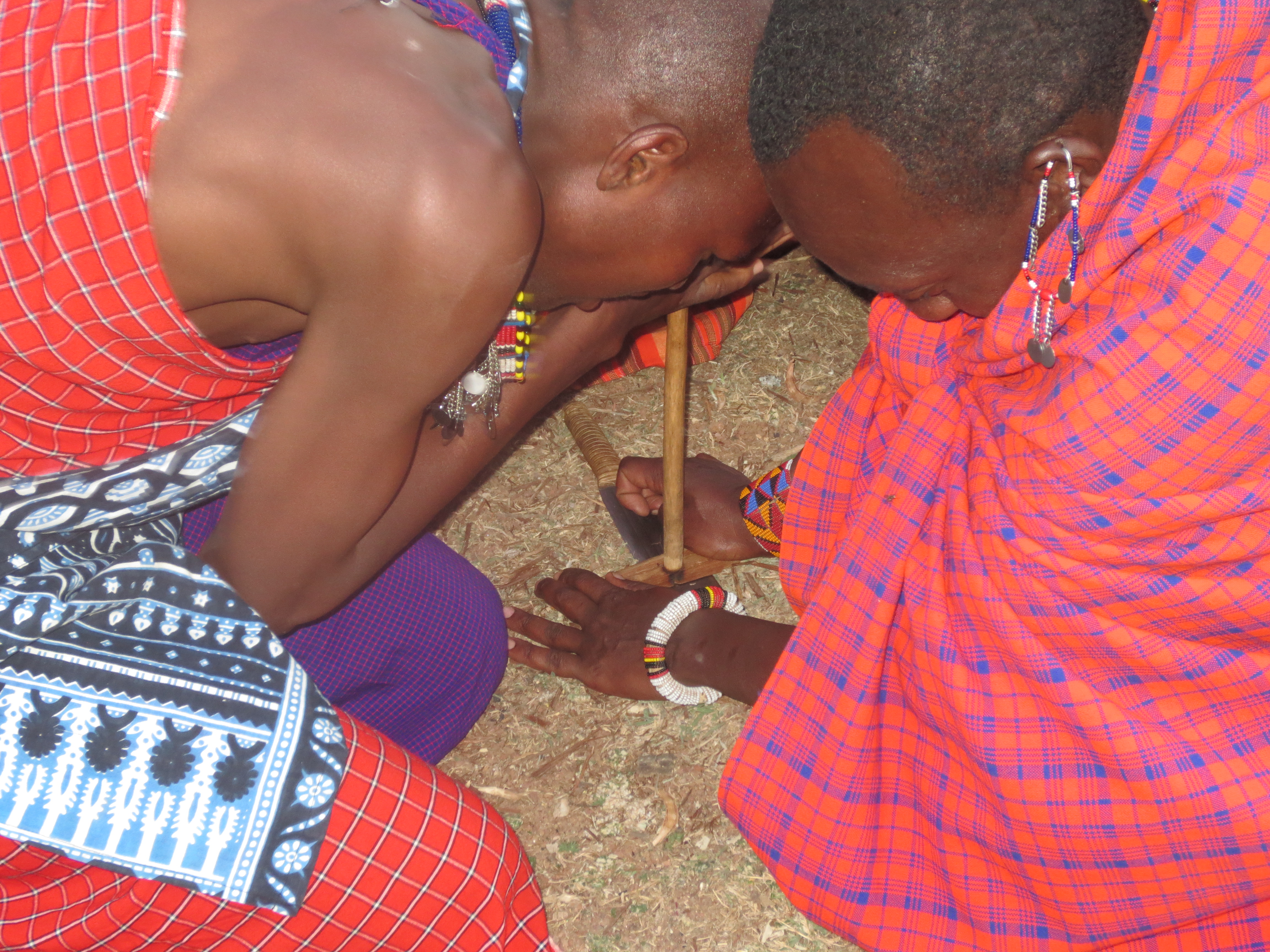
That night, the warriors demonstrated how they traditionally started a fire, using a stick and a piece of tinder.  They twirled the stick in their hands, rubbing it against a flat piece of wood with the tinder underneath and their machete under that.  When the tiny tinder was lit, they would carefully transfer it to a larger clump of dry cedar shavings and then gradually add wood until the fire was blazing.

IMG_1629 IMG_1633

That first night, I sat around the fire with four Maasai warriors.  The stars came out one by one and the warriors sang traditional songs.  Most of the songs were a kind of chanting call-and-response and most were about cattle and women.

In the Maasai traditional religion, their god Enkai stretched a long piece of bark from heaven and all the cattle were able to walk down to earth on it.  Enkari gave all the cattle to the Maasai.  A jealous  god broke the bark and so young Maasai warriors often jump as high as they can to try to reach the cattle still up in heaven.  Apparently, high jumpers also attract young women.

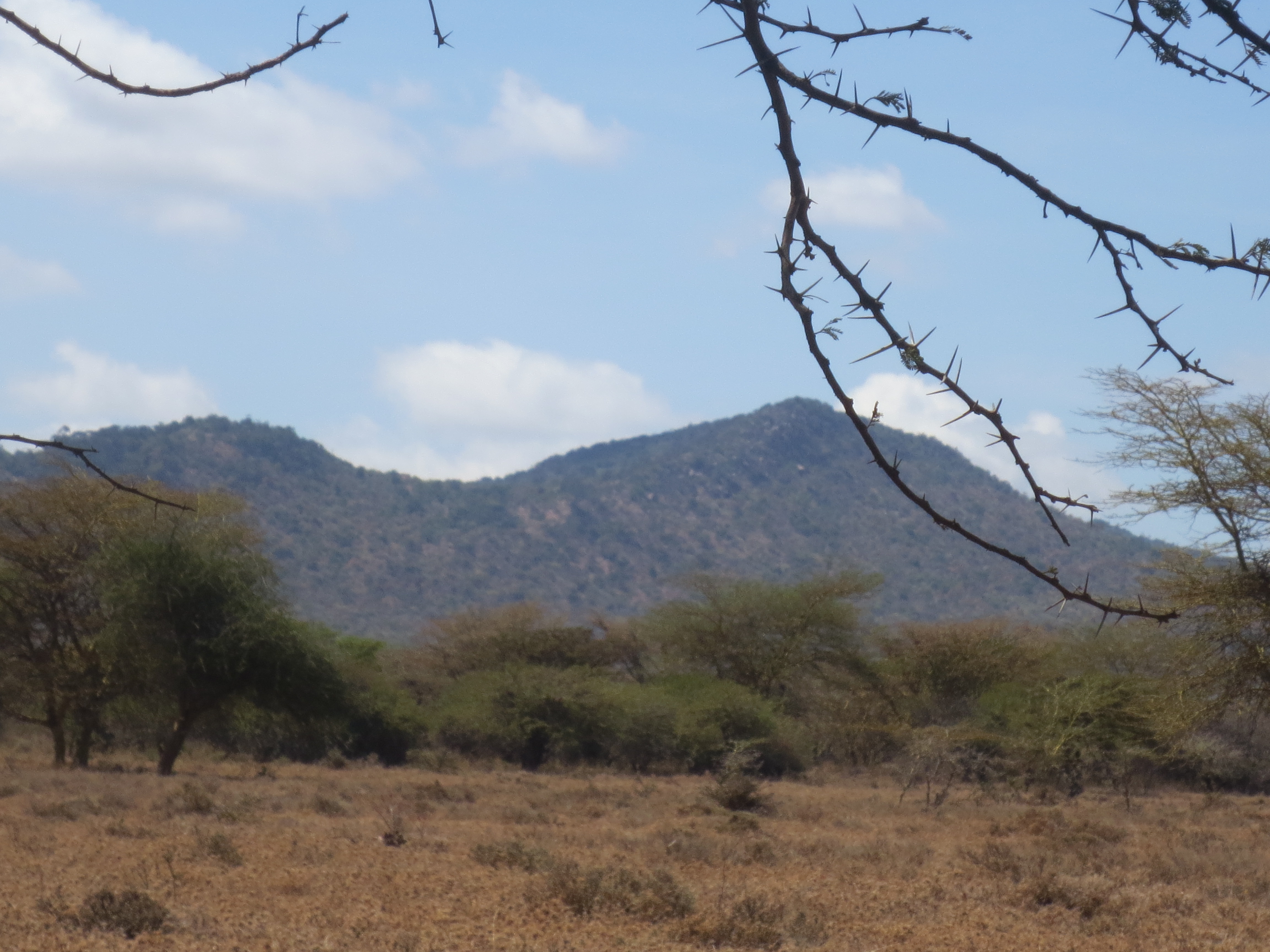
The next day, Salaton, the tribal chief who runs the camp and another warrior named Coila, took me on a hike up Loita Hill.  On the way, the two warriors demonstrated spear-throwing.  A Maasai warrior almost always carries a spear.  The narrow end is for practice and the wide end for protection.  After they had thrown their spears at a tree and missed several times in a row, Salaton turned to me and said gravely, “You are not safe!”   He and Coila thought this was very funny.
IMG_1640

IMG_1644

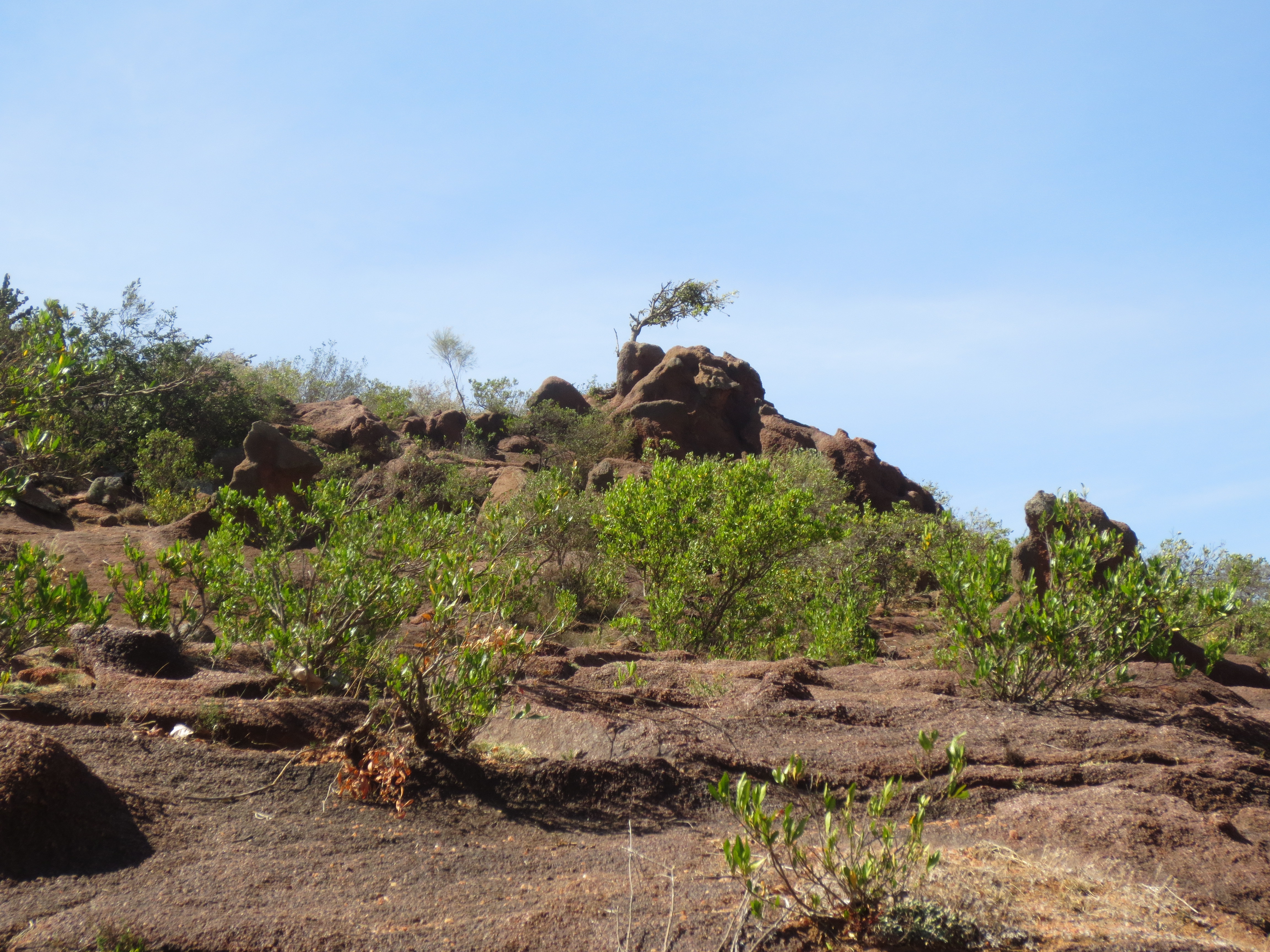
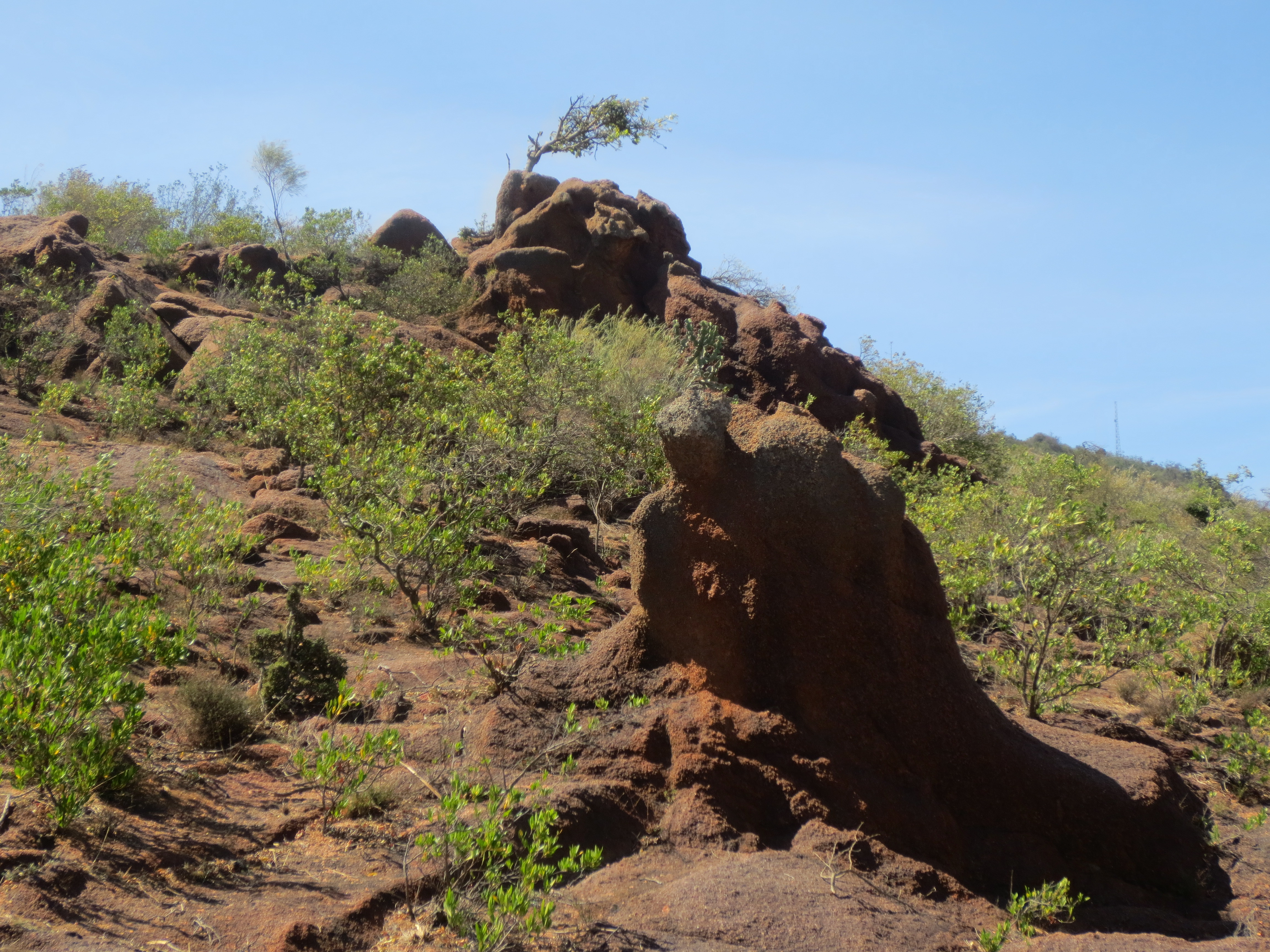
Loita Hills once were part of a vast volcanic range and the rock formations are strange and beautiful.

IMG_1658 IMG_1659 IMG_1660 IMG_1666 IMG_1668 IMG_1675

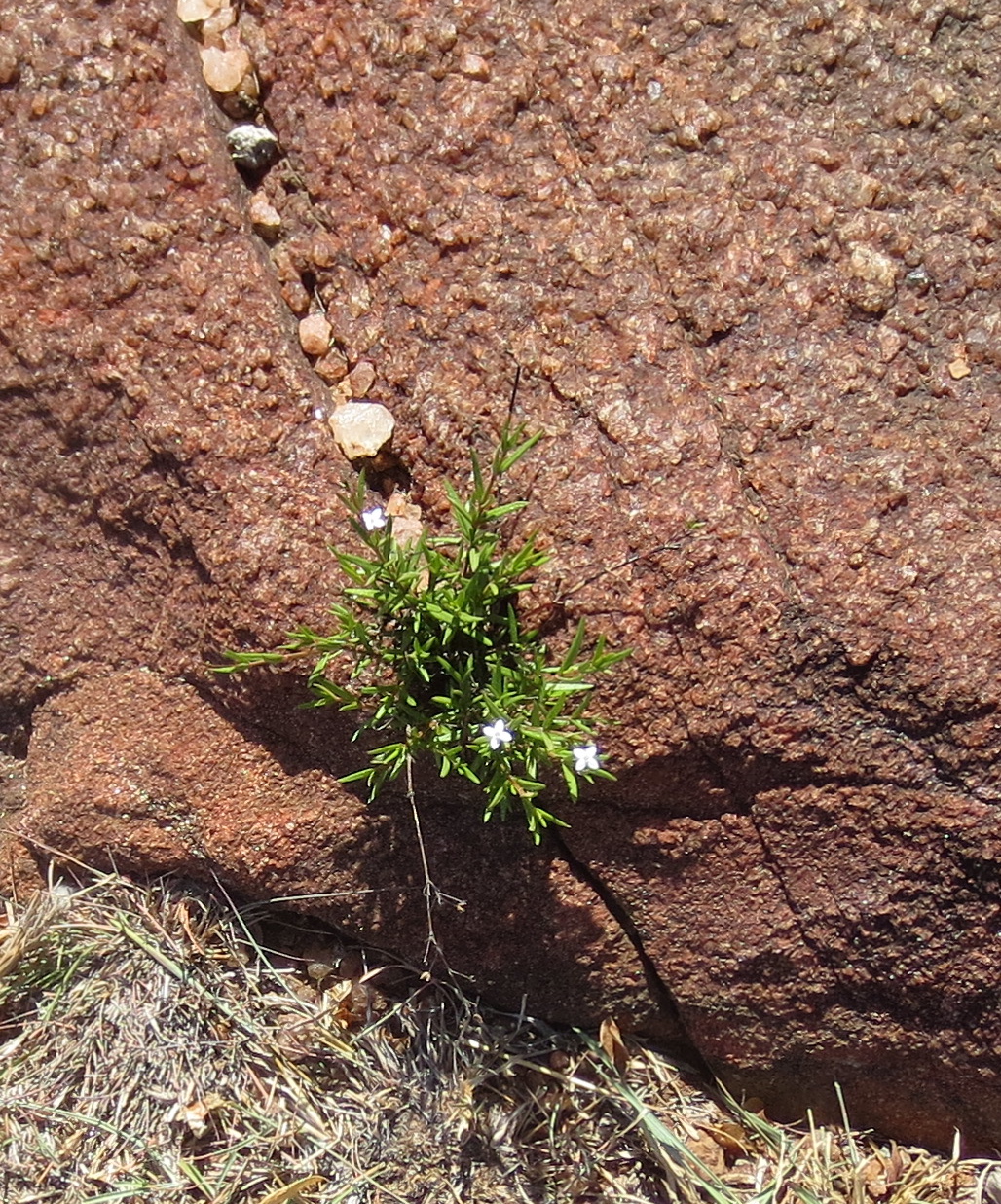
There were many colorful trees and flowers…even in the hot, dry climate.

IMG_1670 IMG_1679 IMG_1680

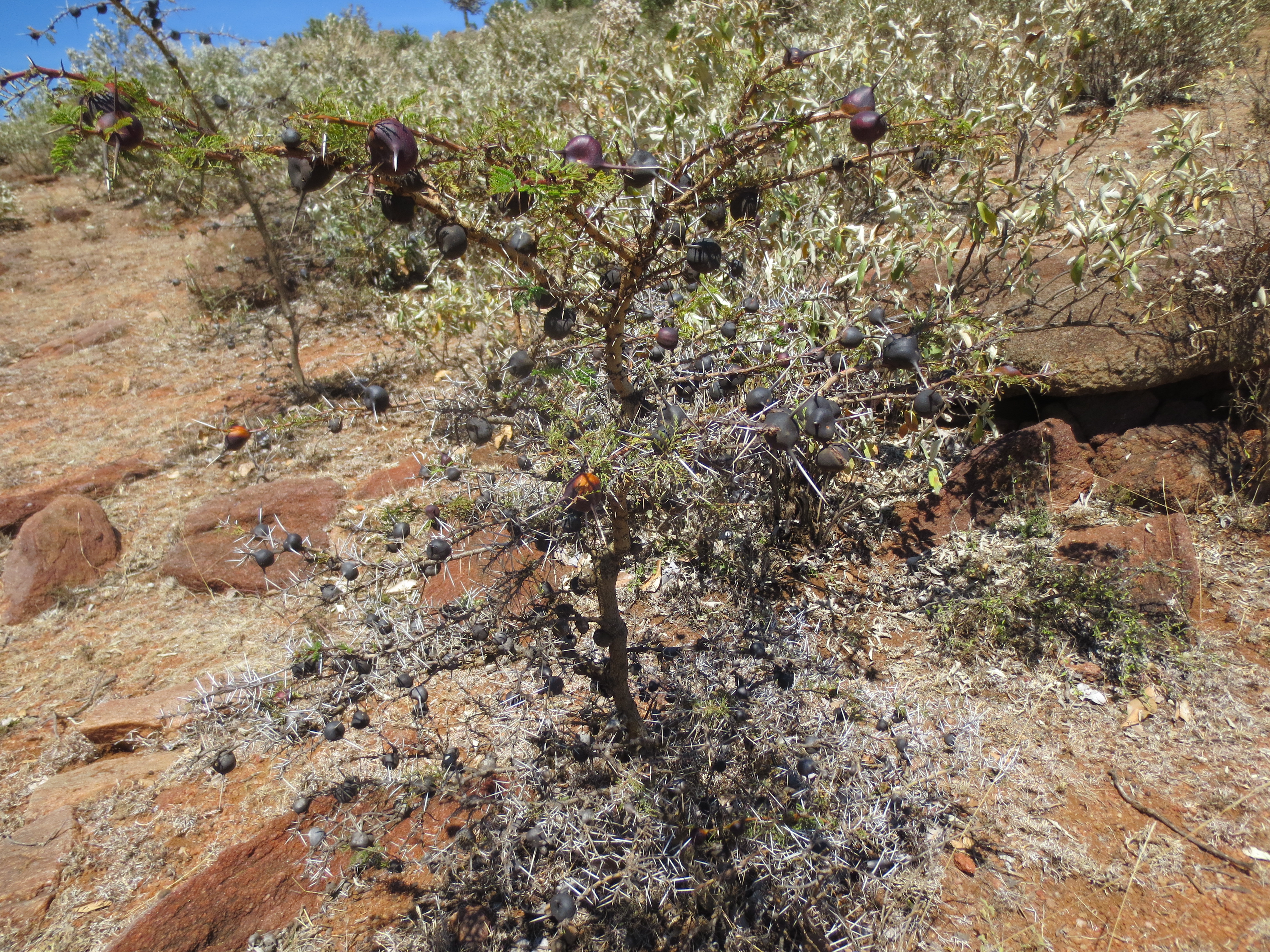
There are over 40 varieties of acacia tree…this one is called a “whistling acacia.”  The hard, black bulb-like things on the tree are made by ants as a nest.  When the ants leave the nest, they make holes in the surface.  And then, when the wind blows, it whistles through the holes.

IMG_1681

On the way back, we came across a young boy looking after the goats.  In Maasai culture, when you meet a child, you touch their head and say “Supa.”  This is a sign of respect.  Most young children will come up to you and lower their head to be touched.

IMG_1684

When we got back down to the camp, I was hot and tired…I looked up to where we had climbed and felt like I had touched the sky.

IMG_1655 IMG_1662

IMG_1677


Next: Visiting the Widows Village, the Conservation Project, Warrior Training and a two-day trek across the Loita Plains.

Vroom, vroom – driving in Lusaka!

Standard

Lusaka city map

NOTE: Pictures from various sources!

It’s now been 3 months since the unfortunate mishap with my car, and I’ve been back on the road for about 2 months.  I figured it was time for a short description of what it’s like for a right-side of the road Yank to be driving on the left…and to be driving in a “frontier town” like Lusaka.
Outside Manda Hill
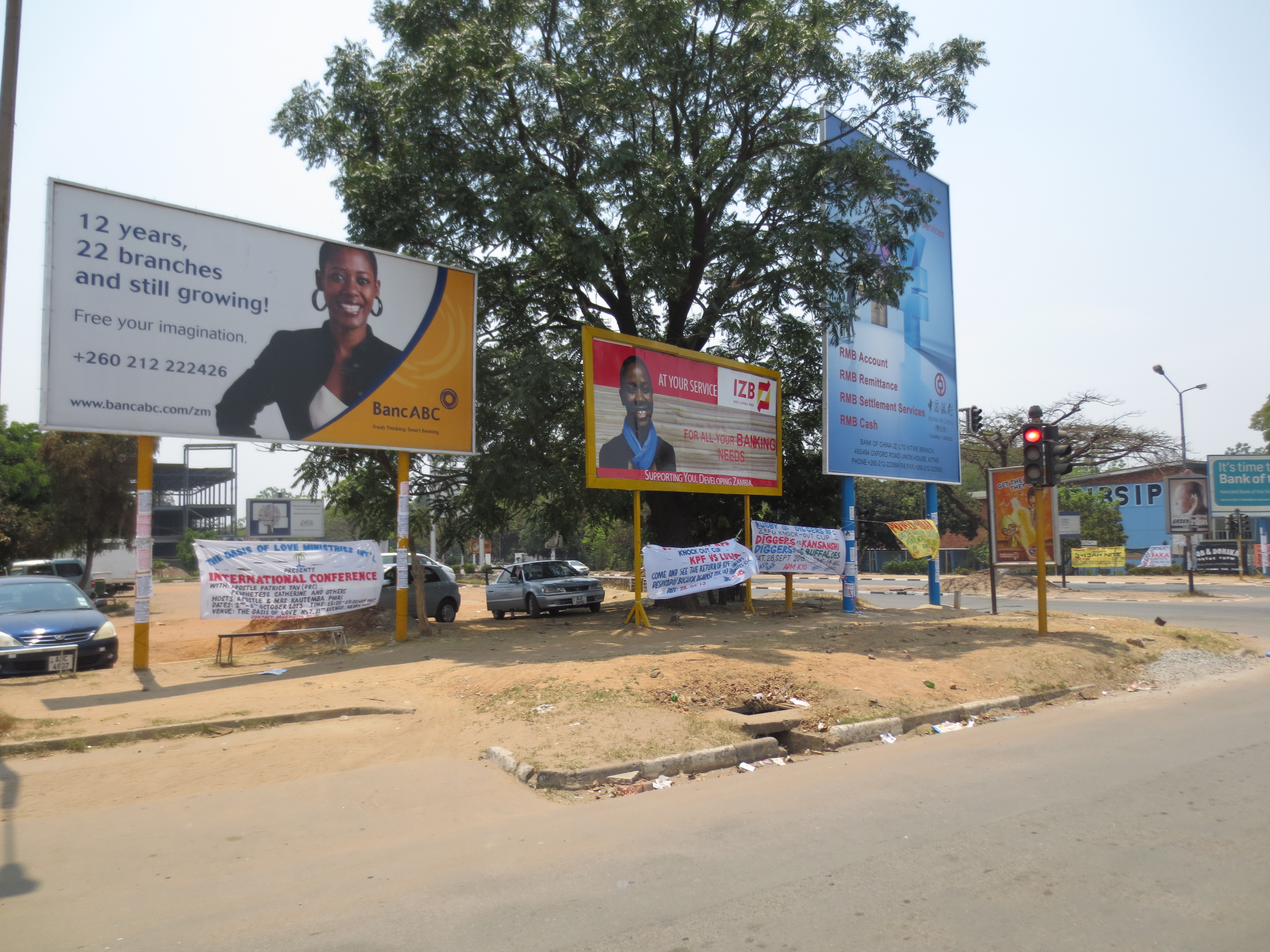
Paved roads and car ownership are both fairly new to Lusaka.  Although the roads in the downtown area are nicely paved, with neatly painted lanes, traffic lights, directional signs, sidewalks and shoulders, and even colorful billboards, the rest of the city is not so well equipped.

Downtown
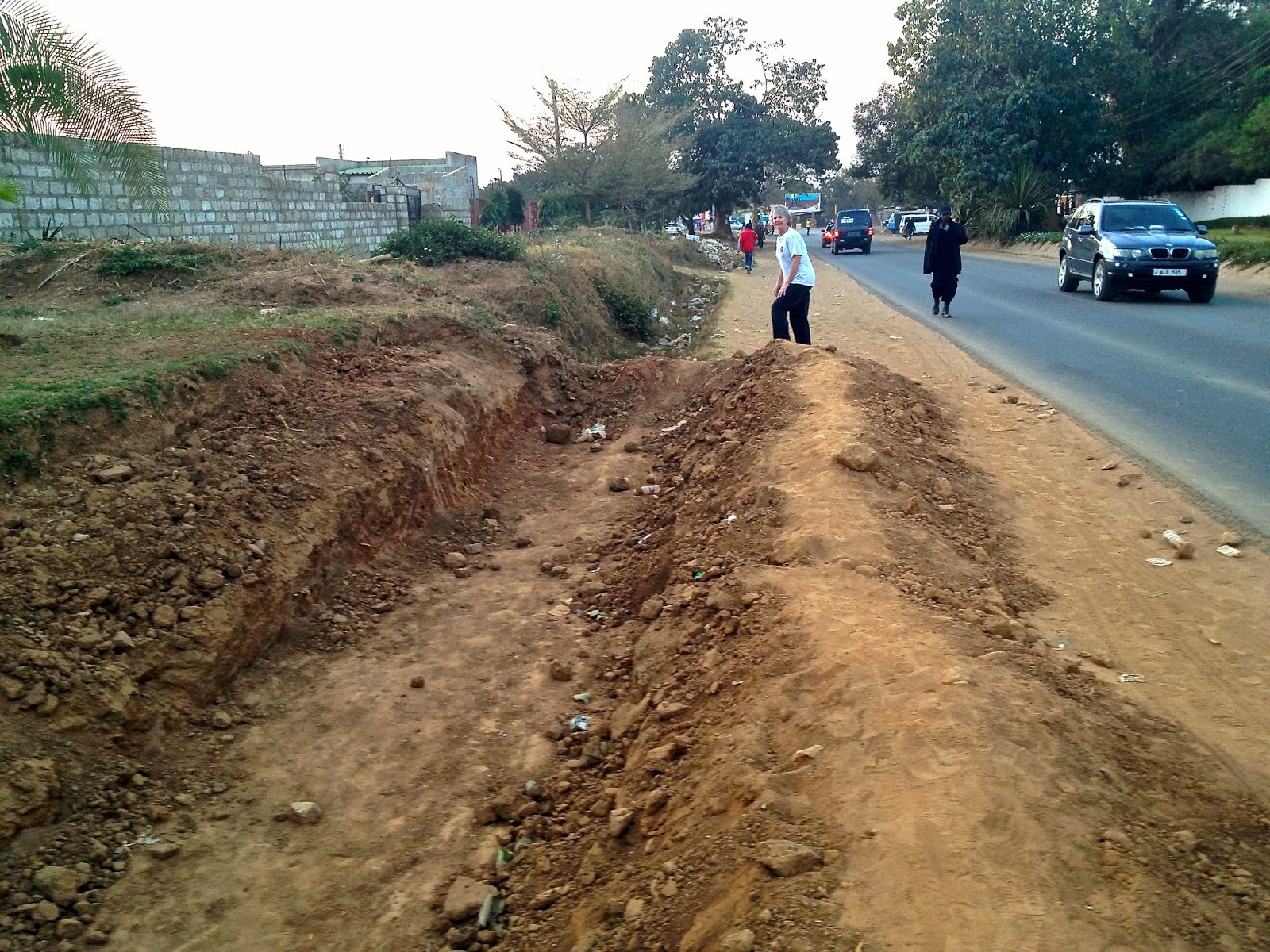
Most of the roads that are paved are very narrow, with no shoulder to speak of and a huge drop-off where the pavement meets the side of the road.  In addition, there are ditches lining the road to accommodate the rainy season.  Right now, there are workers out on almost every road, making these ditches even deeper…the rains are coming!

Paved road Ditches

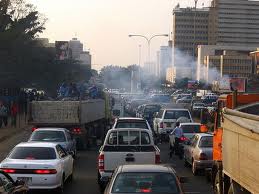
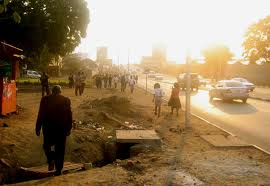
Much of Lusaka’s population still walk almost everywhere (or grab one of the mini-buses…more about that later)  Since there are no sidewalks, the people walk on the side of the road when they can.  But many times the people walk along the pavement.  And because there are so few “main” roads, most of the traffic in the morning and evening is all going on the same road in the same direction as the people walking to work.  This includes bicycles, small passenger cars, larger 4-wheel drive vehicles, pick-up style trucks (often with a dozen or so people sitting the bed) larger construction trucks and the ubiquitous mini-buses. There can be some spectacular traffic jams.

traffic jam Side of road

Learning to drive on the right instead of the left would be a nerve-wracking experience under the best of circumstances.  (I managed to live in the UK for 4 years without ever driving!) On a straight away, it is fairly simple…you drive on the left, constantly thinking to yourself, “Stay on the left!  The LEFT!  Stay to the left!”  and if there is some traffic, it is not too bad, because you are simply going along with the traffic.

But then you might have to turn!   First, you put on your directional signal…only sometimes you put on the wipers by mistake.  Now, a left-hand turn is easy.  You turn left and you stay on the left.  A right-hand turn is a little trickier.  You turn right, but you stay on the left.  My right-hand turns are usually bit wider than they should be.   But then…there are the rotaries.  (Round-abouts to some of you.)  Here’s where things get a bit dicey.  Everything is reversed and your instincts about where to merge, where to exit, when to yield, when to accelerate…it’s all backwards.

I have been known to look at a map and drive well out of my way to avoid a rotary.  But sometimes it cannot be helped and usually my inner dialogue goes like this, “Oh, God, here comes a rotary!  Okay, just stay to the left.  The LEFT!  Now, blend into the traffic!  Why is that guy beeping at me!  Okay, just m-e-r-g-e right into the lane.  Look, there’s the exit…so…careful now…just put on your signal – no, those are the wipers!  Put on your signal and c-a-r-e-f-u-l-l-y get over to the left and there you are! See, you did it!”   There is no way to be relaxed while driving, because letting your guard down could mean that you react instinctively and your instincts will be WRONG!

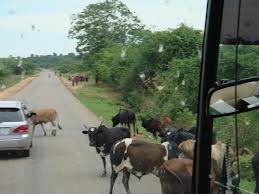
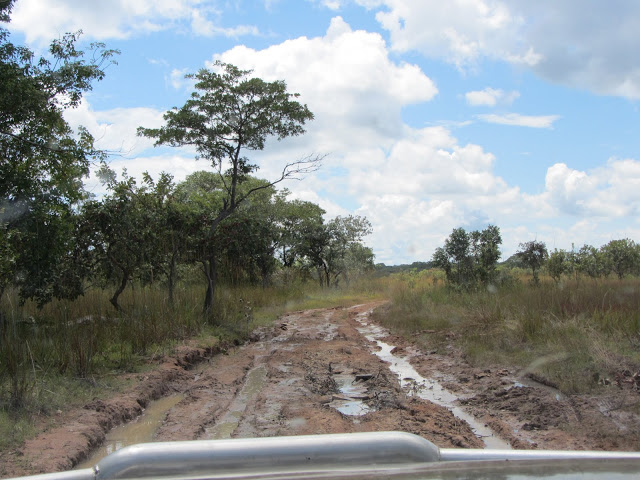
In most places, only the main road is paved…dirt roads are still the norm in Lusaka, and  indeed, in all of Zambia.  And you often share the road with livestock; even right outside the main center of the capital city!

Uneven roads Red clay road Animals on road dirt road

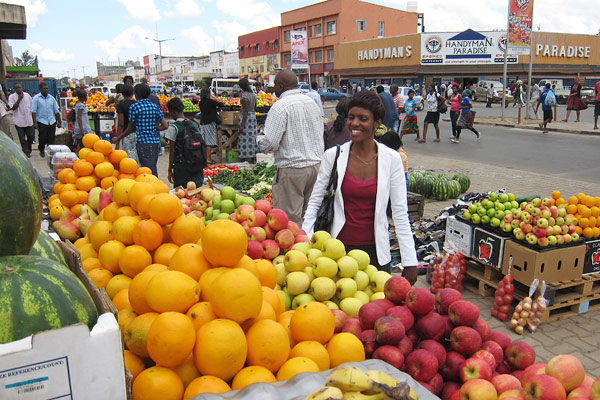
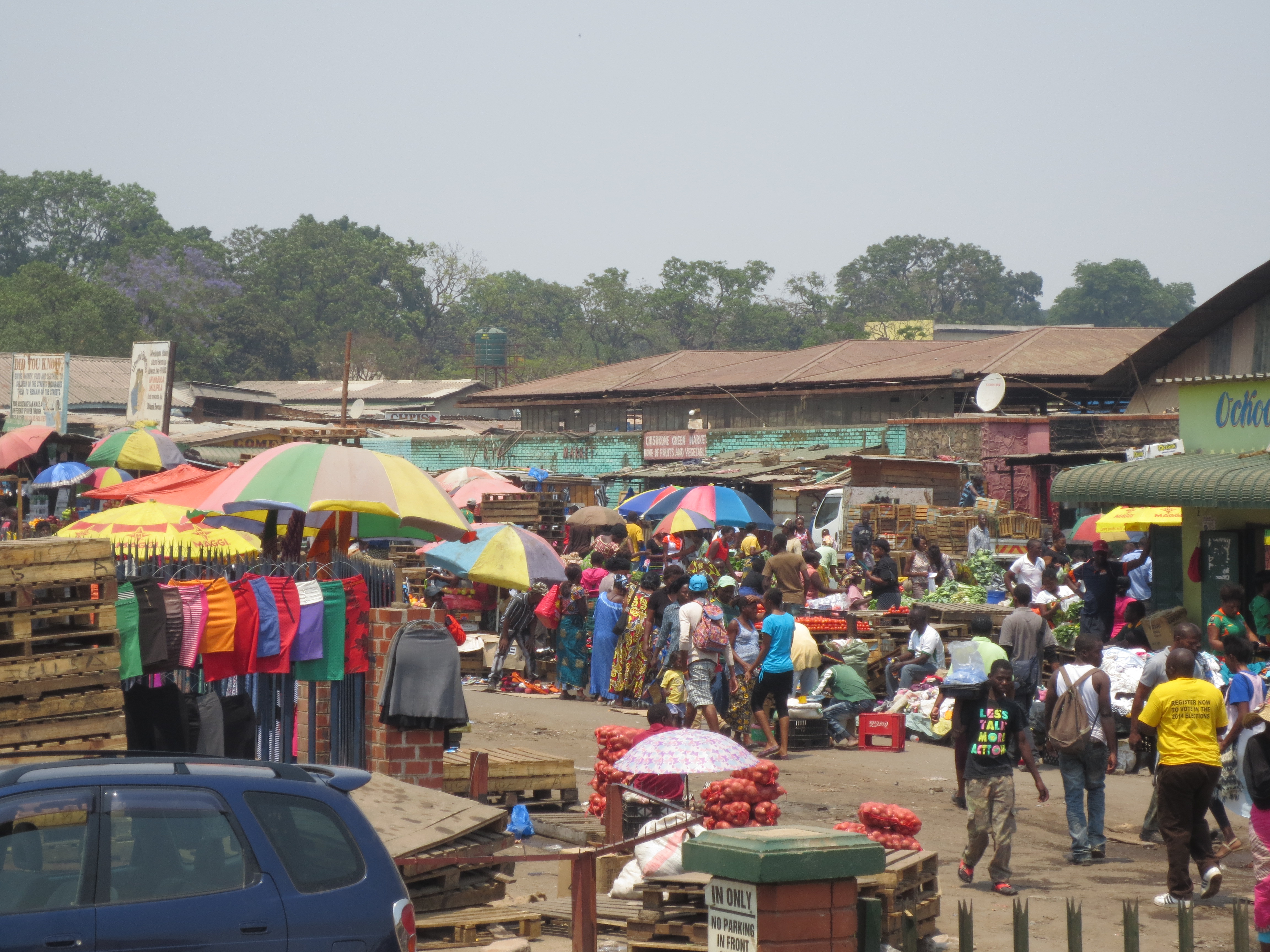
Even in the middle of the city, where there is a divided highway, people tend to treat the road like a walkway and vendors spread their wares out right on the pavement.

Soweto market 2 Soweto market

Potholes are common and often ridiculously deep.  And if the dirt road isn’t properly graded, it can become nearly impassable in the rainy season.

Muddy roadPotholes

Driving at night has its own special challenges.  There are no street lights and people drive just as fast and turn just as suddenly as they do in the daylight.  In addition, the walking traffic does not abate…and people have not yet learned about wearing light colored clothing for visibility.  So you have dark-skinned people, wearing dark clothing walking along a dark road with no sidewalks or shoulders. So far, I have avoided driving at night unless absolutely necessary.

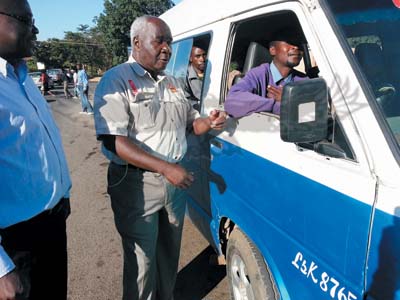
And the mini-buses…ah, the mini-buses.  This is Zambia’s local public transportation and used by most of the citizens to get around.  They are 18 – 34 seat vans, usually blue  and they go everywhere!  How do you know where a particular mini-bus is headed?  Well, the bus drives down the road and the “conductor” is leaning out the window, shouting the destination, while the driver beeps the horn.  “DOWNTOWN!  DOWNTOWN!”  or  “CROSSROADS!  CROSSROADS!”  The locals seem to know which bus is going where and often the bus is stuffed full of many more passengers than there are seats.

minibus1 Melissa minibus

Anyone can flag down a bus and they will stop almost anywhere, although there ARE some designated stops.  The bus will pull over, bumping over the edge of the pavement and onto the side, sometimes narrowly avoiding a ditch.  If the traffic is going too slowly, a mini-bus will often drive on the wrong side of the road, until they come up against oncoming traffic and have to pull over.  It is not unusual (but a bit disconcerting) to be driving along a paved road and see a mini-bus approaching you, head-on.  I have seen them driving over curbs, onto sidewalks and grass strips, along the dirt by the side of the road and squeezing past the traffic by driving into places that you would think a motor vehicle simply could not go.  Many of the mini-buses are in a state of disrepair and there has been movement to regulate them and require the owner/drivers to obtain a license.  But they remain a cheap way to get around Lusaka and almost anywhere in Zambia.

However, plans are moving forward to improve the roads, add sidewalks, better pavement, street lights and a “ring road” around the city.  The engineers I met in Ndola a few weeks ago were very enthusiastic and positive about the work being done and about how Lusaka is moving forward.  Just down from my school, on Leopard’s Hill road, the project to create a 4-lane highway is well underway (financed by the Chinese, who do a great deal of business with Zambia.)

Road project Divided highway

I do not expect to ever feel fully comfortable driving in Lusaka…as much as I love adventure I would much prefer to let someone else be behind the wheel for my travels!

Emmanuel Jal – child soldier to hip-hop artist for peace!

Standard

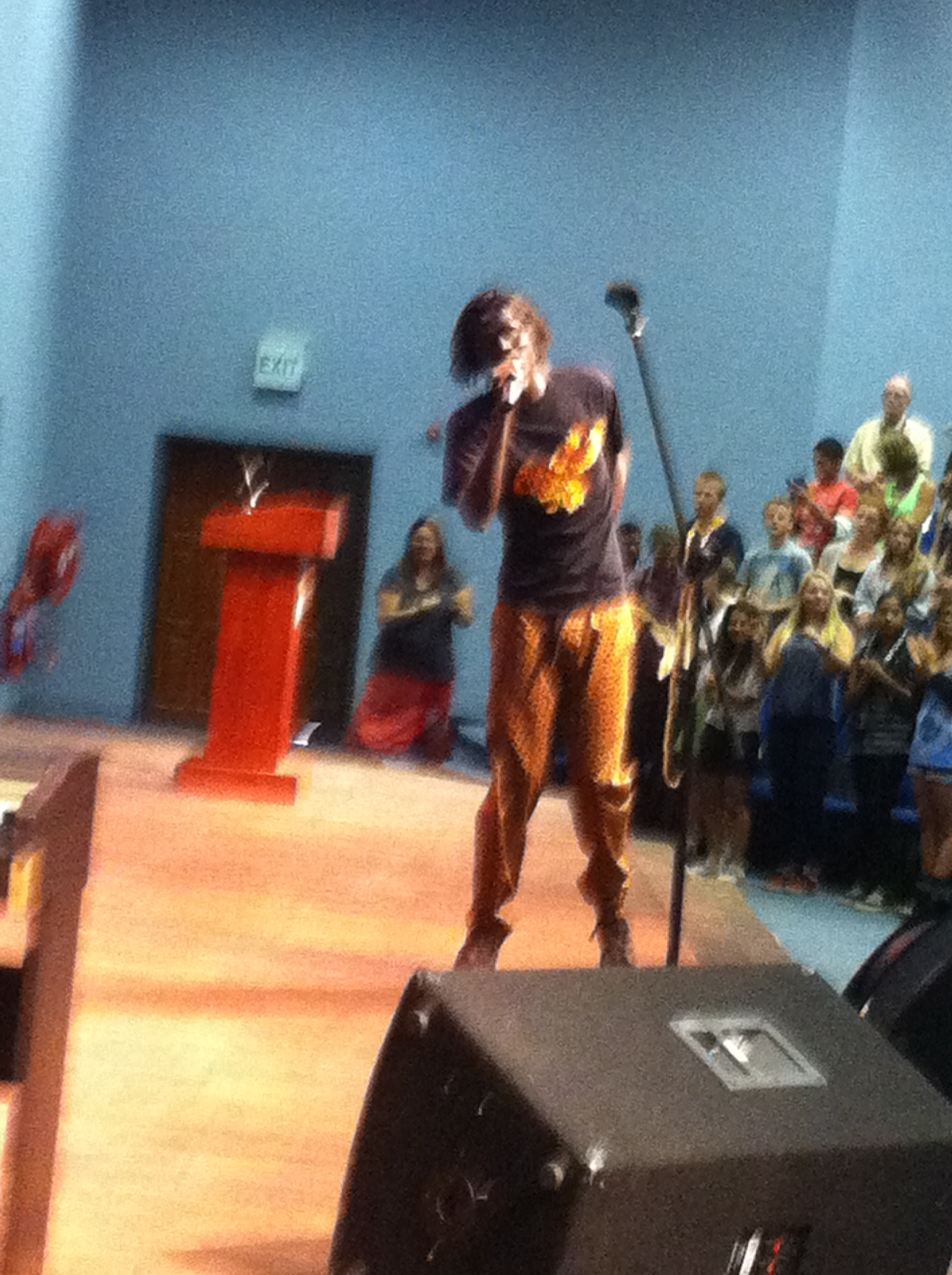
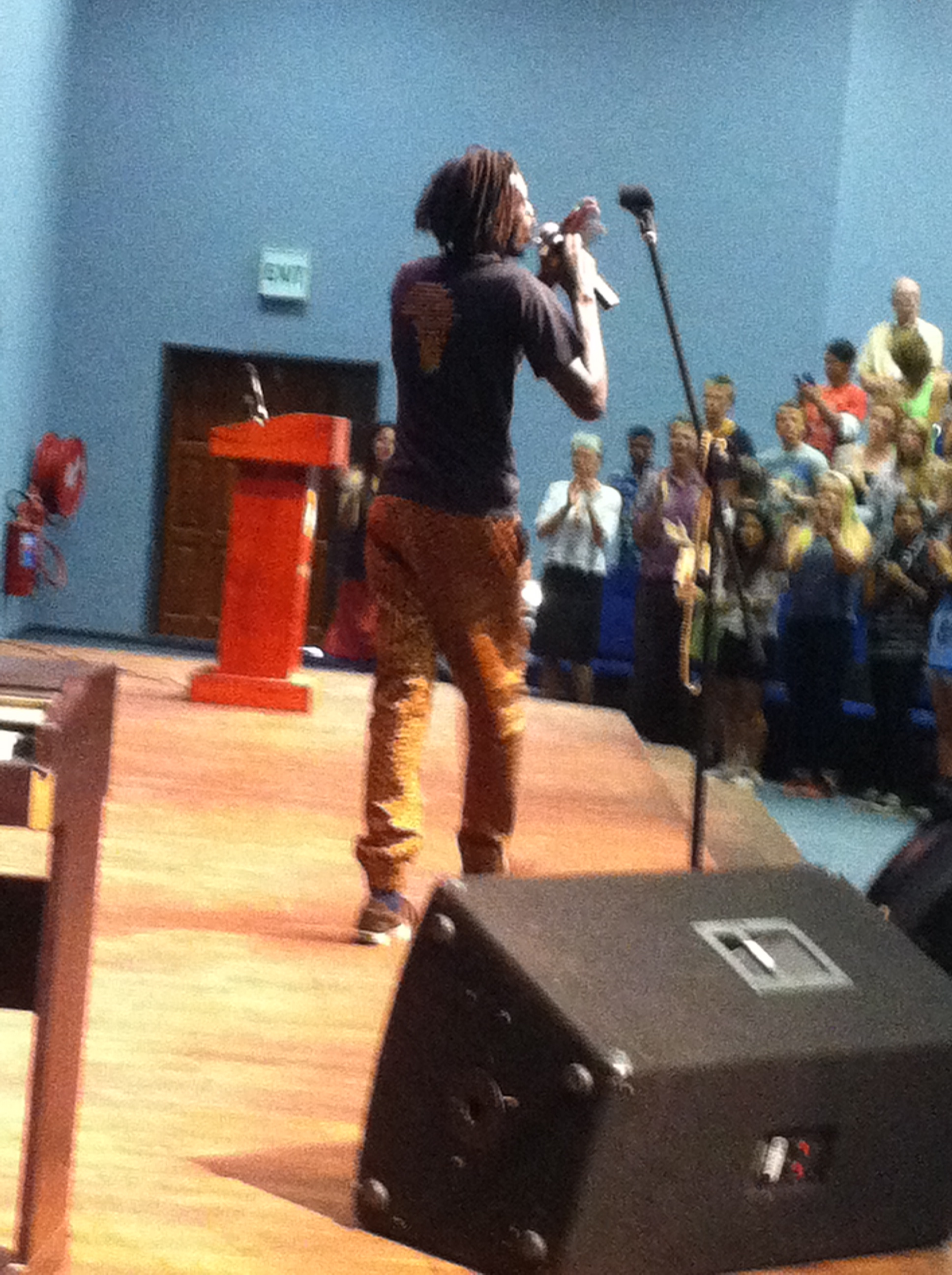
NOTE: Please forgive the horrible picture quality…I had to use my iPhone.  Also – this guy never stood still!  Hence the blurriness!

IMG_0048“Music is powerful. It is the only thing that can speak into your mind, your heart and your soul without your permission.”

Official website of Emmanuel Jal: http://www.emmanuel-jal.webs.com

This week, we were privileged to have Emmanuel Jal as a guest artist at our school.    Jal is a South Sudanese musician and former child soldier. He is a world recognized hip-hop artist and also a humanitarian advocate for social justice and human rights. He broadcasts his message of peace and equality through his music and through various NGOs he has founded.

IMG_0046 IMG_0045

Hip-Hop is far from my favourite style of music.  However, the energy in the auditorium when Jal took the stage was electrifying and unmistakably positive.

Using a mixture of singing, rap, spoken word and dance, he told his story and advocated for a more unified, peaceful world, in spite of religious and cultural differences.

His life story was both horrifying and uplifting.   Kidnapped when he was only 8 years old (under the guise of getting an education)  he was trained to be a soldier and to hate Arabs and Muslims…and his goal was to kill as many of them as possible.  (This admission elicited some gasps for our students, many whom are Arab and/or Muslim!)  He told of his lowest point – when some of the children were so hungry that they considered eating the corpses of their dead friends…and of how a crow appeared that he was able to capture for food before he had to resort to that himself.  He talked of poverty and slavery and greedy governments and lack of education…and engaged the students in dialogue about ways to make a better world.

IMG_0051 IMG_0049

He lived as a child soldier for more than 5 years and saw many of of friends die from exposure, thirst and starvation.  Finally, he and some other children decided to run away.  Some died in the attempt, but some made it to the town of Waat.  Jal, then 11 years old, met a British aid worker (emma McClure) who adopted him and smuggled him into Kenya, where he was able to attend school for the first time.

Even though McClure died shortly afterward, Jal was aided by some of her friends and completed his education.  Although he had no musical training, he stumbled upon the hip-hop genre and felt that the music had great spiritual and political power.  He started to use his music to tell his story and lobby for political change.

Jal’s biggest passion is for Gua Africa, a charity that he founded.  The nonprofit charity builds schools, provides scholarships for Sudanese war survivors in refugee camps, and sponsors education for children in the most deprived slum areas in Nairobi. The organization’s main mission is to work with individuals, families, and communities that have been affected by war and poverty.  His most recent project is a Global Peace campaign called We Want Peace (and he got all the kids singing and dancing along to the song.) The project is a steady effort to inform the world that peace is a possibility.

Read about Gua Africa here: http://www.gua-africa.org

More about We Want Peace: http://www.we-want-peace.com

He also got the kids up and stage and dancing.

I found Emmanuel Jal’s performance both inspiring and humbling.  Surely, if someone with such a horrific and miserable childhood, brought up in the worst possible conditions, seeing so much bloodshed and misery and sorrow…if someone like that can rise above it to create music, dance and poetry with a message of peace for the world and can work and advocate for education and health care for the world’s poorest inhabitants…then surely we who have been born into privilege, have never really known hunger or thirst or been homeless or mistreated….surely – we can do as much for our fellow residents of the world.


IMG_0052

An incredible visit to the Chimfunshi wildlife refuge.

Standard

DSC03094

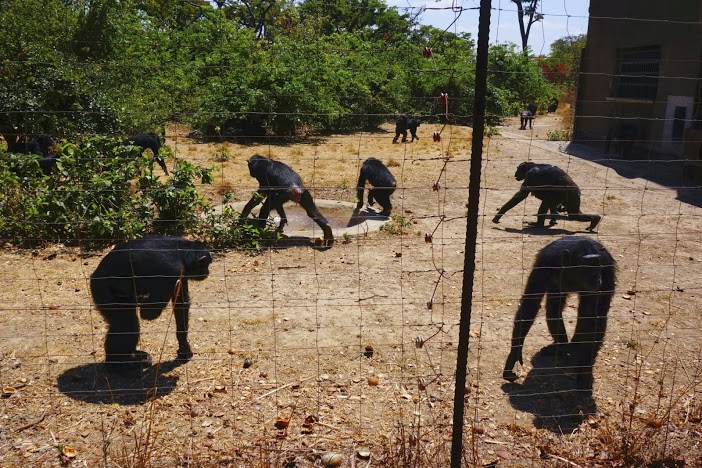
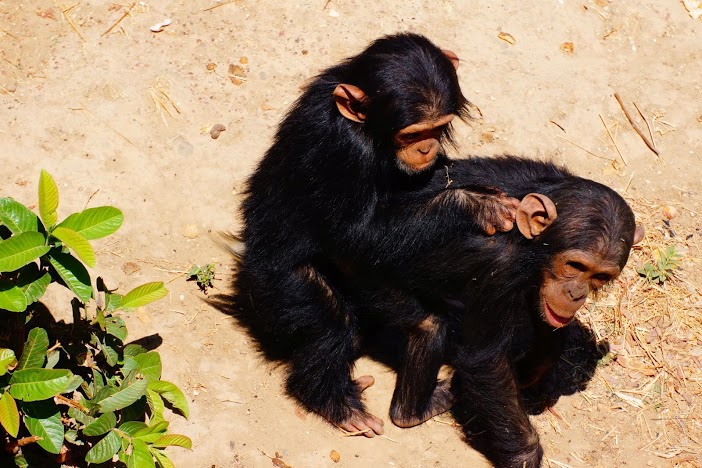
The Chimfunshi Wildlife Orphanage in central Zambia is a non-profit refuge that cares for a wide variety of sick, wounded or unwanted animals — but the primary residents are over 100 orphaned chimpanzees.  Last week, I was privileged to chaperone the 9th grade field trip to this unique and fascinating place…and to learn about chimpanzees – our closest cousins on the evolutionary tree, with more than 99% of our genetic make-up in common.

NOTE: With the exception of the photos of the school, these wonderful pictures were taken by my colleague, Heather PIllar, a professional photographer.

From their website: Chimfunshi was founded in 1983 when a game ranger brought a badly wounded infant chimpanzee to the cattle ranch of David and Sheila Siddle, a British couple who had lived in along the Zambian Copperbelt since the 1950s. The Siddles nursed that chimp – nicknamed “Pal” – back to health, thereby establishing a tradition of care and respect that forms the legacy of the sanctuary.  Once word of Pal’s recovery spread, the Siddles found themselves inundated with orphaned chimpanzees. Although many are confiscated from poachers who attempt to smuggle the infants into Zambia for sale as pets, an equally large number are rescued from dilapidated zoos and circuses from all over Africa, Asia, Europe and South America.  The Siddles bestow love and care upon the traumatized apes and gradually introduce them to the extended family at Chimfunshi. Five social groups inhabit the free-range enclosures that span 1,100 acres at the orphanage, including three 500-acre enclosures, the largest area ever set aside for captive primates.

More about Chimfunshi here: http://www.chimfunshi.org.za/  (And worth a read…)

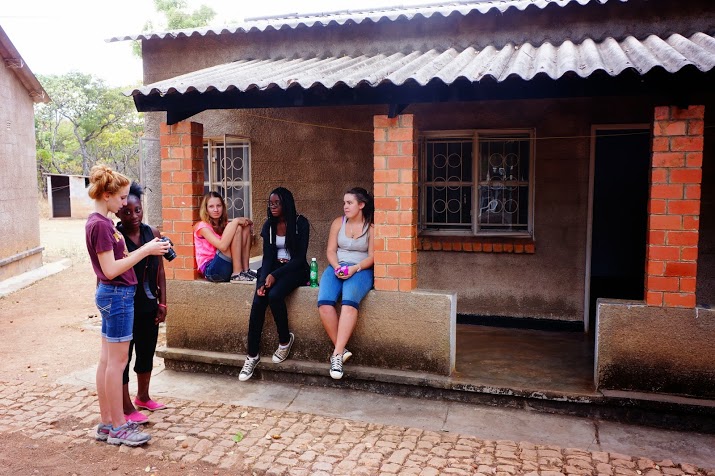
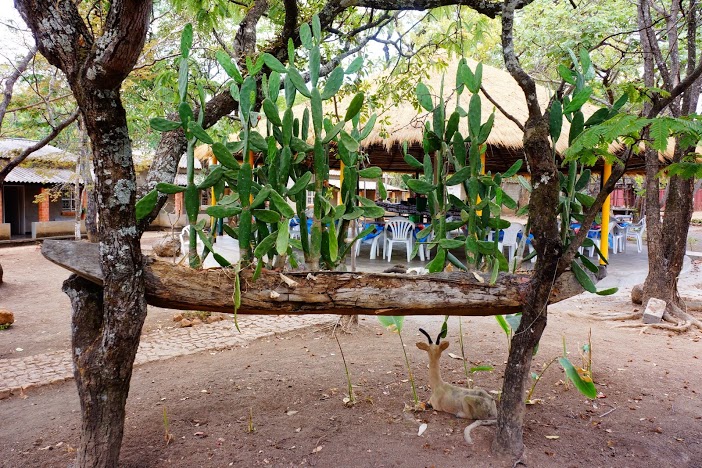
After a long bus ride, we arrived at the main camp and got unpacked.  The camp is situated out in the bush; there are a number of rustic cabins, a central pavillion, a kitchen and a meeting room.  All electricity is provided by solar power and any kind of Wifi is non-existent.  We were given a introduction by one of the staff members and saw a video about the rescue of “Toto,” one of the chimps now at the orphanage.

DSC03100 DSC03101 DSC03102

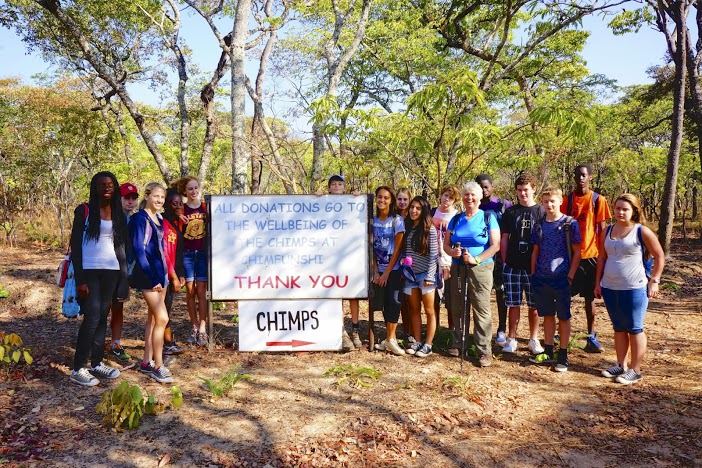
The next day, we walked to the enclosures…about 4 km down a dirt road. DSC02958 DSC02959 DSC02964

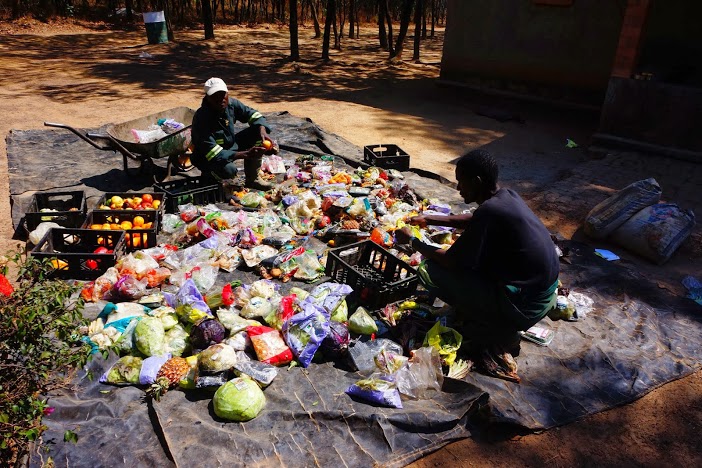
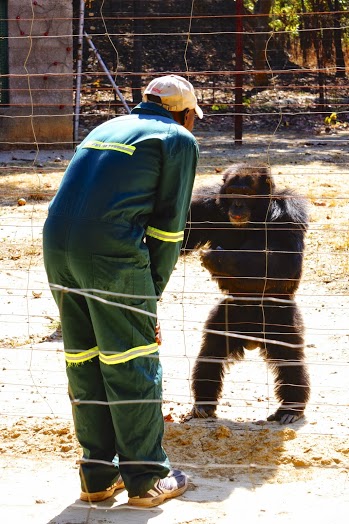
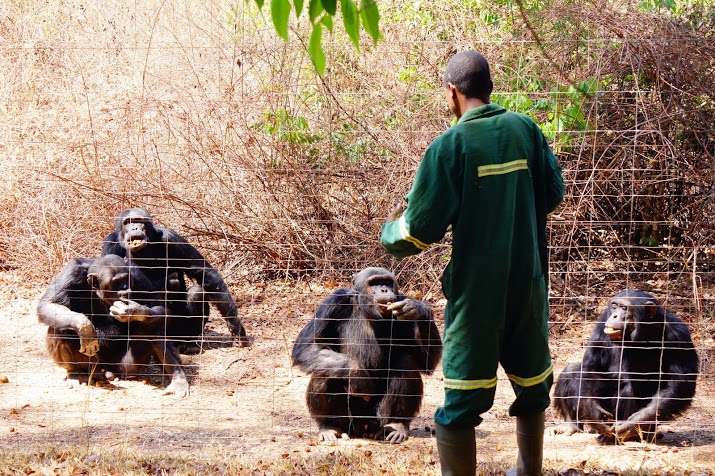
The enclosures are the “second stage” of the sanctuary.  Here are chimps that have been successfully integrated into family groups and live fairly independently in enclosures about 10 – 15 acres in size.  They are not ready yet to be released into the huge, 500 acre enclosures as wild chimps, but except for feeding time, they are pretty much left alone.  The staff never go into the enclosures and the chimps only come to the borders for meals.  This is so that the staff can ensure that the chimps are eating enough and monitor them.  We also got to watch them being fed…they eat vegetables and fruits and they love nshima (a kind of cornmeal paste.)  They will negotiate with each other for food and steal it from other chimps who aren’t paying attention.  But they can also be generous and will share with a youngster or a chimp who is their friend.

DSC02967 DSC03042DSC03030DSC03034

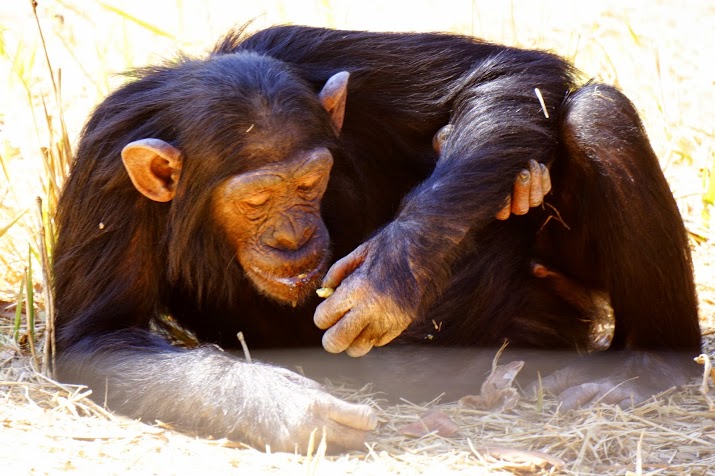
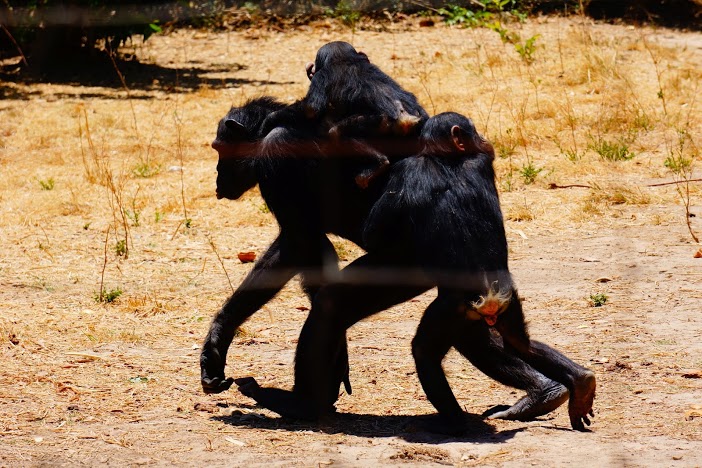
Each student was assigned a chimp to observe every 30 seconds for one hour.  They had codes to record various behaviors.  Sometimes the chimps would be very active – grooming, vocalizing, interacting with other chimps, climbing a tree, throwing rocks, cuddling their babies and sometimes behaving aggressively, including loud hoots and shrieks.  But some of them simply seemed to like the easy life and spent a good portion of the observation time relaxing. (Much to the disappointment of their observer!)

DSC03155 DSC03173 DSC03149 DSC03073 DSC03076 DSC03082 DSC03068 DSC03057 DSC03053 DSC03047

The next day, we visited the Orphanage.  This is where animals are taken when they first come to Chimfunshi.  Many times, they have been so badly treated that it is impossible to move them to the larger enclosures…but the staff still strives to give them as natural an environment as possible.  “Toto,” the chimp in the video who was rescued from a circus in Chile was there.  He had been captured at age 2, along with 3 other baby chimps.  (Also, sometimes 10 – 12 adult chimps will die trying to protect a baby chimp.)  The other baby chimps died on their way to Chile and Toto was kept for more than 20 years in a crate about a meter wide, taught to smoke and drink and wear clothes.  He was castrated, chained by the neck and had most of his teeth pulled out.  When, he finally arrived at Chimfunshi (thanks to many people from many countries) he had not seen another chimpanzee for almost 25 years.

When he finally was let out of quarantine, he was cautiously introduced to a little 5 year old orphan chimp named “Madonna.”  He approached her carefully, and then reached out his long arms and enfolded her in an embrace.  He paid no more attention to the humans, but focused all his attention on his companion – able to be with one of his own kind at last.  (Go on, watch the video!  It is quite moving.)

Video about Toto: http://www.youtube.com/watch?v=rqiEqUlB7V4

A website about his remarkable rescue: http://www.savetheprimates.org/happyendings/stories/saved-toto-the-chimpanzee

He’s an old man now…almost 37 years old, but he could live for another 20 years.  And although he cannot be released into the larger enclosures, due to his age, infirmities and the fact that he was castrated, he has bonded with several other chimps in a “family” and he is respected by them because of his age.

DSC02985 DSC03200DSC03220

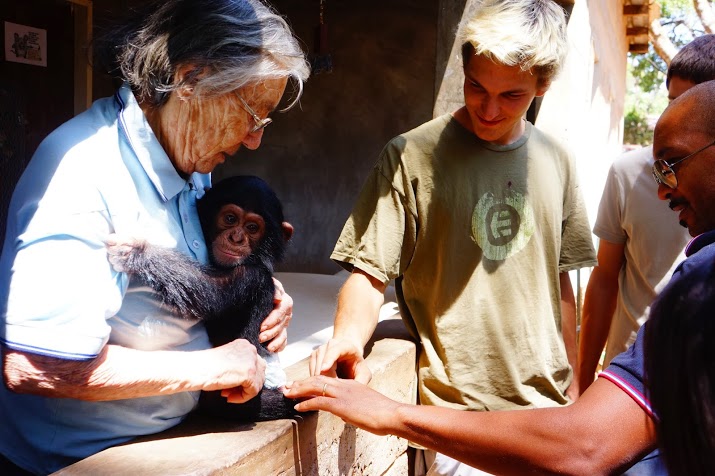
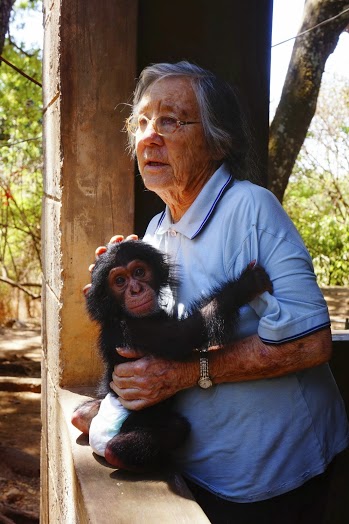
We also met Sheila Siddle, the co-founder of Chimfunshi.  (Her husband David died a number of years ago, and she has carried on with the work.)  She was fostering a baby chimp whose mother had rejected her.  The baby is 4 months old.

DSC03196 DSC03192 DSC03188

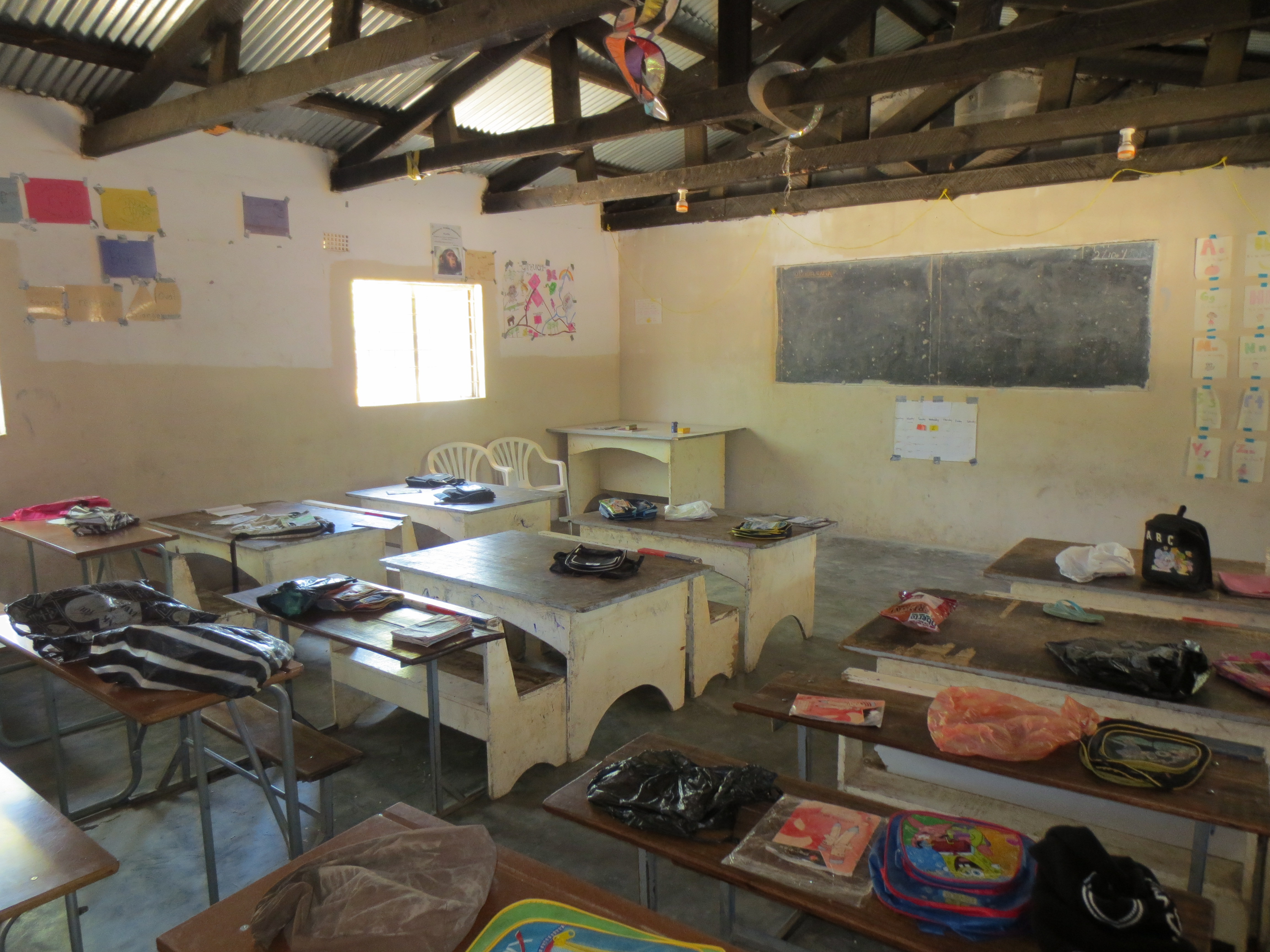
Chimfunshi also sponsors a school for the families who live in and around the area.  This is a one-room school house, for kids ages 5 – 11.  There are about 40 kids in the classroom…this is how it looks empty.

IMG_1590 IMG_1589

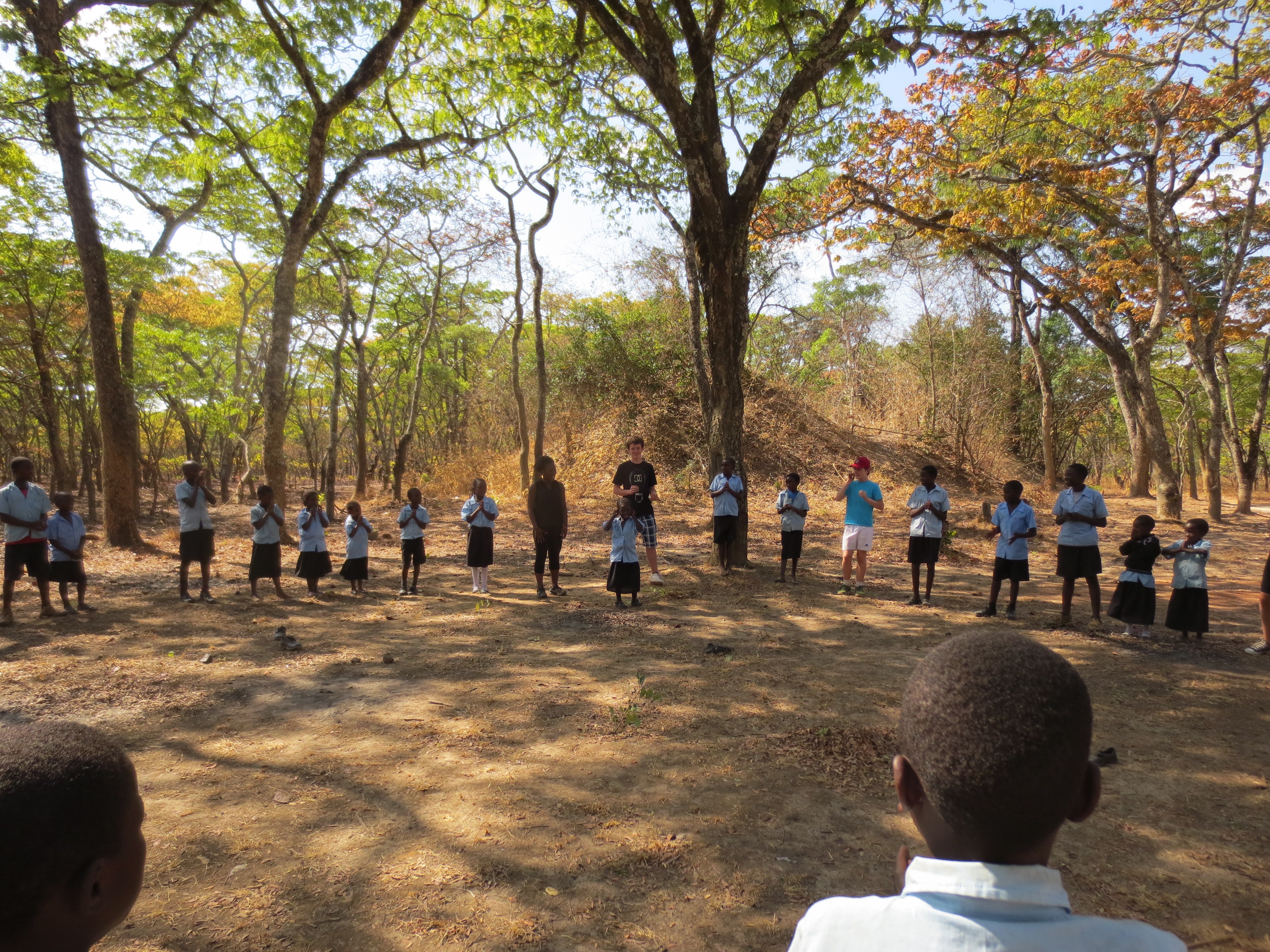
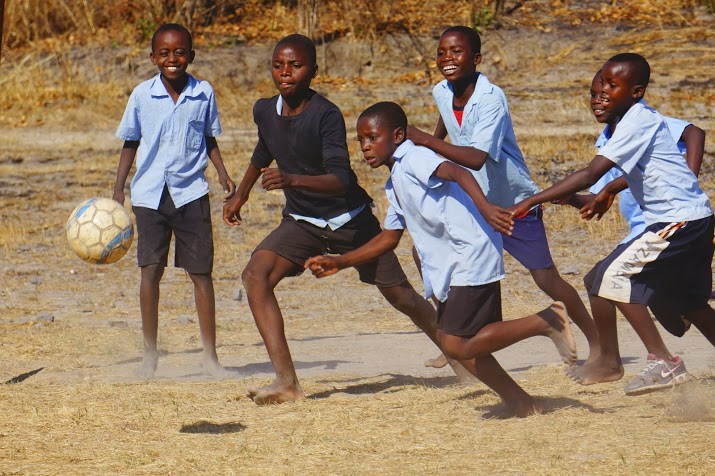
Our kids came and introduced themselves to the students and even though all the students spoke Bemba and all our kids (except one) did not, they seemed to have a good time playing together.

IMG_1591 IMG_1588 IMG_1587DSC03129 DSC03122 DSC03115

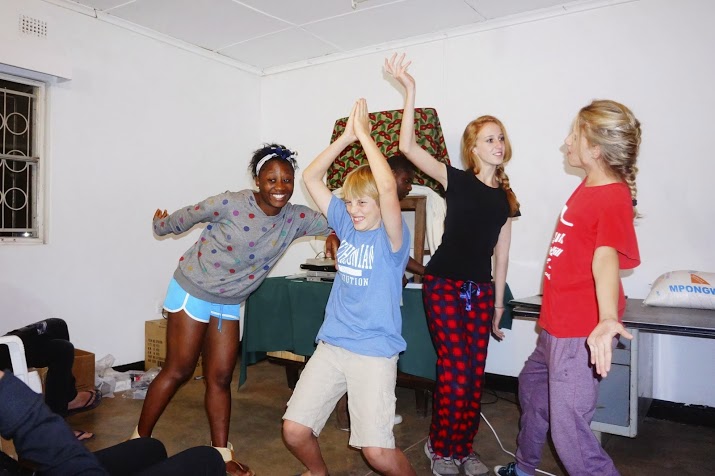
That evening, we were supposed to watch “The Rise of the Planet of the Apes” but something went wrong with the DVD player…so some of our kids acted out the movie for us…it was hilarious.

DSC03235

I thought Chimfunshi was a fascinating place and I really admire the work that is being done there.  Chimpanzees are highly intelligent, social, complex individuals who are suffering due to poaching, “bush meat” hunters, loss of habitat and general indifference.    Their numbers are decreasing at an alarming rate with only an estimated 150,000 still living in the wild.  Surely our closest living “relatives” deserve better from us.

“Chimpanzees have suffered so much pain and trauma at the hands of humans, yet they still have the grace to forgive us.”  (Sheila Siddle)

DSC02966


A short trip up to Ndola and the Copperbelt

Standard

ndola

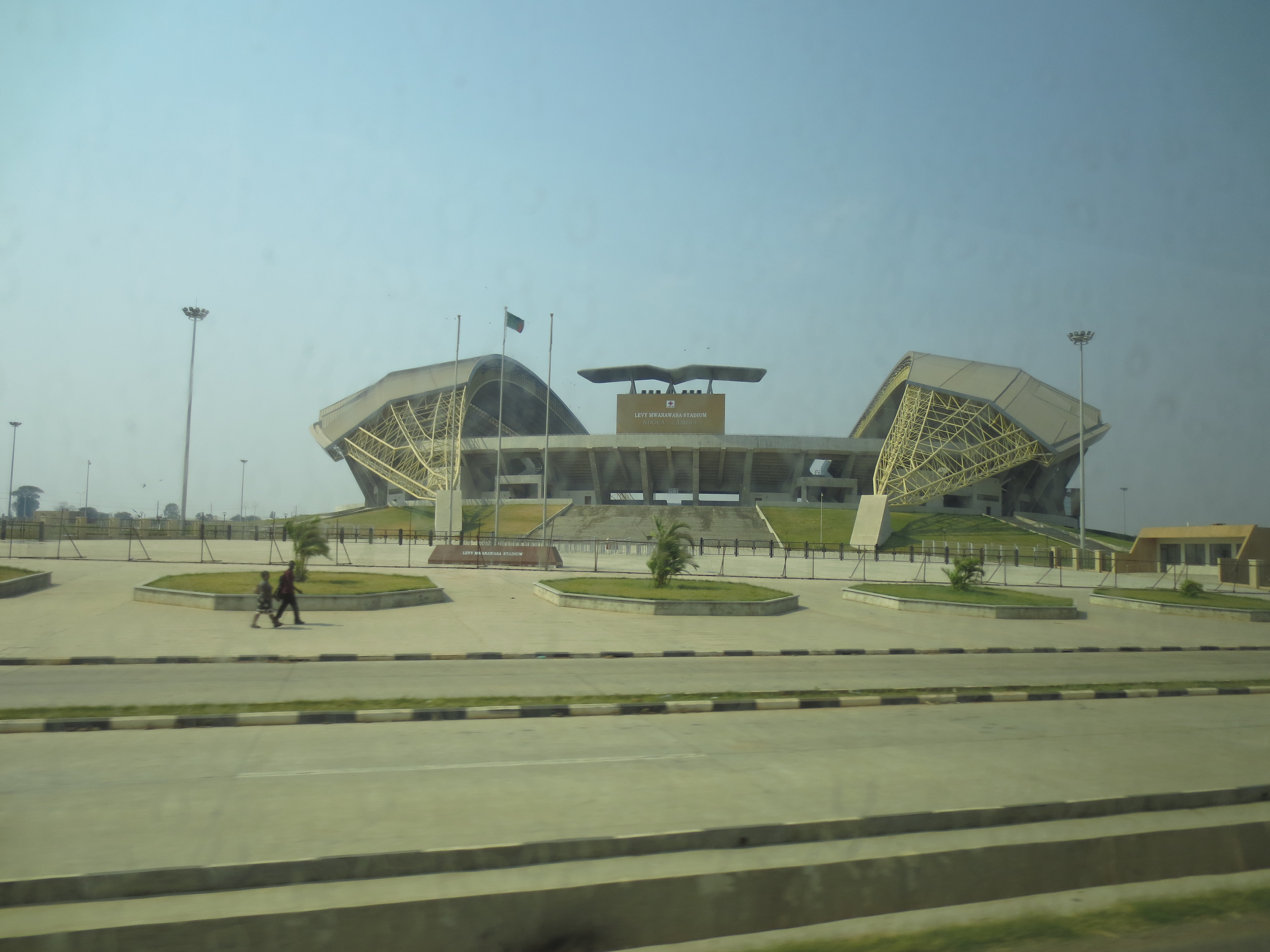
Last weekend, I took a trip up to the city of Ndola, which is the third largest city in Zambia and right in the middle of the Copperbelt.  When I told people where I was going, the common reaction was “Why?”

Truth to be told, there is not a lot to do or see in Ndola (or Kitwe, the second largest city, which I also visited!)  But…it was someplace different and it gave me an opportunity to see a bit more of Zambia.

IMG_0006 IMG_0005

The flight from Lusaka took about 35 minutes on ProFlight Zambia, a fairly new company that is making a great effort to become Zambia’s premiere airline.  The flight was comfortable, friendly and included snacks and drinks!  I had arranged a ride with the guest house and was picked up in a van by a smiling driver, who took me right to the “Indigo Lodge” in the center of Ndola.

IMG_1527

The next day, I took a walk around the city.  We were in the middle of a heat wave (even for Zambia) and there was little breeze.  I was quickly wilted.  Being Saturday, the city was crowded and noisy with street vendors, traffic, taxi drivers trying to get fares, beggars, and people out shopping, getting money from the ATMs and walking on the sidewalks and in the street.

IMG_1558 IMG_1559 IMG_1560IMG_1528

IMG_1530 IMG_1531 IMG_1532

One thing about going to a town like Ndola is that, as a white person, there is no way to simply “blend in!”  I was obviously out of place and though nobody was rude, I certainly got some curious looks.  Ndola is not exactly a tourist destination.

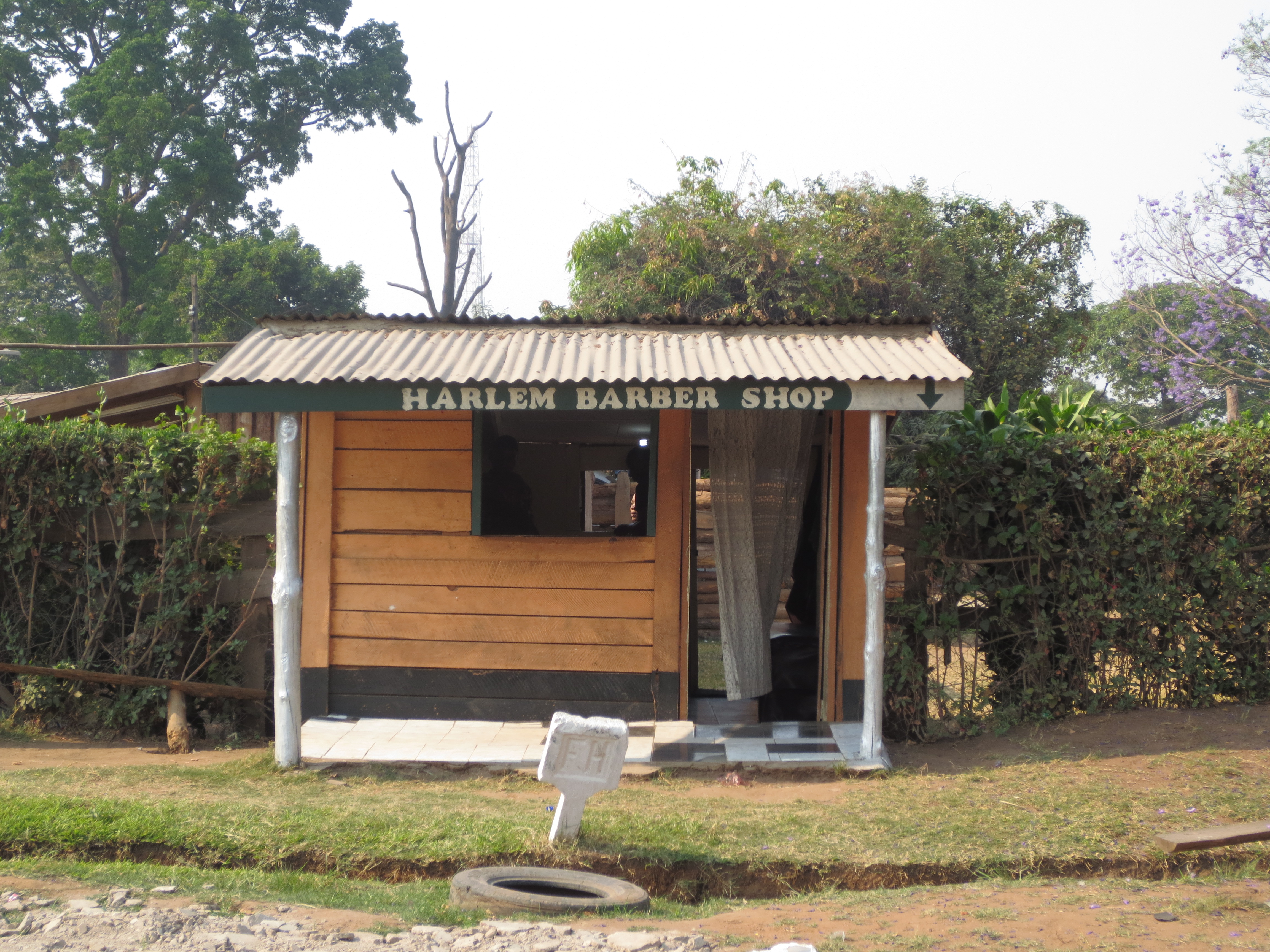
I remarked to one of the other guests at the Lodge that Ndola reminded me very much of uptown Harlem…and then I saw this!

IMG_1570

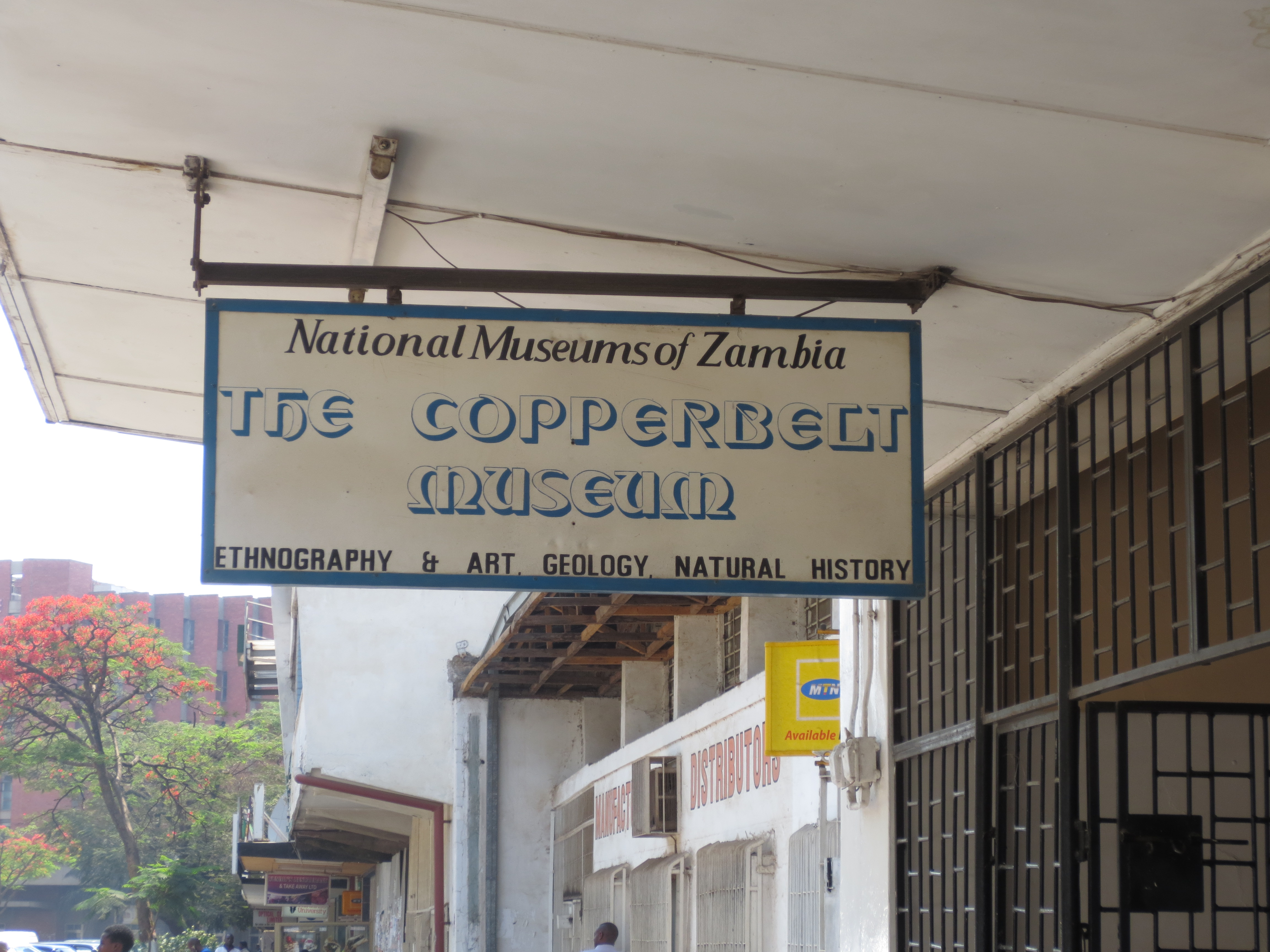
I had it in mind to visit the Copperbelt Museum and so I circled around to the main street and found it.  Although it was not air-conditioned inside, it was much cooler!  I paid my fare (later I realised I had been over-charged; as a resident I should have only had to pay 5 kwacha, not 25!) and went in.

IMG_1536 IMG_1535

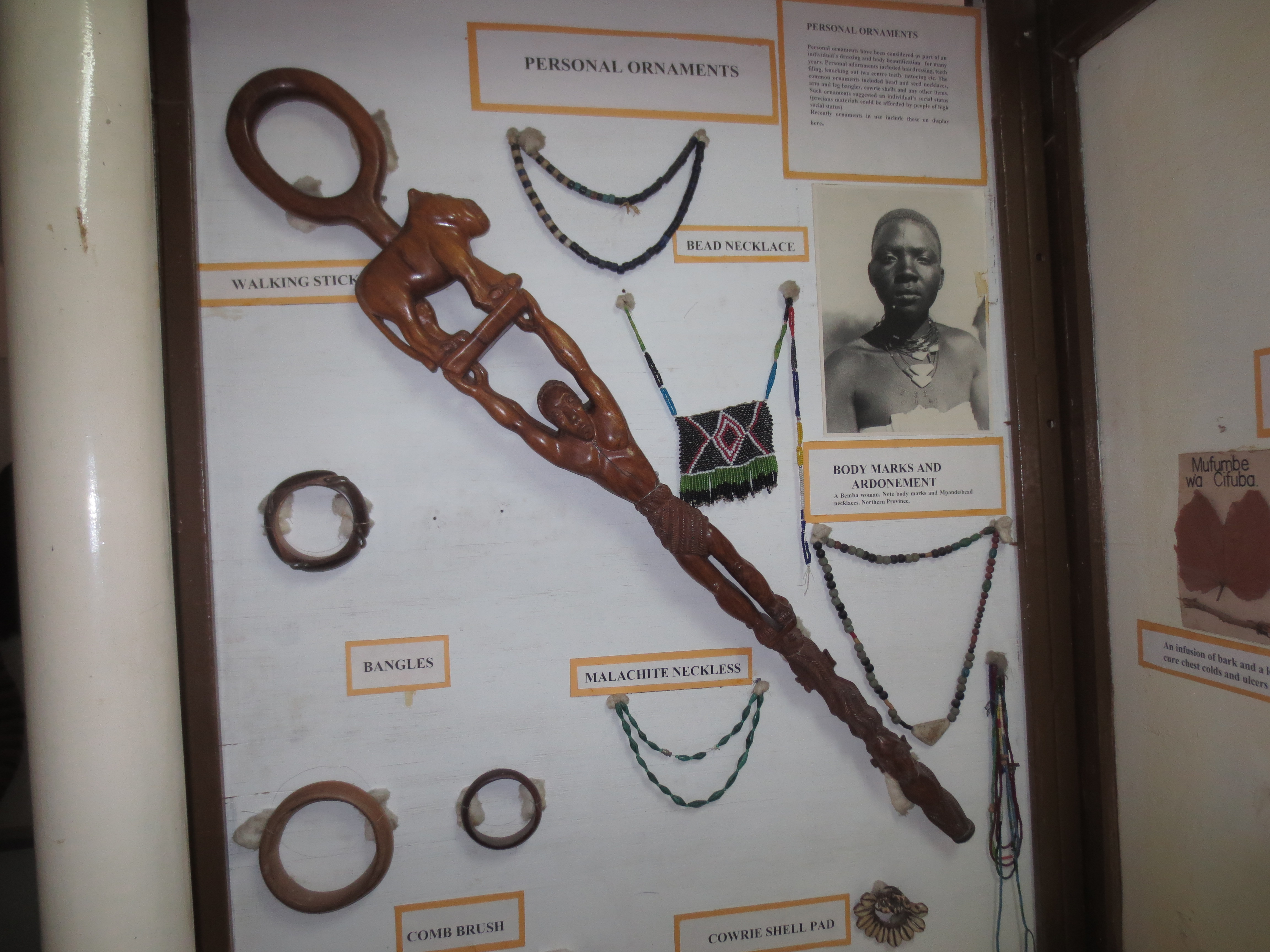
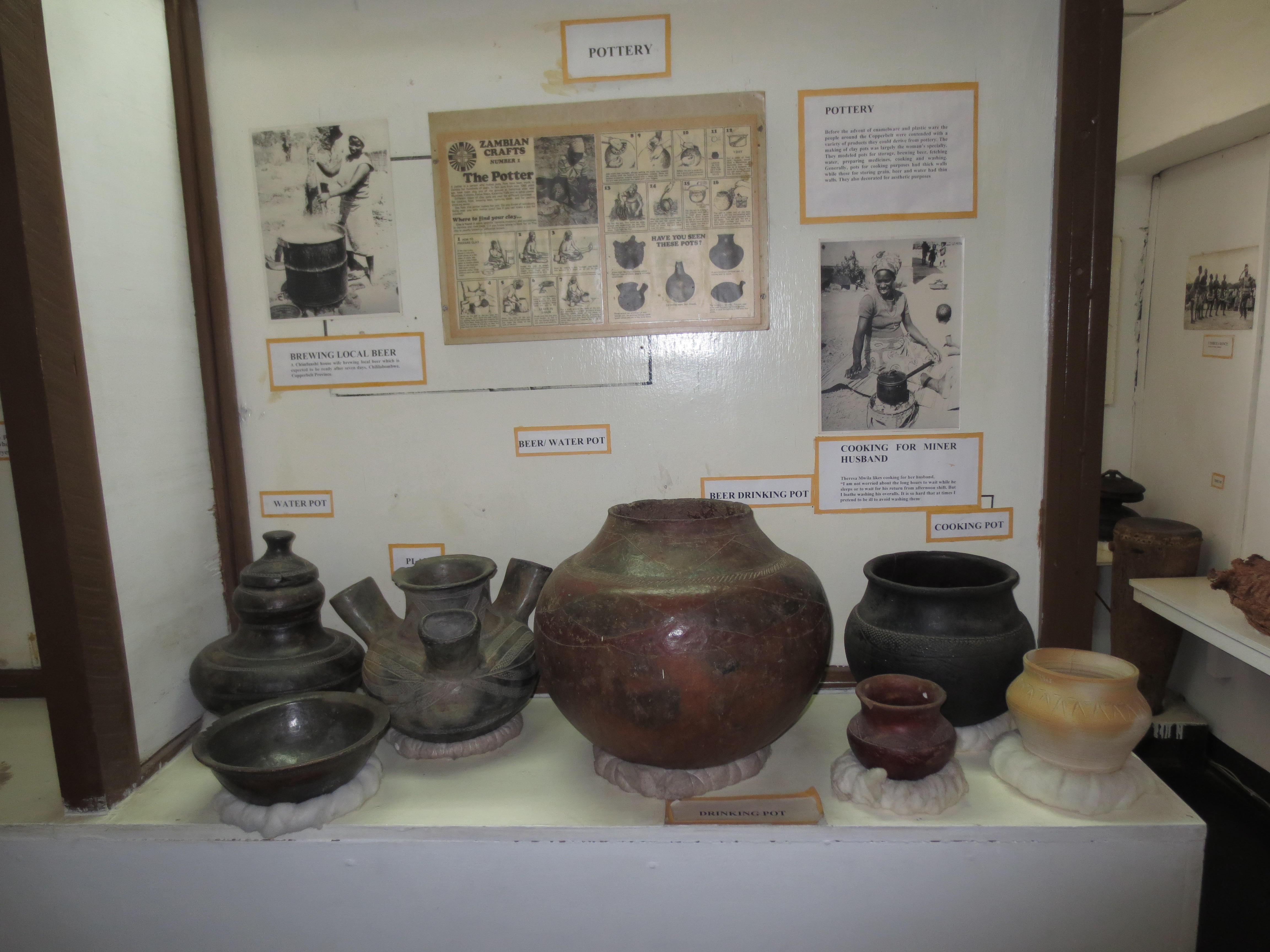
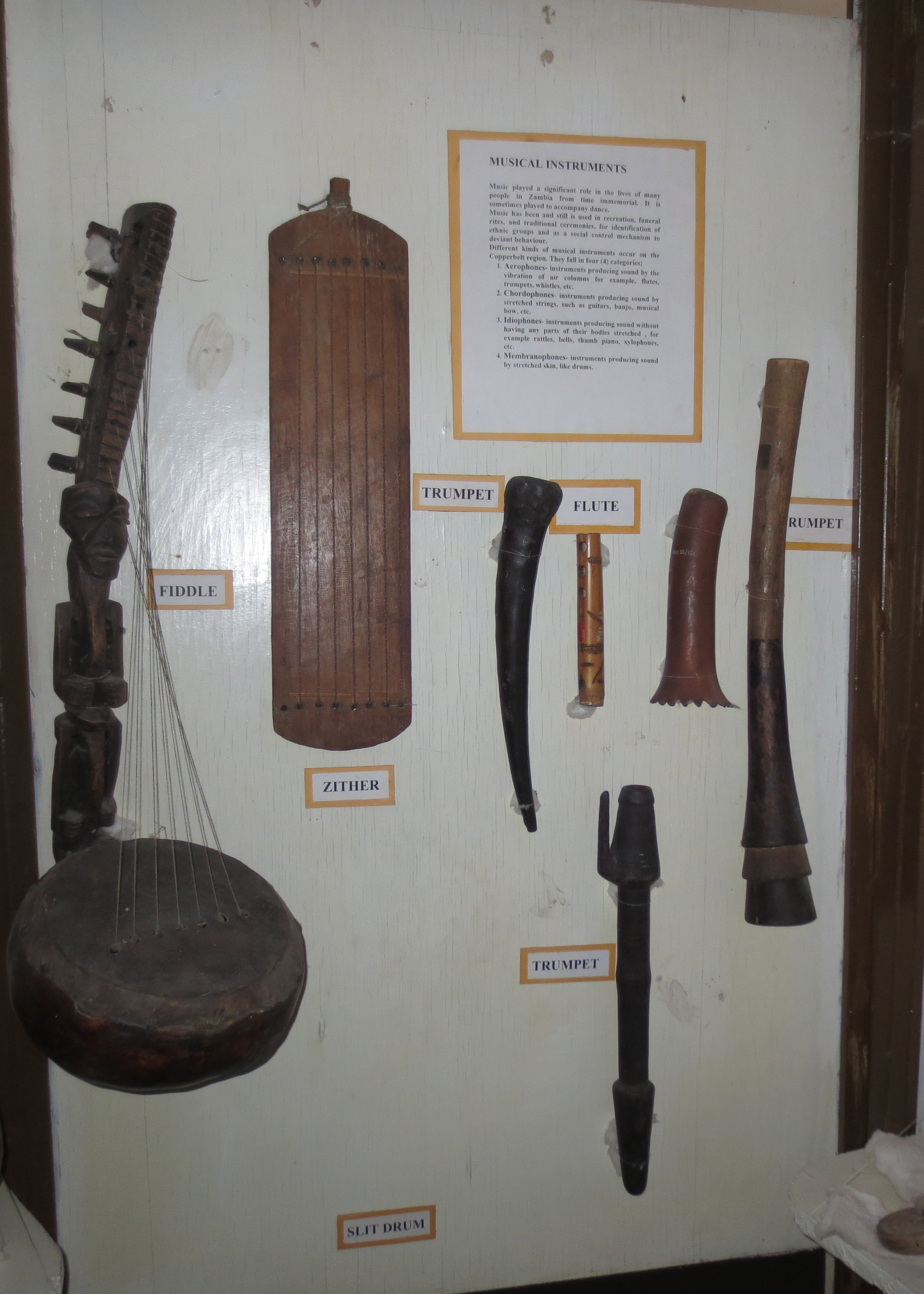
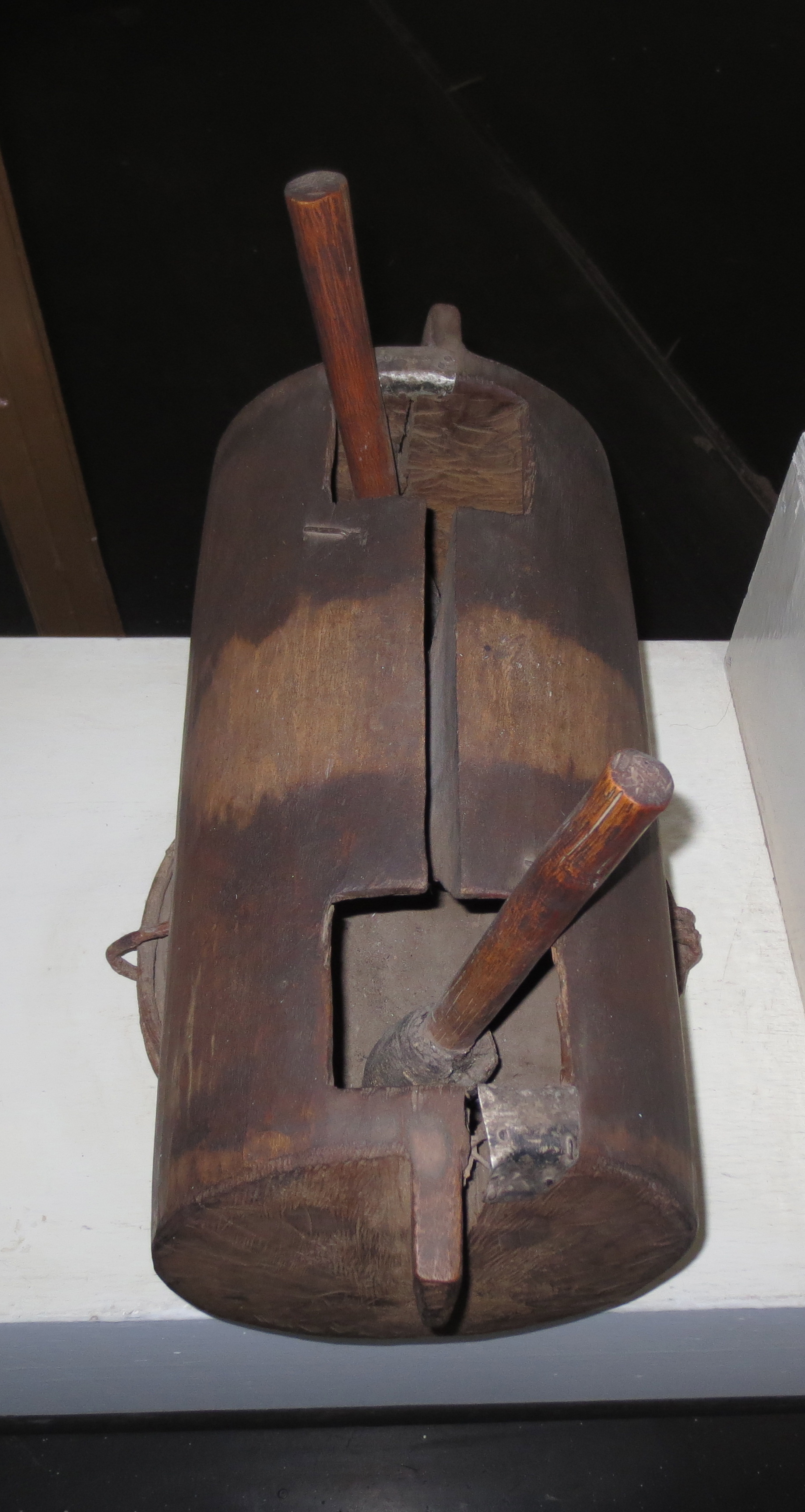
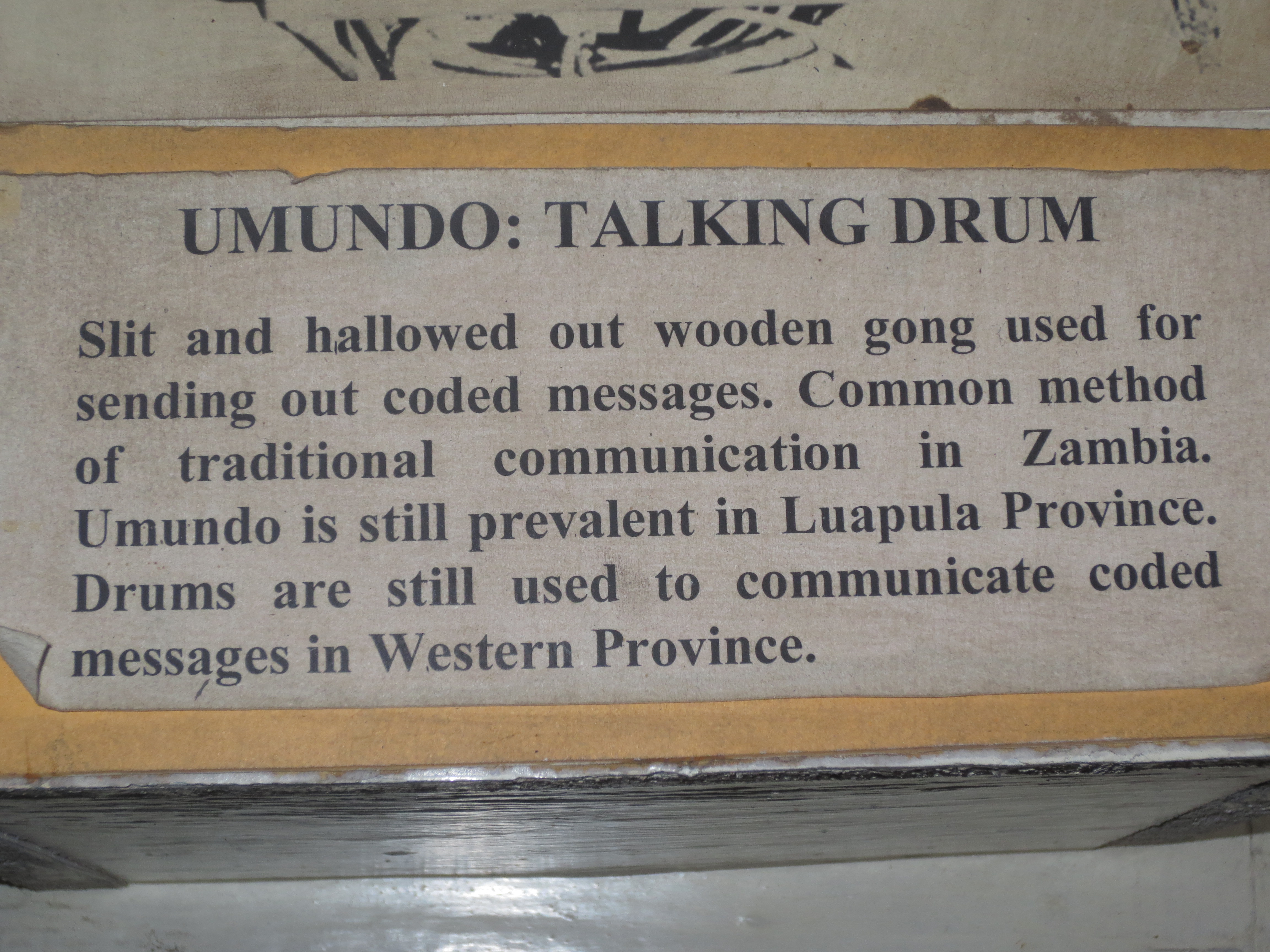
There were exhibits about the area and examples of tools and instruments made by the indigenous peoples before the mining industry took over.

IMG_1537 IMG_1538 IMG_1541 IMG_1540 IMG_1539 IMG_1542 IMG_1544 IMG_1545

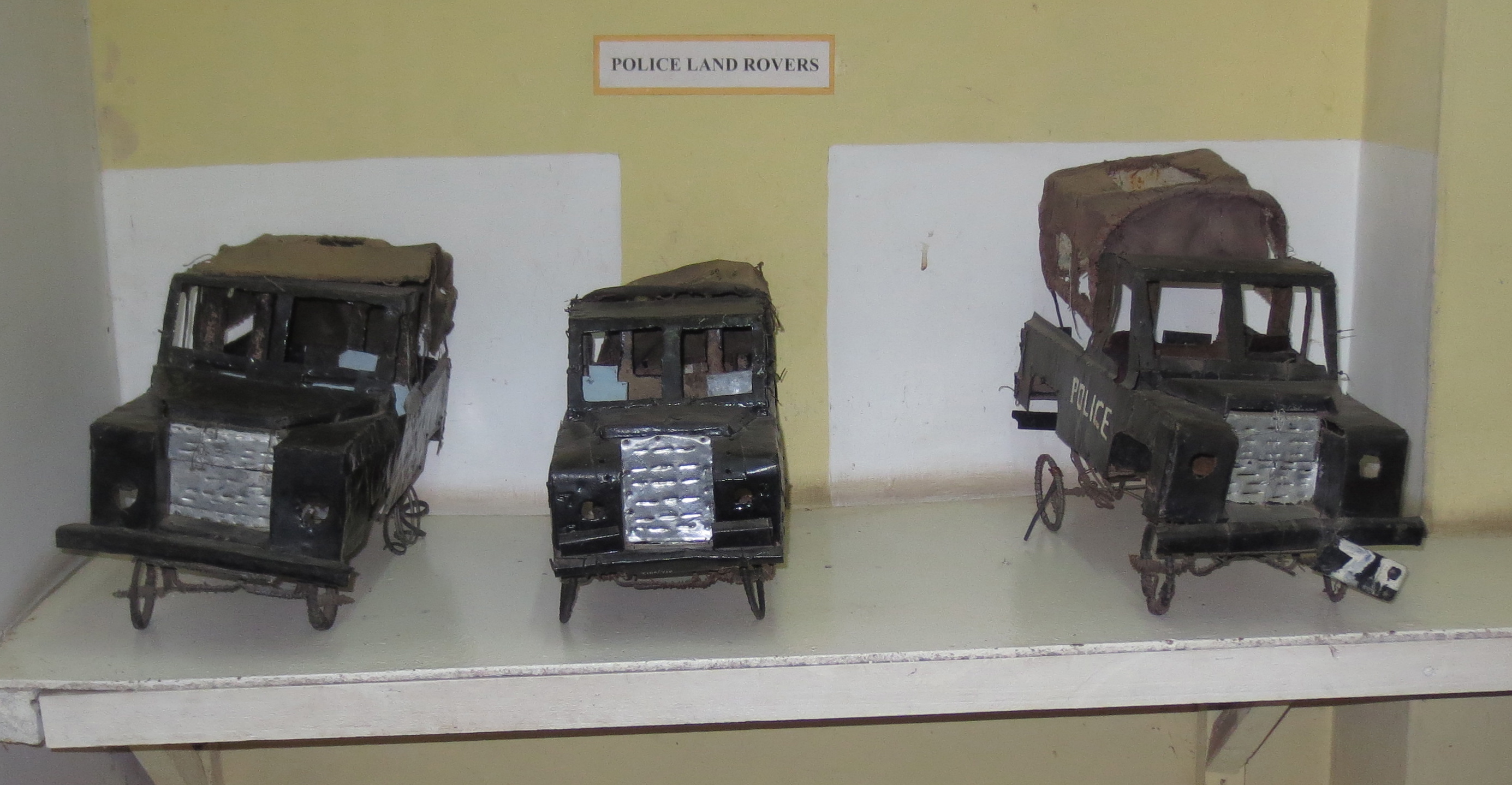
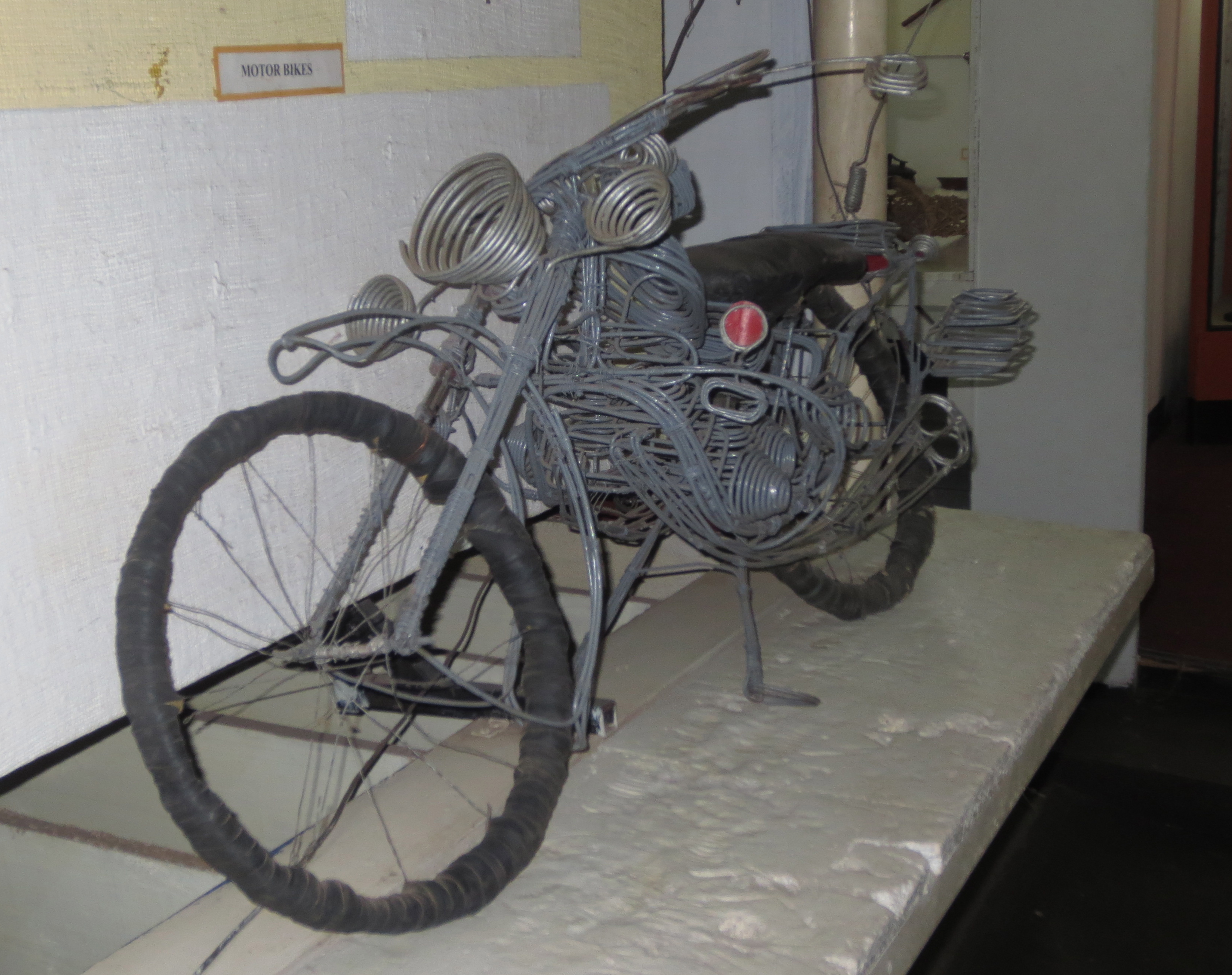
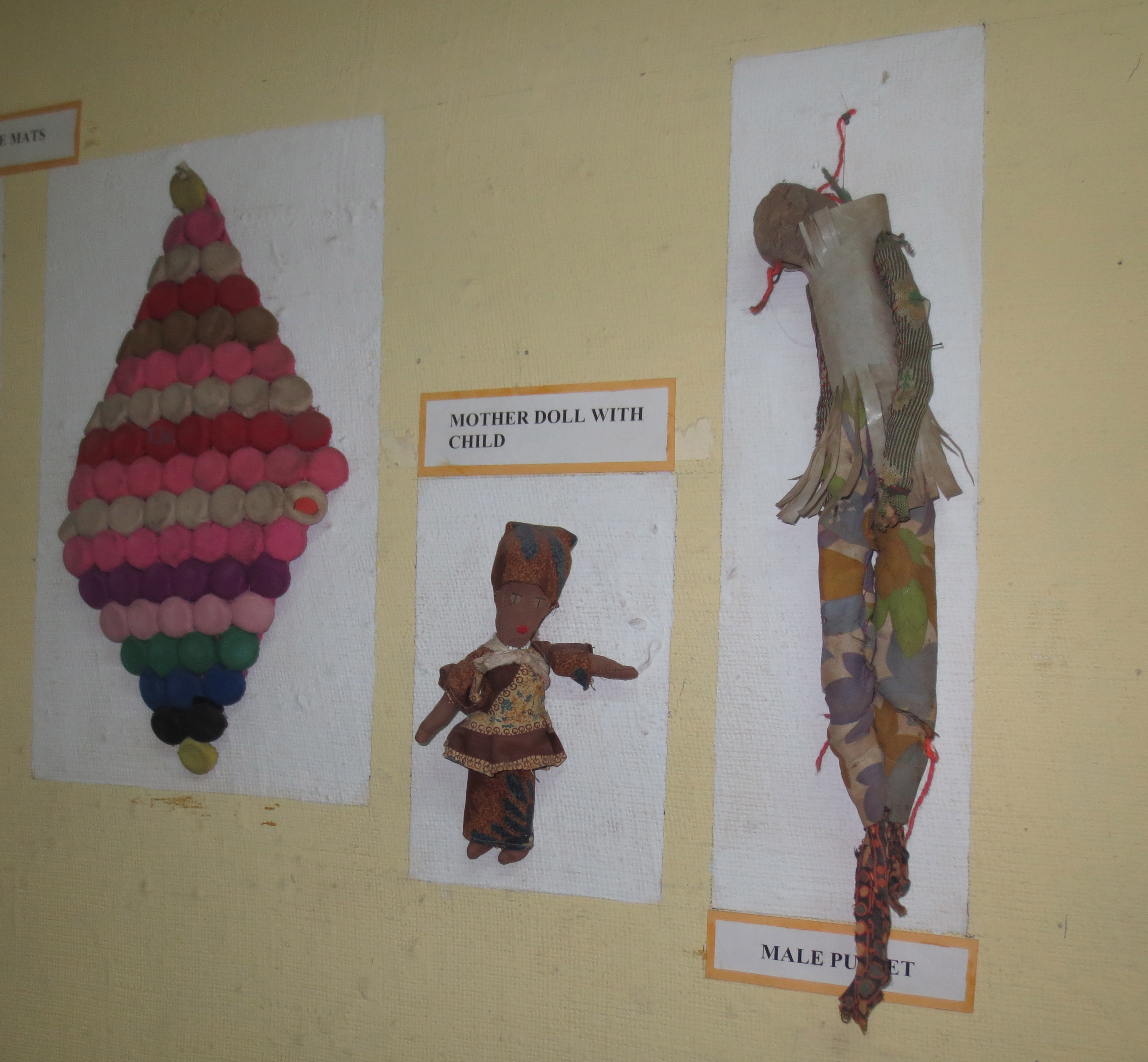
I was particularly taken by the exhibit of toys made by local children.  Not having access to modern and fancy toys that children in more developed countries have, the children create their own toys out of wire, fabric, metal and other items.  Some were quite elaborate and detailed.

IMG_1547 IMG_1548 IMG_1549 IMG_1550 IMG_1551 IMG_1553 IMG_1554

Late Saturday afternoon, when things had cooled down a bit, I took a walk in the other direction.
IMG_1565 IMG_1566 IMG_1567
I was lucky enough to come upon two church choirs, practicing for Sunday service.  One group was standing and practicing a capella, outside in the yard and the second, a Baptist church, was inside with electric organ and drums.  One of the women in the choir saw me standing at the door and went out of her way to welcome me and invite me into the church.  I loved hearing the music and watching the choir directors try to get the best sound from their group.

Catholic Church Choir outside

Baptist Church Choir

Baptist Church Choir 2

The guest house had its own chef who would cook you anything you liked and the food was excellent.  Saturday evening, I ate a fabulous dinner of marinated strip steak with a creamy pepper sauce, roast potatoes and salad.  There were two other guests there, both engineers who worked for the Zambian government and were surveying the roads.  We had a great conversation and by the time we had had a few drinks, we had solved most of the world’s problems!

IMG_1569

The nest day, I had the idea of taking the bus to Kitwe, about 65 kms up the road. I wanted to go to the huge local market there and see a bit more of the countryside.

Kitwe was hot and dirty and the Sunday market was full of people.  It is a true local market and again, I got some very curious looks.

IMG_1579 IMG_1575

After about an hour, I had seen enough, I was hot and tired and hungry!  I bought a couple of bananas and had an ice cream before going to board the bus back to Ndola…only to find that there were no more coaches going back to Ndola that day!

So, I got to take the local bus.

Local bus

I made it back in one piece and the guest house manager was preparing a braai with chicken and beef and invited me to join her family.   So, I had a refreshing dip in the pool, a couple of beers and some excellent food before heading to the airport!

Ndola and Kitwe may not be tourist destinations, but they are up-and-coming cities, as is Lusaka.  Zambia is moving forward…2014 will be its 50th anniversary as an independent nation and there are signs everywhere of development, education, health care and improvements.  As the Zambian engineers told me “This is an exciting time for Zambia!”

IMG_1582 IMG_1574 IMG_1561

A bird watch…and cows!

Standard

IMG_1499

Sunday, I joined the Zambian Bird Society (http://www.birdwatchzambia.org) on their monthly bird-walk.  It took place at the Kalamazi Game Ranch, not far outside of Lusaka.  I borrowed a pair of binoculars for the occasion (and really need to get some of my own soon!)  I was also armed with a camera, a couple of bottles of water, a hiking pole and sunscreen.  I had neglected to bring my hat, but I made do with my trusty bandanna.

We met at the “Bird Watch Office” and caravanned towards the Game Ranch.  There were 7 of us…and no one was really a “regular,”, it seemed.  Once we turned off the tarred road, I realized that I should have jumped into one of the 4-wheel drive vehicles as my little Starlet was not meant for rutted dirt roads.  When we hit the turn to the ranch,  which was little more than a dirt path, I parked my car and grabbed a ride with a very nice American couple who had a sturdy 4 x 4.

IMG_1496

As we drove in, we passed several flocks of guinea fowl, which are very common and have been domesticated.  They apparently make good eating!

guinea-fowl

Birders can be an interesting bunch.  I was asked if I had brought my notebook – apparently it is common to record sightings and observations as you encounter different birds…or think you encounter them.   Everyone had a pair of serious binoculars and when a bird was sighted (or someone thought a bird was sighted) everyone would stand perfectly still, binoculars up and steady, looking to see if certain markings or beak colours could be discerned before confirming the sighting.

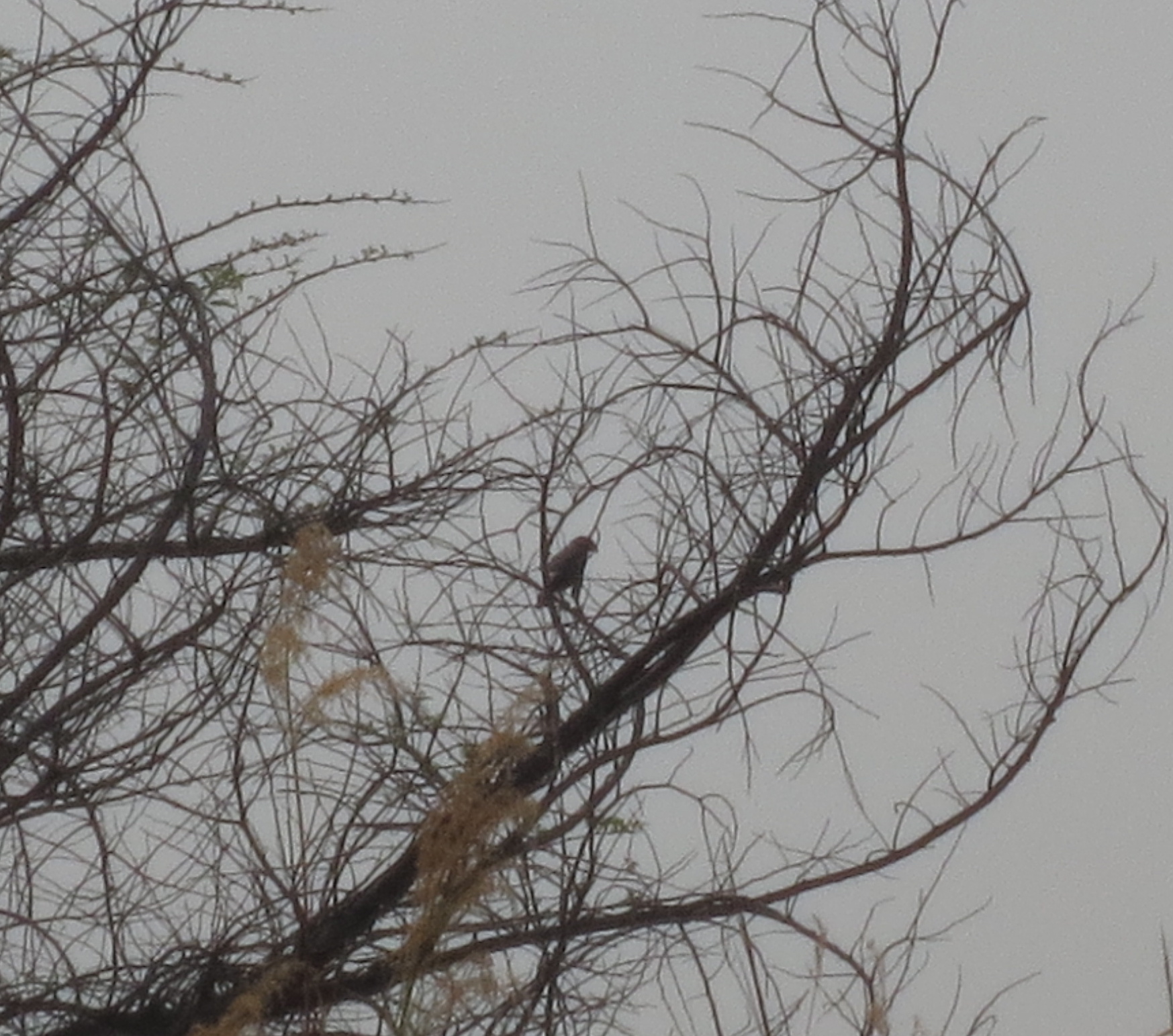
IMG_1492


Some people thought this bird was definitely a “lizard buzzard” but others were not so sure.  The light was not good enough to check to see if he had the requisite black stripes down his chest, as shown in the close up picture (not mine!)

IMG_1495


lizardbuzzard3_327w

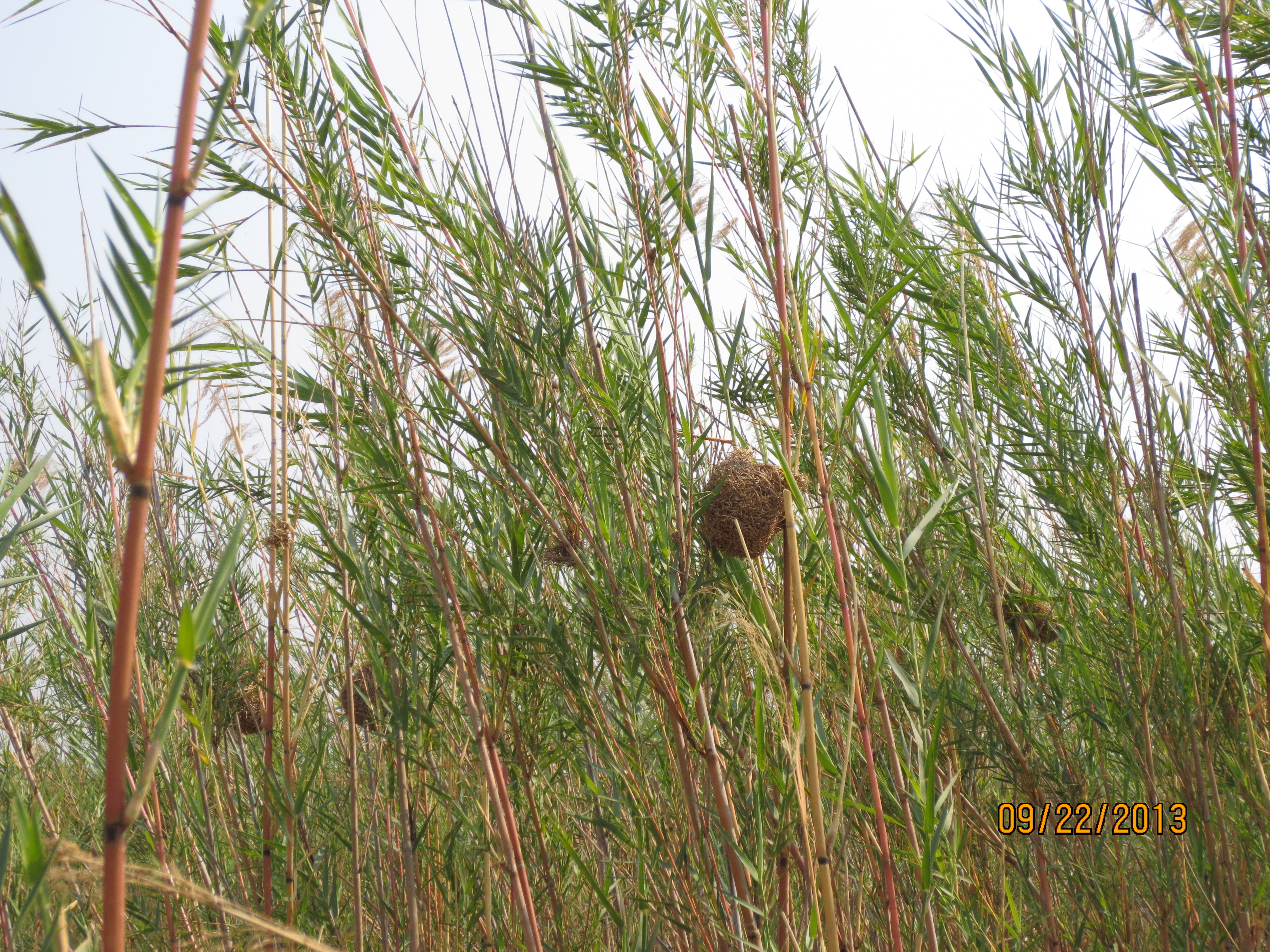
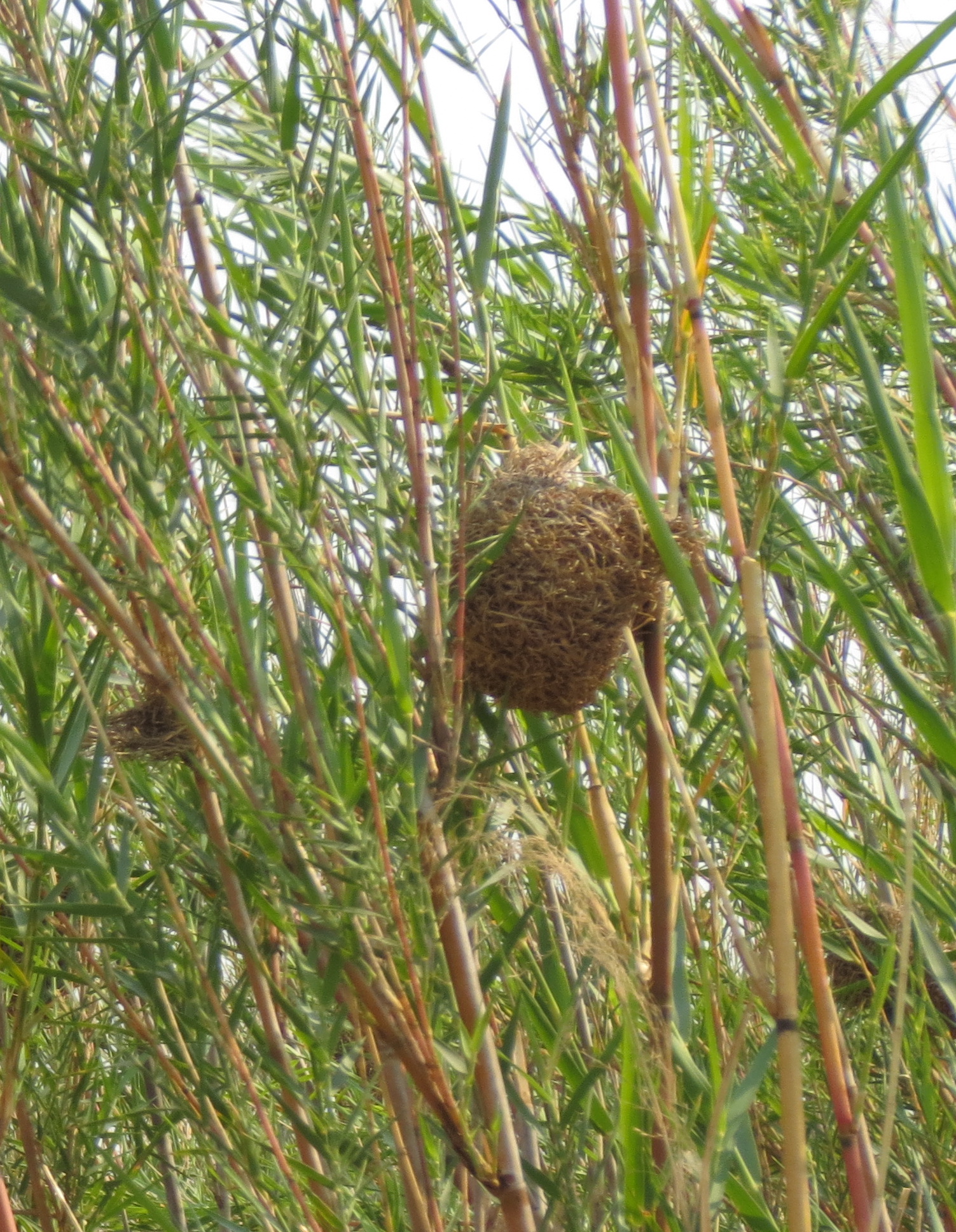
We came across a whole bunch of nests made by a bird called a “weaver.”  They weave their nests onto reeds and thin branches.  There are several kinds of weavers, some that make neat, tidy nests like these and others who are sloppy and make ratty looking nests with loose ends and bits of sticks and grass sticking out. .

IMG_1493 IMG_1494

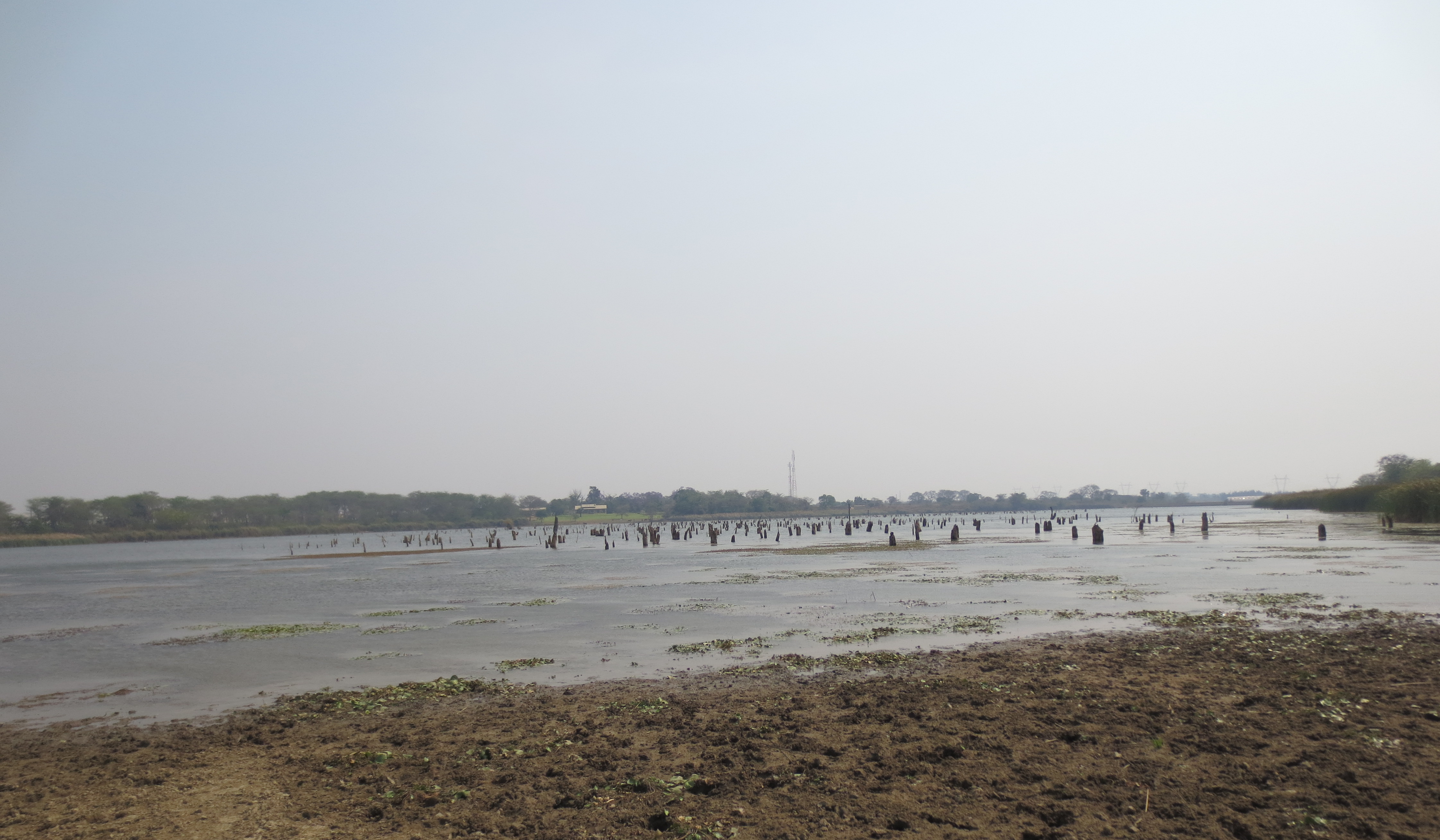
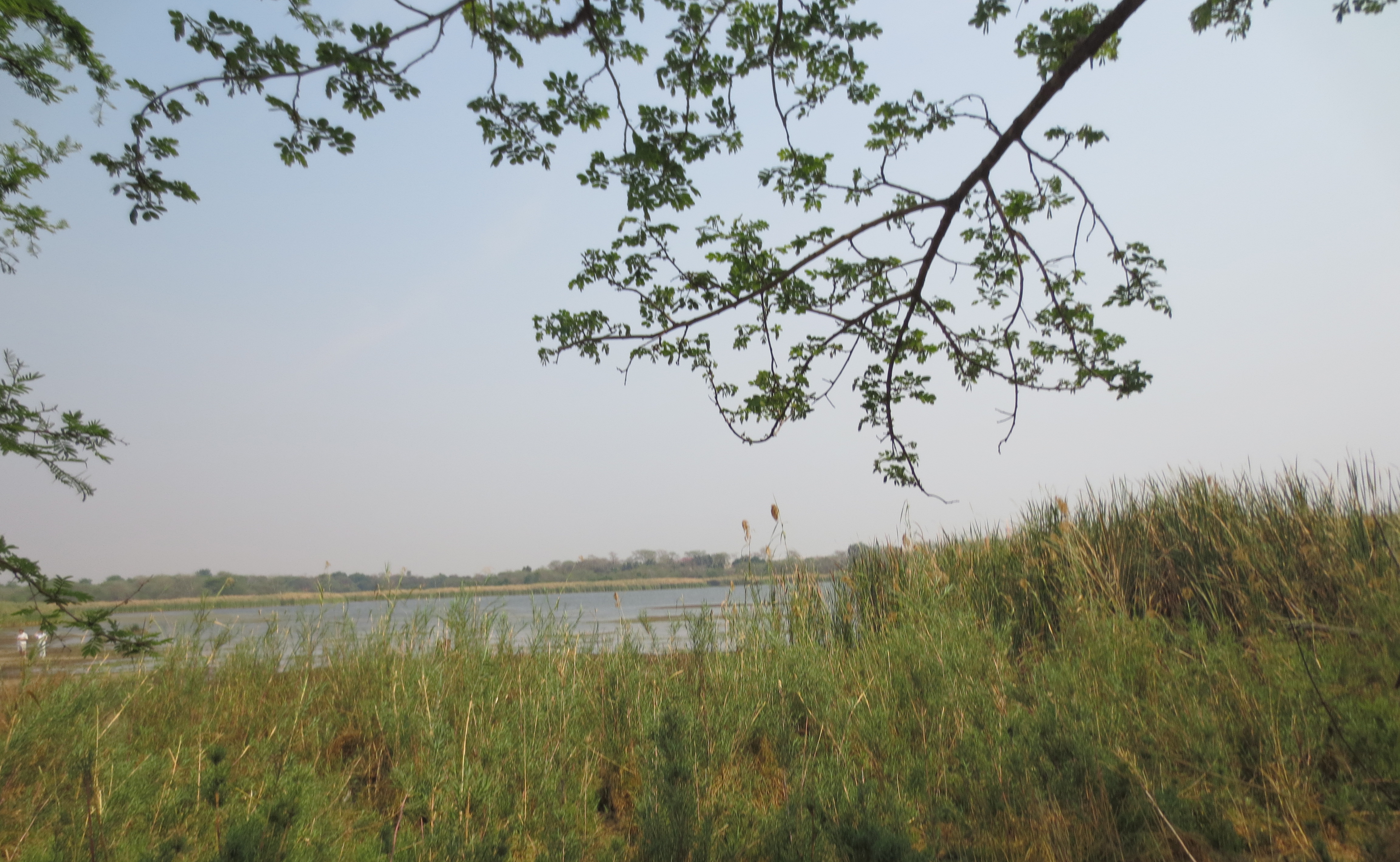
The game ranch is part of a farm that borders a large dam and the lake that has been created.  We walked around the lake to the mud flats, where we hoped to see some of the “waders.”  It was very pretty and there was a nice breeze coming off the water.

IMG_1497 IMG_1498 IMG_1500 IMG_1501

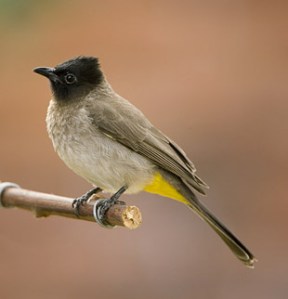
We were able to see several kinds of birds – ones that were positively identified were the pied kingfisher, the stilt, a common bulbul, a jacana (also called the “Jesus Christ bird” because it appears to walk on water!), a black-necked heron (which could possibly have been a grey heron) and a bee-eater.

The stilt is a very attractive bird – long red legs and black wings with a white body.  And the pied kingfisher is unique amongst kingfishers in that he hovers over the water before diving for his prey.  The bee-eater is a very pretty little bird – bright yellow body with a colorful head.  And the jacanas really do seem as if they are walking on the water – they have incredibly long toes which allow them to navigate on even the smallest leaves or twigs.

 (Please note: the close-up bird pictures are NOT mine!  I would have needed incredible luck and a much more expensive camera to take shots like these!  But they show what the birds look like!)

combcrestedjacanaDark-capped Bulbul WT09216 black_necked_stilt_small Bee-eater_Lit-Jy05Mahango-w


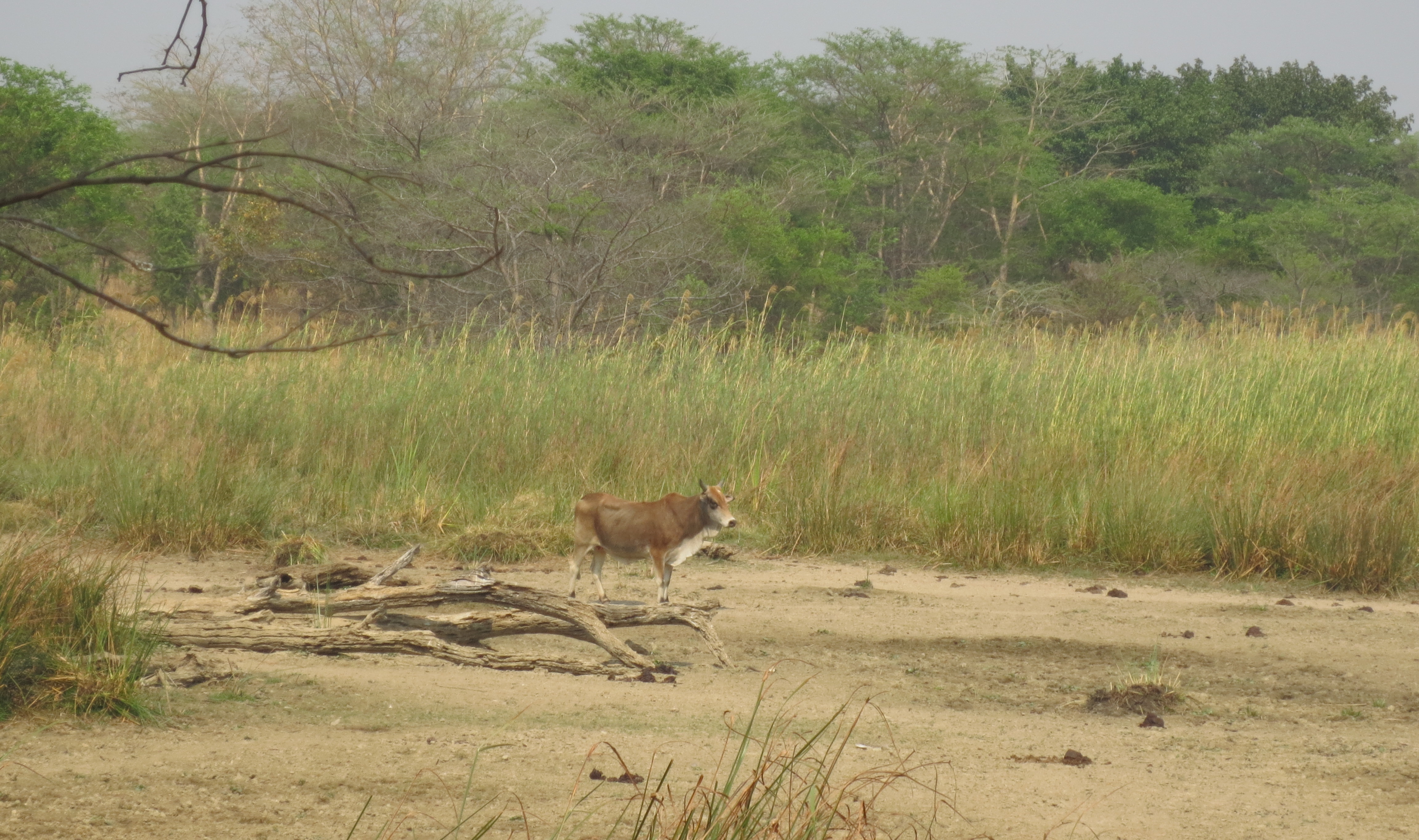
And then…someone told the cows it was time for morning tea.  One came down to see if it was ready.

IMG_1502


Then, using some unknown cow-communication, the rest of them slowly followed.

IMG_1503 IMG_1505 IMG_1506


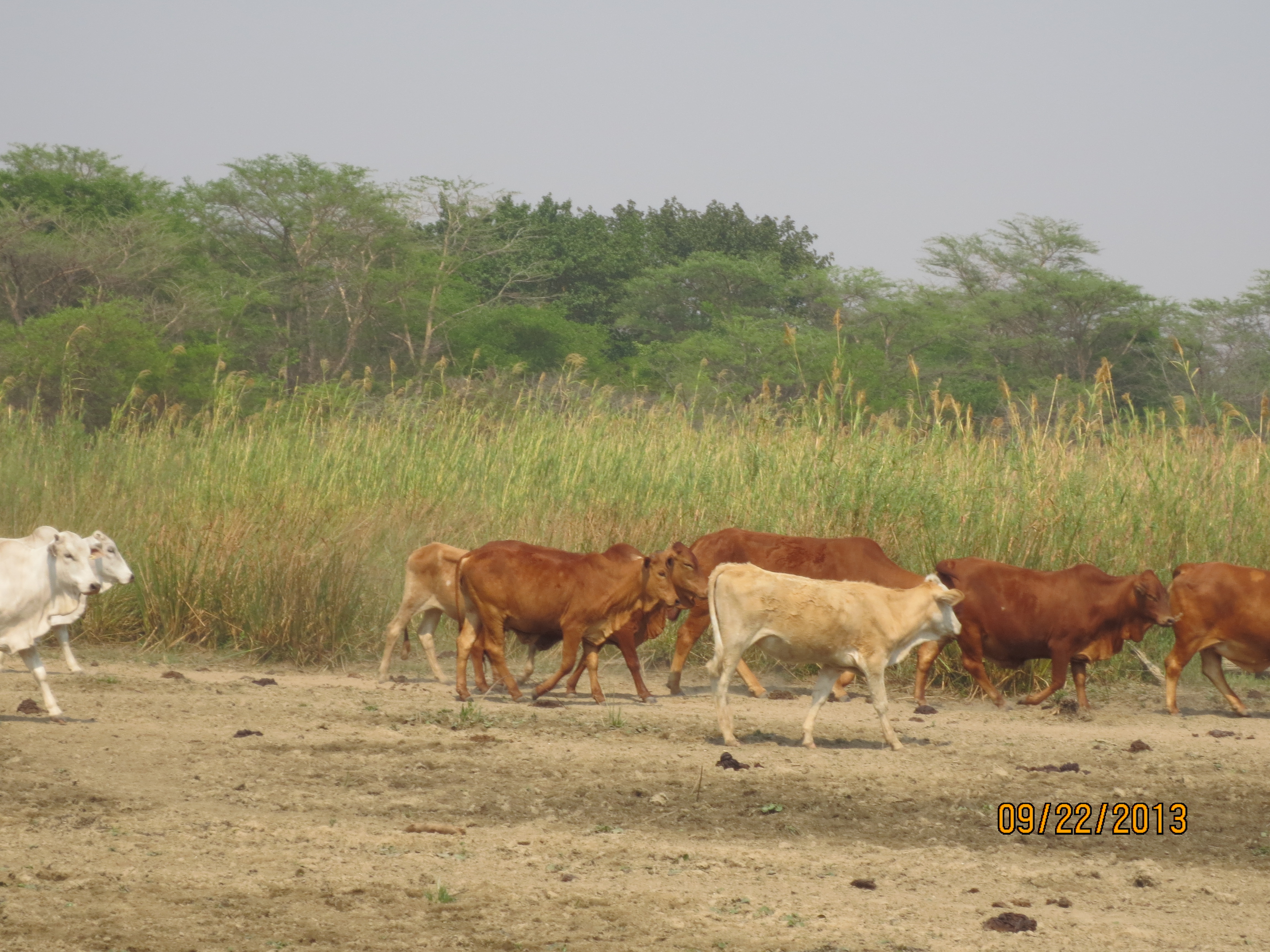
These cows are quite unusual in that they have a hump between their shoulder blades, in some cases quite pronounced.  They are called “Zebus” or Brahman cattle and originated in Southern  Asia.   They are well adapted to tropical temperatures and used for dairy, beef, draught animals and also hides and leather.  Their dung is used for fuel and fertilizer.

IMG_1508 IMG_1507


Most of the cows moved placidly down to the water, but every once in a while, there would be feisty one who would seem more curious.

IMG_1504 IMG_1509


Behind the mud flats, there was a curious structure that I first took to be an old foundation of some sort.  Upon closer inspection, and some discussion, we discerned it to be a “cattle dip.”  The cattle would be driven into the shoot and into the deeper end, where they could be soaked with insecticide or cleaner…

IMG_1513


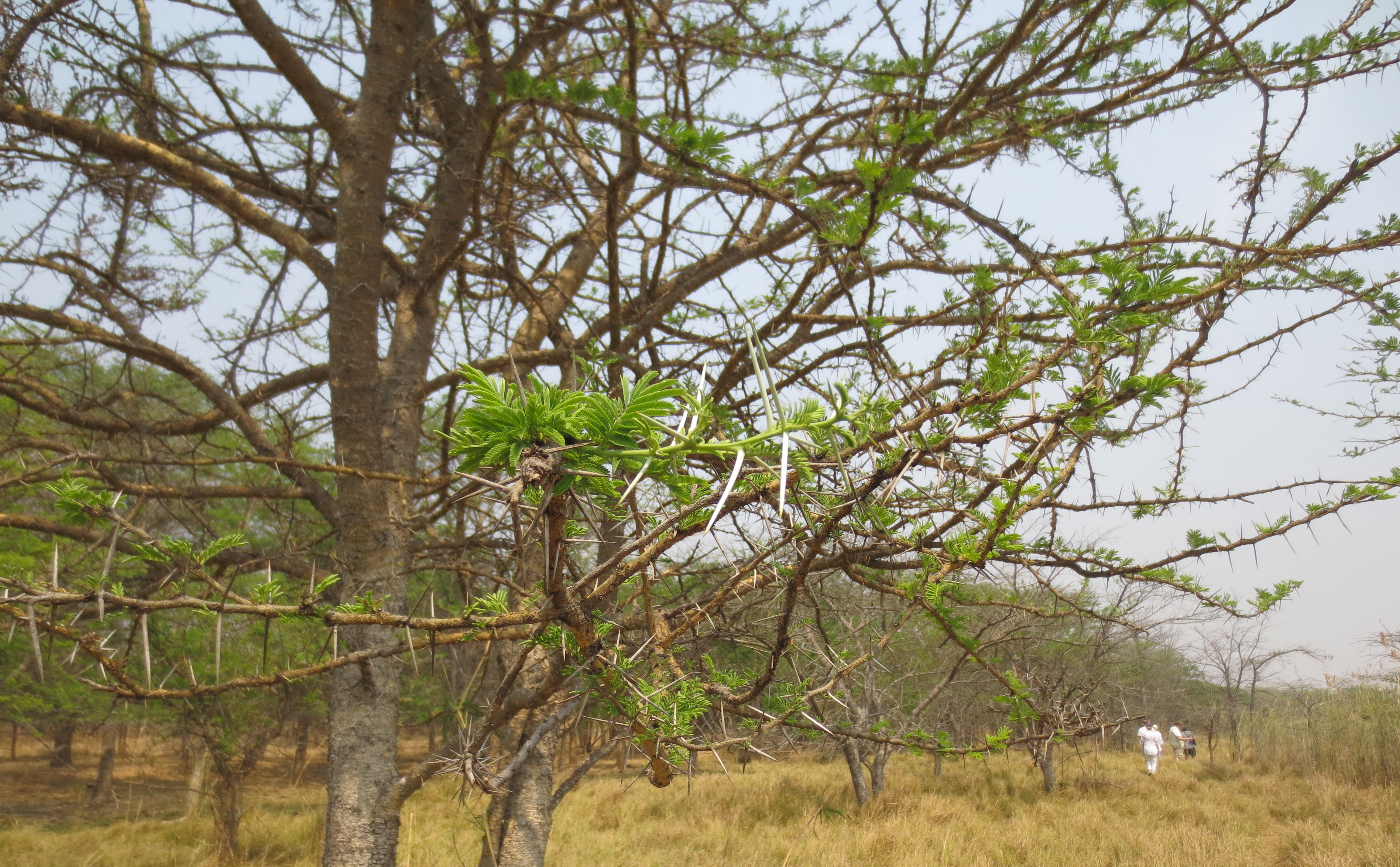
There was much interesting flora, as well.  Thorned acacia trees and various bushes and tall rush-like plants.

IMG_1511 IMG_1512 IMG_1515 IMG_1514 IMG_1516


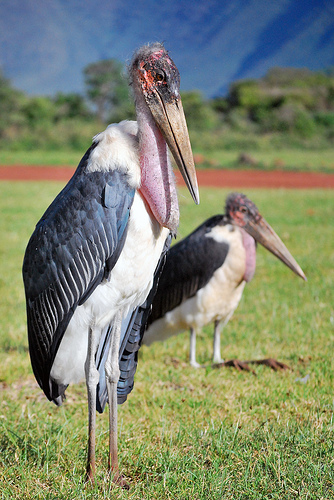
And as we returned to our cars, we could clearly see a marabou stork wheeling about overhead.  This bird has a wing-span of almost 2 meters.  From a distance, it was beautiful, but it was considered to be one of the ugliest birds, with its short neck, featherless head and huge neck- pouch.

Marabou-Stork-pair

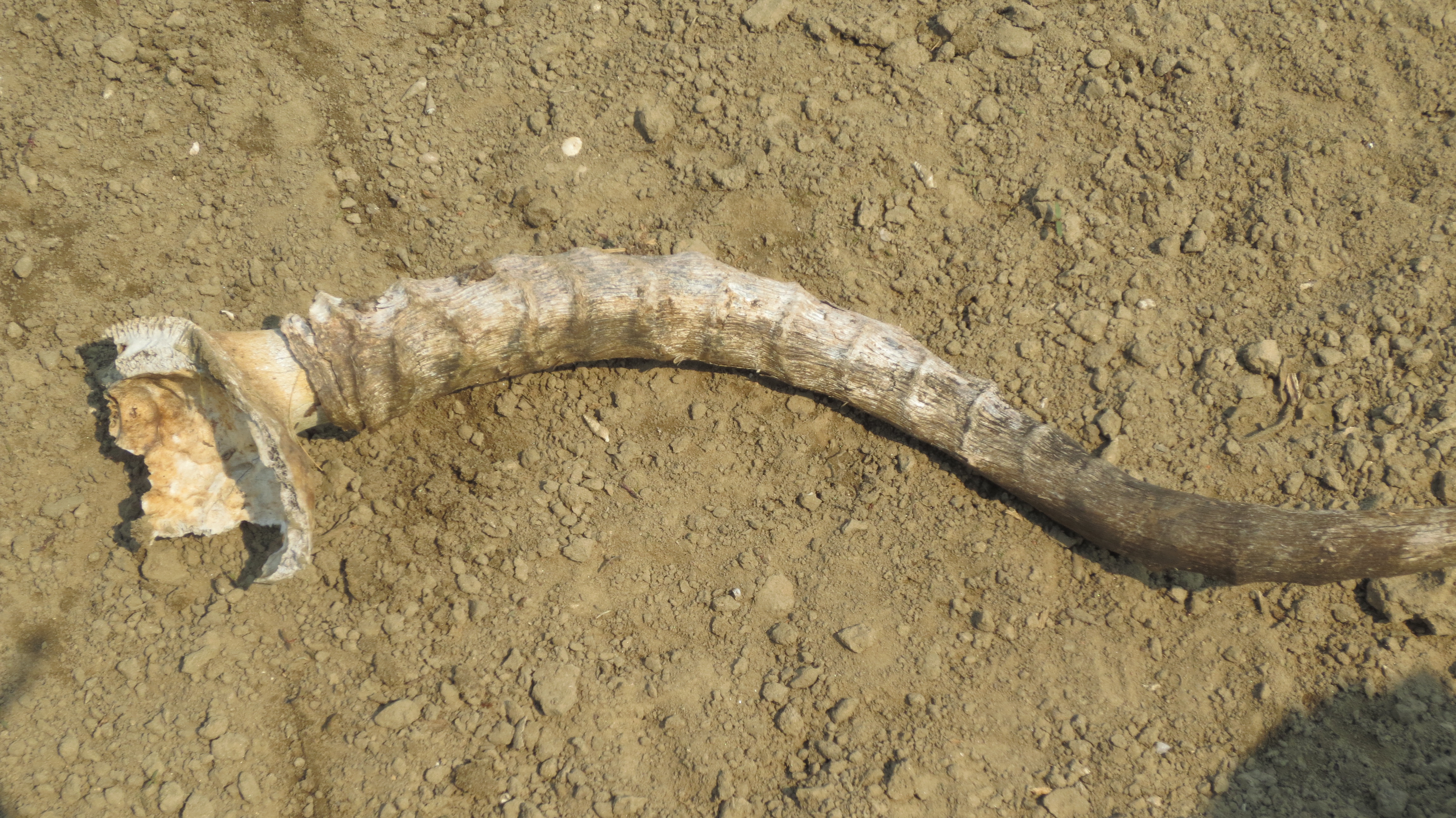
Right before leaving, I found a long-discarded impala horn on the ground…

IMG_1510

It was a fun morning…and next time, I plan to have a stronger pair of binoculars (and my hat!)


The Lusaka Children’s Choir

Standard

As I have mentioned before, Fridays at the school are a bit different.  There is a section of the day called “Global Issues.”  This is devoted to assemblies and events that (hopefully) connect the students to the wider world.  About once a month, there is an extended period of time where students take part in a service project of one kind or another.  Every student grade 6 – 12 must be involved in one of the projects.  Selected students function as leaders and organizers.  Every teacher must also be involved.

I was asked to co-lead the “Lusaka Children’s Choir” along with Geofrey, who is the manager of our Performing Arts Center and also directs a choir at his church and one of the local schools.  They started this activity last year…students from several local schools are bused in and combined with students from our school in the hopes of making music.  At the end of the year, there is a concert, which helps raise money for the local schools.  Apparently, last year, they spent almost the entire time rehearsing one song for this concert…and I got the feeling that the students had become quite frustrated with this.  Anyone who has seen me teach music knows that this really isn’t my style.  I suggested we jump right in and learn as many songs as we could…both African songs and songs from other countries.  So we started with some simple rounds – “Row, Row, Row Your Boat” and “Music Alone Shall Live.”  I taught them Natalie Sleeth’s “Gaudeamus Hodie” and the calypso tune “Shake the Papaya Down.”  And Geof taught (or rather, reviewed, since most of them knew it!) a traditional Zambian song called “Tiyende Pamodzi” and also “Siyahamba” which we sing in the US as well.

I thought we sounded pretty good for a first attempt!  Please forgive the horrendous quality of the video…I am just learning how to use the camera on the iPad!  I also haven’t yet figured out how to embed the videos into the blog, so you’ll have to click on the links!  But please do click – it is worth hearing!

The uniformed kids are from a local school called “Appleseeds” and the younger children are from a primary school called “Open Arms.”  They were quite shy at first, but as you can see, they become more involved and expressive as we sang together.

Tiyende Pamodzi is a traditional African song that was popularized by Zambia’s first President, Dr. Kenneth Kaunda, who used the song in his election campaign.  For his purposes, the title would likely be translated as “Let’s move together with one heart.”

Learning Tiyende Pamodzi

Siyahamba is a South African song…some you might know it as “We Are Marching in the Light of God.”  I used to sing this with my kids at the Academy of Notre Dame and they loved it, too.  Such a great choral song.

Siyahamba – getting the alto part right!

Adding movement…

Putting all together.

I am really looking forward to working with Geof and this choir as the year goes on!  And I bet our end-of-the-year concert will be fantastic!

“Everybody Ought to Have a Maid…”

Standard

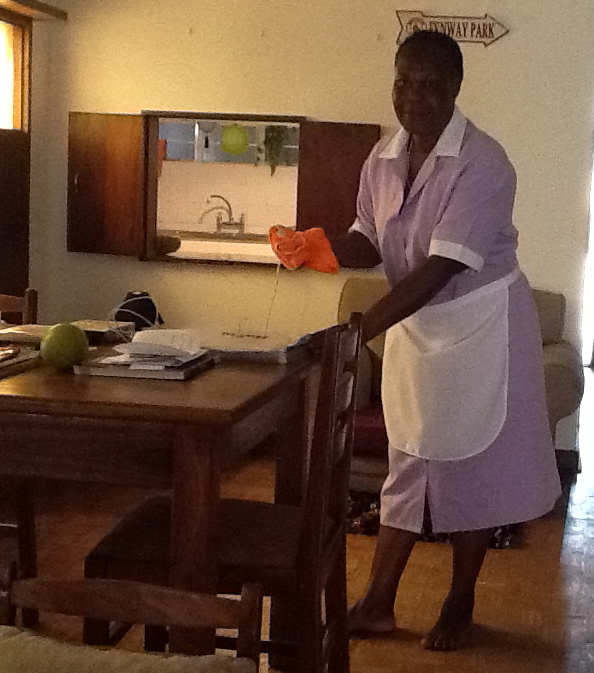
Meet my wonderful maid, Mary.

Mary2

In Zambia, as in many parts of Africa, it is very common (and expected) that anyone making any kind of decent living will hire household help.  A maid, a gardener, maybe a cook and a nanny if you have children to look after.  Sometimes a person might do more than one job.  If you have a large family and a big house and yard, you might have a couple of gardeners and maids.

At first, this seemed very odd to me and a bit uncomfortable.  After all, couldn’t I pick up after myself?  I am perfectly capable of doing my own laundry, aren’t I?  Wasn’t it lazy of me to hire a maid for my little flat?  Would it be condescending for me to hire someone to fold my clothes and make my bed?

Zambia has an incredibly high rate of unemployment and many people who are employed live well below the poverty line.  When you hire a maid or other household help, you are giving someone a job who otherwise would not be employed at all.   Some of the people who work as maids or cooks  have been doing this their entire life – they are trained, experienced and knowledgeable about what they do.  And they are proud of the quality of their work.  Some younger people work as domestics in order to put money away for college or training school.  And while the expected pay is very low compared to what you might pay in the states, it is enough to make a living and put some money aside.  The minimum wage for a maid in Zambia is 550 kwacha per month, full time (usually 5 and a half days per week) however, most experienced maids charge more and deserve it.  I pay 50 kwacha per day, plus money for weekly bus fare and lunch.  (One kwacha is a little less than 20 cents.)

My block of flats has a communal garden and the gardeners are hired by the landlady.  However, everyone hires their own maid.  The two other folks who live here and work at the school “share” their maid (thus giving her a full-time job.)  Mary was recommended to me by one of the teachers who knew her.   Having never had a maid I wasn’t sure what to expect or what to ask her to do and I felt a little shy about it.  Luckily, Mary knew exactly what she was doing.  The first day, I showed her how to use the washer and dryer, where I kept everything and how the flat was set up.  She took it from there.  She is the kind of person who just “feels” comfortable and although her English is not the best and I speak no Nyanga, we can talk about our daughters and our ex-husbands and our lives and laugh together, just like two women anywhere.

She comes 3 days a week and cleans, washes, folds, irons and in general, makes the place sparkle.  Because we rarely cross paths, we leave little notes for each other!  It is absolutely wonderful to come home and have the flat all organized, the laundry done, ironed and put away (neatly folded!) and the bed linens changed, the towels fluffed, the dishes all clean and in the cupboard.  I came home a bit early today and was able to take her picture in her new uniform (they sell them at the grocery store and she had specifically asked for one.) When I told her I wanted to take her picture, she made sure to put her apron on to look “professional.”  After the picture above, she went and got a dust-rag so she could pose as if she was “working.”  She asked me if I would show the picture to my children and I told her yes…I would show the picture and tell everyone, “This is my wonderful maid, Mary!”  She beamed.

Mary1


(PS: For those of you who are Broadway musical challenged, the title of this post is a song from Stephen Sondheim’s “A Funny Thing Happened on the Way to the Forum.”)